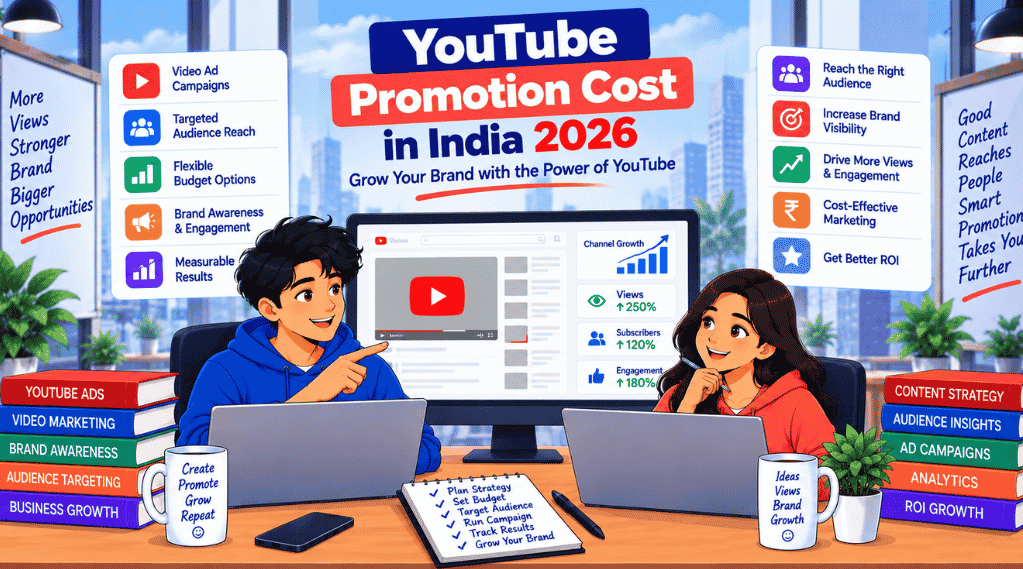
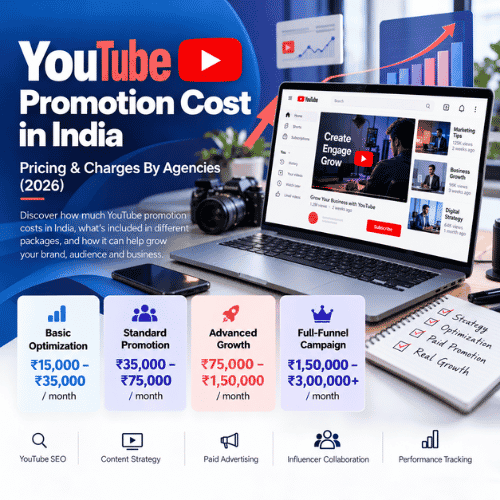
YouTube promotion cost in India typically ranges from ₹15,000 to ₹3,00,000+ per month, depending on the level of optimization, audience targeting, paid advertising, influencer collaborations, and campaign management. Packages generally include Basic YouTube Optimization (₹15,000–₹35,000), Standard Promotion (₹35,000–₹75,000), Advanced YouTube Growth (₹75,000–₹1,50,000), and Full-Funnel YouTube Campaigns (₹1,50,000–₹3,00,000+). Paid YouTube ad spend is separate from agency fees. Sync Soft Solution can help businesses improve YouTube visibility, reach targeted audiences, optimize content, and manage performance-focused campaigns.
YouTube has become one of the most influential platforms for brand visibility, discovery, and conversions. For businesses that want to reach larger audiences, build trust, or drive sales, YouTube promotion can be highly effective—if executed strategically.
However, one common question business owners ask is:
How much does YouTube promotion cost in India?
YouTube promotion cost in India typically ranges from ₹15,000 to ₹3,00,000+ per month, depending on the scope of services, campaign goals, and whether the promotion includes organic optimization, paid advertising, influencer collaborations, or a full-funnel strategy.
Basic YouTube optimization starts at ₹15,000–₹35,000 per month
Standard promotion by agencies costs ₹35,000–₹75,000 per month
Advanced growth and performance campaigns range from ₹75,000–₹1,50,000 per month
Enterprise or large-scale YouTube campaigns can exceed ₹3,00,000 per month
Paid YouTube advertising budget is separate from agency fees and is paid directly to Google Ads.
What YouTube Promotion Really Means
YouTube promotion is not simply uploading videos and hoping they perform. It includes:
– Audience research – Channel strategy and positioning – Content optimization – Video distribution and syndication – Paid advertising on YouTube – Influencer collaborations – Performance tracking and reporting
Many businesses confuse video creation with video promotion. Creation is only one part. Promotion is how your content reaches the right audience and ultimately how it drives measurable business impact.
Why YouTube Promotion Costs Vary
The cost of promoting on YouTube depends on multiple factors:
Target audience – Niche vs mass
Type of promotion – Organic optimization vs paid ads
Video volume – Number of videos being promoted
Influencer fees
Campaign duration
Level of reporting
Because of this complexity, agencies do not follow a one-size-fits-all fee structure. Instead, packages are based on the level of service and business outcomes.
How Agencies Price YouTube Promotion in India
Agencies typically use three pricing models for YouTube promotion:
Monthly Retainer
A fixed fee per month covering a set range of services.
Project-Based Pricing
A one-time fee for a campaign, channel launch, or video series.
Performance-Based Pricing
Fees tied to agreed outcomes, such as views, leads, or conversions.
Each model has its advantages, but for sustained growth, a monthly retainer model is commonly used.
YouTube Promotion Cost in India (2026): Pricing Overview
Package Type
Typical Monthly Fees (₹)
Best Suited For
Basic YouTube Optimization
₹15,000 – ₹35,000
Small brands building an initial presence
Standard Promotion Package
₹35,000 – ₹75,000
Brands looking consistent organic visibility
Advanced YouTube Growth
₹75,000 – ₹1,50,000
Brands focusing on performance & strategy
Full-Funnel YouTube Campaign
₹1,50,000 – ₹3,00,000+
Large brands, enterprise-level campaigns
Note: Paid advertising budget on YouTube (Google Ads) is separate from agency fees.
What Each YouTube Promotion Package Includes
Basic YouTube Optimization (₹15,000 – ₹35,000)
This tier focuses on the foundation of your YouTube presence:
– Channel setup and optimization – Keyword and tag strategy – Video metadata optimization – Basic thumbnails and titles – Monthly reporting
This is suitable for businesses establishing their presence but not yet ready for aggressive growth.
Standard Promotion Package (₹35,000 – ₹75,000)
This tier aims for consistent visibility:
– Full content optimization – Posting strategy – Audience engagement monitoring – Performance reporting – Basic paid support guidance
This suits businesses that want regular visibility without heavy investment.
Advanced YouTube Growth (₹75,000 – ₹1,50,000)
This tier focuses on meaningful performance improvement:
– Audience targeting strategy – Paid campaign setup and optimization – Engagement and community building – Analytics and trend insights – Monthly performance strategy calls
This is suited for brands that measure success by both views and engagement quality.
A well-managed paid YouTube campaign is one where the cost per view or cost per acquisition aligns with your business goals, not just impression counts.
How to Choose the Right YouTube Promotion Package
When evaluating YouTube promotion packages, ask:
Does this agency provide a goal-aligned strategy or just execution?
How do they measure success? Views? Engagement? Leads? Revenue?
What platforms beyond YouTube are they considering?
How will my videos reach the right audience?
Do they support both organic and paid promotion?
The right answers distinguish high-value agencies from vendors who offer only activity.
YouTube Promotion Cost vs Organic Growth
Both organic optimization and paid promotion have value.
Organic optimization:
– Improves discoverability over time – Builds long-term authority – Reduces dependency on budgets
A balanced approach uses both, aligned with brand goals and budgets.
Frequently Asked Questions
1. How much do agencies charge for YouTube promotion in India?
Agency fees usually range from ₹15,000 to ₹3,00,000+ per month depending on strategy depth and goals.
2. Is YouTube ad spend included in promotion fees?
No. Paid ad spend is separate and paid directly to the advertising platform.
3. How soon can YouTube promotion show results?
Basic visibility improvements can be seen within 4–8 weeks. Meaningful engagement and conversions generally take longer.
4. Does YouTube promotion include video production?
Video production is usually separate. Promotion focuses on visibility, optimization, and campaign management.
5. Does YouTube promotion help with sales?
Yes, when the strategy aligns with audience targeting, content relevance, and performance optimization.
Final Thoughts
YouTube promotion is not a quick fix. It is a strategic investment in visibility, audience growth, and brand authority.
Businesses that structure promotion around audience relevance, content quality, and performance metrics see stronger, sustainable outcomes.
Choosing the right promotion package ensures your investment leads to measurable results rather than temporary views.
Sync Soft Solution can help businesses with YouTube promotion, optimization, audience targeting, paid campaigns, and performance-focused digital marketing strategies.
Pay-per-click advertising is one of the fastest ways to generate traffic, leads, and sales. But it is also one of the easiest channels to waste money on if managed poorly.
If you are searching for PPC packages in India and want to understand how much agencies charge for Google Ads management, this guide explains the pricing clearly, what is included in different packages, and how to choose the right agency model for your business.
How much do PPC packages cost in India?
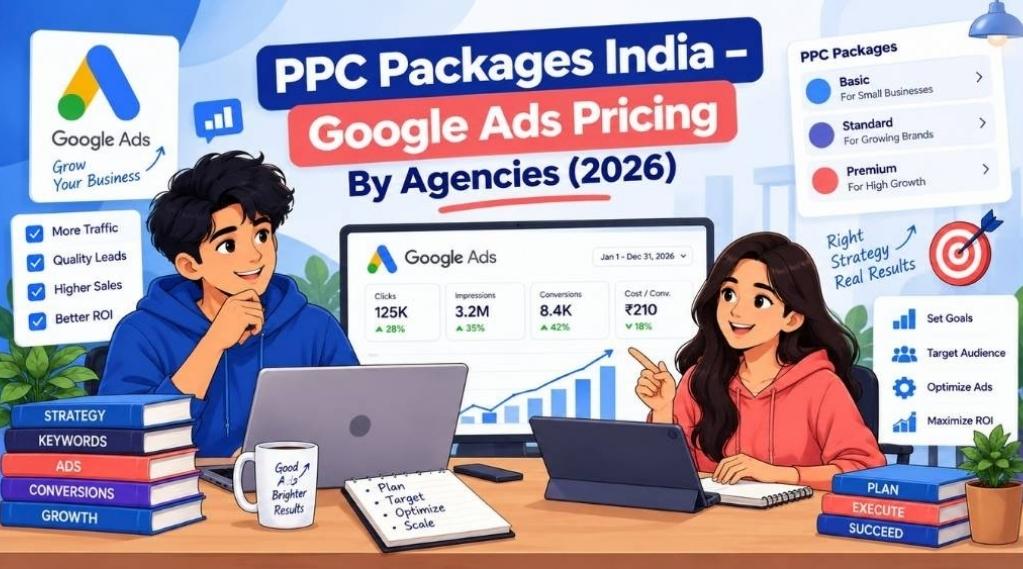
PPC packages in India typically cost between ₹20,000 and ₹3,00,000+ per month for Google Ads management, depending on monthly ad spend, campaign complexity, industry competition, and the level of optimization provided by the agency.
Basic PPC management packages start at ₹20,000–₹40,000 per month and focus on campaign setup and basic optimization
Growth-focused PPC packages cost ₹40,000–₹80,000 per month and include ongoing keyword, bid, and conversion optimization
Advanced PPC performance packages range from ₹80,000–₹1,50,000 per month and focus on ROAS, CPA, and scaling profitability
Enterprise or high-spend PPC services can exceed ₹3,00,000 per month for large budgets, multi-campaign management, and advanced reporting
Google Ads budget is separate from agency fees and is paid directly to Google.
PPC Packages India (2026): Pricing Overview
PPC Package Type
Agency Fee (Monthly)
Best Suited For
Basic PPC Management
₹20,000 – ₹40,000
Small businesses & local services
Standard PPC Growth
₹40,000 – ₹80,000
Ecommerce & lead-gen brands
Advanced PPC Performance
₹80,000 – ₹1,50,000
Competitive industries & scaling brands
Enterprise / High-Spend PPC
₹1,50,000 – ₹3,00,000+
Large budgets & multi-location brands
Note: Ad spend is separate from management fees.
What PPC Management Really Involves
Running Google Ads is not just about setting up campaigns and letting them run.
Effective PPC management includes:
Keyword research based on buying intent
Account and campaign structure
Ad copywriting and extensions
Conversion tracking setup
Landing page alignment
Bid and budget optimization
Search term analysis and exclusions
Performance monitoring and reporting
Agencies are paid not for clicks, but for how well they manage and optimize your ad spend.
Why Google Ads Pricing Varies Between Agencies
PPC pricing varies widely because management effort depends on:
Monthly ad spend
Number of campaigns and ad groups
Competition level in your industry
Conversion complexity (leads vs ecommerce sales)
Reporting and optimization depth
Landing page involvement
Lower-cost agencies often manage many accounts at once, which limits optimization quality. Higher-quality agencies manage fewer accounts and focus on performance, not volume.
How Agencies Charge for PPC Management in India
Agencies typically use one of the following pricing models:
Percentage of Ad Spend
Usually ranges from 10% to 20% of monthly ad spend.
Fixed Monthly Retainer
Ranges from ₹20,000 to ₹2,00,000+ per month, depending on scope.
Hybrid Model
A base retainer plus a smaller percentage of ad spend.
The right model depends on your budget size and growth goals.
What Each PPC Package Typically Includes
Basic PPC Management (₹20,000 – ₹40,000)
Focused on stable account setup and basic optimization.
TL;DR: Keyword research identifies the terms people search for, while audience research explains who those people are, what they need, and why they search. A successful SEO strategy combines both to create relevant content, match search intent, attract qualified traffic, and improve conversions. Sync Soft Solution helps businesses use audience insights and keyword data to build focused, result-oriented SEO strategies.
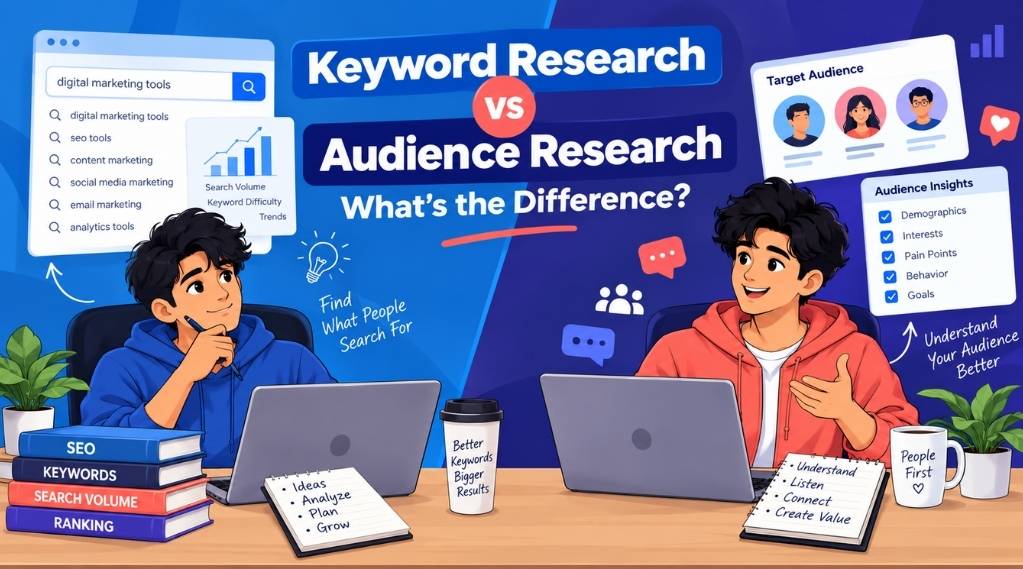
Keyword Research vs Audience Research is an important comparison for businesses building an effective SEO and digital marketing strategy. Keyword research identifies the words and phrases people use on search engines, while audience research focuses on understanding who those people are, what problems they face, what information they need, and what influences their decisions. For businesses working with Sync Soft Solution, combining both approaches can create a more focused content strategy, improve search visibility, and connect organic traffic with genuine business opportunities.
What Is Keyword Research?
Keyword research is the process of identifying and analyzing search terms that potential customers use on search engines such as Google and Bing. It helps businesses understand what people are searching for and how those searches relate to their products, services, or information needs.
A professional keyword research process generally considers:
Search relevance
Search intent
Search volume
Competition
Keyword difficulty
Long-tail variations
Location-based searches
Commercial value
Customer journey stage
For example, a business offering digital marketing services may identify keywords such as SEO company in Delhi, digital marketing services, website SEO services, or local SEO services.
However, selecting keywords only because they have high search volume does not always produce valuable traffic. The keyword should also match the audience, business objective, and content purpose.
What Is Audience Research?
Audience research focuses on understanding the people a business wants to reach. It examines their needs, interests, behavior, challenges, preferences, expectations, and purchasing decisions.
A business may use audience research to understand:
Who its ideal customers are
What problems they want to solve
What questions they ask before purchasing
What factors influence their decisions
What concerns prevent them from taking action
Which platforms they use
What type of content they prefer
How they describe their problems
For SEO, these insights are valuable because they provide context behind the search query.
A keyword tells you what someone searches for. Audience research helps explain why they are searching for it.
Keyword Research vs Audience Research: Key Difference
Keyword research and audience research serve different purposes, but neither should be treated as completely separate from the other.
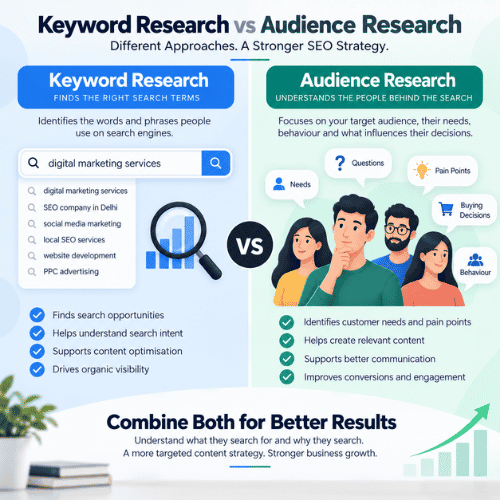
Keyword Research
Audience Research
Identifies search terms
Identifies target customers
Studies search behaviour
Studies customer behavior
Finds keyword opportunities
Finds customer needs and pain points
Focuses on search queries
Focuses on people behind the queries
Helps plan SEO content
Helps shape the content message
Analyses search intent
Analyses customer intent and motivation
Supports organic visibility
Supports relevance and engagement
Uses search data
Uses customer and behavioral insights
The simplest way to understand the difference is:
Keyword research tells you what people type. Audience research helps you understand why they type it.
A strong SEO strategy uses both pieces of information.
Why Keyword Research Matters for SEO
Search engines need clear signals about the subject and purpose of a webpage. Relevant keywords help businesses identify the topics their potential customers are actively searching for.
Identifying Search Opportunities
Keyword research can reveal topics with meaningful search demand. Businesses can use these opportunities to develop blog posts, service pages, landing pages, FAQs, and supporting content.
Understanding Search Intent
A keyword can represent different types of intent.
For example:
Informational intent: “What is technical SEO?”
Commercial intent: “Best SEO company for small business”
Transactional intent: “Hire SEO company in Delhi”
Navigational intent: “Sync Soft Solution”
Understanding these differences helps businesses create content that matches the user’s expectations.
Building a Strong Content Strategy
Keyword research can also help organize content around broader topics and related search queries. Instead of creating isolated articles, businesses can develop topic clusters that cover a subject from multiple relevant angles.
Why Audience Research Matters for SEO
SEO is ultimately about connecting people with useful information. Audience research helps businesses understand what information is actually valuable to their target customers.
Understanding Customer Pain Points
Customers rarely search only for a product or service. They often search because they have a specific problem.
For example, a business owner may search for an SEO agency because:
Website traffic has declined
Competitors are ranking higher
Leads from Google are limited
Local visibility is poor
Existing content is not generating results
The website has technical SEO problems
Understanding these problems allows a company to create content that addresses the actual reason behind the search.
Creating More Relevant Content
Audience insights can influence the tone, format, depth, and subject of content.
A technical audience may prefer detailed explanations, while a business owner may want practical information about costs, timelines, results, and implementation.
Supporting Conversion-Focused Content
Audience research can reveal the questions customers ask before contacting a company. Businesses can address those questions through service pages, comparison articles, case studies, FAQs, and supporting content.
This makes SEO content more closely connected to the conversion journey.
How Keyword Research and Audience Research Work Together
The strongest approach is not keyword research versus audience research. It is the combination of both.
Consider a digital marketing company targeting small and medium-sized businesses.
That process is more effective than writing an article around a keyword without understanding the person searching for it.
How to Conduct Keyword Research
A professional keyword research process can follow several stages.
1. Start With Business Goals
Identify the products, services, locations, and business objectives that SEO should support.
2. Identify Seed Keywords
Start with broad terms related to the business and expand them into relevant search variations.
3. Analyze Search Intent
Determine whether users are looking for information, comparing solutions, researching a company, or ready to make a purchase.
4. Find Long-Tail Keywords
Long-tail keywords often provide more specific context about the user’s requirements.
For example:
“SEO services” is broad.
“SEO services for small businesses in Delhi” provides considerably more context.
5. Group Related Keywords
Closely related keywords can be organized into topic groups to create comprehensive content instead of multiple repetitive pages.
6. Evaluate Business Relevance
Search volume should not be the only deciding factor. Relevance, intent, competition, and potential commercial value also matter.
How to Conduct Audience Research
Audience research can involve both quantitative and qualitative information.
Study Existing Customers
Customer conversations, inquiries, reviews, feedback, and support requests can reveal recurring problems and questions.
Analyze Website Behavior
Website analytics can provide insights into which pages attract visitors, how users navigate the website, and where they leave.
Review Search Queries
Search performance data can show the actual queries bringing visitors to a website. These queries can reveal unexpected customer interests and information needs.
Study Competitors
Competitor websites can provide useful clues about the audiences they target, topics they cover, and questions they attempt to answer.
Monitor Online Discussions
Forums, social platforms, review websites, and community discussions can help identify the language customers naturally use when describing their problems.
Which Comes First: Keyword Research or Audience Research?
There is no single rule for every campaign, but audience research can provide valuable direction before detailed keyword research begins.
Understanding the target audience first helps establish:
Customer segments
Common problems
Search motivations
Purchase barriers
Relevant topics
Customer journey stages
Keyword research can then turn these insights into measurable search opportunities.
For established websites, the process can also work in reverse. Existing keyword and search-query data can uncover new information about the audience.
Therefore, the most effective process is often iterative rather than strictly linear.
Common Mistakes Businesses Should Avoid
Choosing Keywords Only by Search Volume
High-volume keywords can be highly competitive or poorly aligned with the business.
Ignoring Search Intent
A page may rank for a keyword but still fail to satisfy the searcher’s purpose.
Creating Content for Everyone
Content aimed at everyone often becomes too generic. A defined audience allows for more specific messaging.
Using Industry Language Instead of Customer Language
Customers may describe a problem differently from industry professionals. Audience research helps bridge this gap.
Publishing Content Without a Business Objective
Not every article needs to sell directly, but important content should contribute to visibility, trust, engagement, or conversion.
Treating SEO and Audience Research as Separate Activities
SEO teams can get better results when search data and customer insights are considered together.
Example: Keyword Research vs Audience Research for a Digital Marketing Agency
Suppose a business targets the keyword:
“Digital Marketing Company in Delhi”
Keyword research helps identify related searches such as
digital marketing agency in Delhi
SEO company in Delhi
digital marketing services in Delhi
best SEO agency in Delhi
social media marketing company in Delhi
Audience research adds another layer.
The target business owner may want to know:
Which services are included?
How does SEO generate leads?
How long does SEO take?
What reporting is provided?
Can the agency handle local SEO?
What experience does the agency have?
How is campaign performance measured?
This information can shape a more useful content strategy.
Instead of simply repeating the target keyword, the content can answer the questions that influence a potential customer’s decision.
How Sync Soft Solution Approaches SEO Research
Sync Soft Solution focuses on developing digital marketing strategies around both search behavior and audience needs. Keyword research helps identify relevant search opportunities, while audience research provides the context required to create useful and commercially relevant content.
A combined approach can help businesses:
Identify valuable search opportunities
Understand customer intent
Develop relevant content topics
Improve website visibility
Build topical authority
Target different stages of the customer journey
Create stronger landing pages
Improve the connection between SEO traffic and business goals
The objective is not simply to rank for more keywords. The objective is to attract the right audience with the right content at the right stage of their search journey.
Conclusion
Keyword Research vs Audience Research should not be viewed as a choice between two competing SEO techniques. Keyword research shows businesses what people search for, while audience research explains the needs and motivations behind those searches.
When these insights are combined, businesses can create content that is more relevant, targeted, and useful. The result is a stronger SEO strategy that focuses not only on rankings and traffic but also on attracting qualified visitors and supporting meaningful business outcomes.
For businesses looking to build a sustainable digital presence, Sync Soft Solution can use this combined approach to develop SEO strategies based on search data, audience needs, and clear business objectives.
Frequently Asked Questions
What is the difference between keyword research and audience research?
Keyword research identifies the search terms people use, while audience research studies the people behind those searches, including their needs, behavior, challenges, and motivations.
Is keyword research enough for SEO?
Keyword research is an important part of SEO, but it is not enough by itself. Audience insights and search intent help businesses create content that is genuinely relevant to potential customers.
Why is audience research important for content marketing?
Audience research helps businesses understand what their customers care about, what questions they have, and what problems they want to solve. This information supports more relevant and useful content.
Can audience research improve keyword selection?
Yes. Understanding the target audience can reveal the language, questions, problems, and search behaviors that should influence keyword selection.
Which is more important: keyword research or audience research?
Both are important for different reasons. Keyword research provides search-market data, while audience research provides customer context. Combining them produces a more informed SEO strategy.
How does Sync Soft Solution help with SEO?
Sync Soft Solution can help businesses develop SEO and digital marketing strategies that combine keyword research, audience understanding, content planning, website optimization, and search-intent analysis.
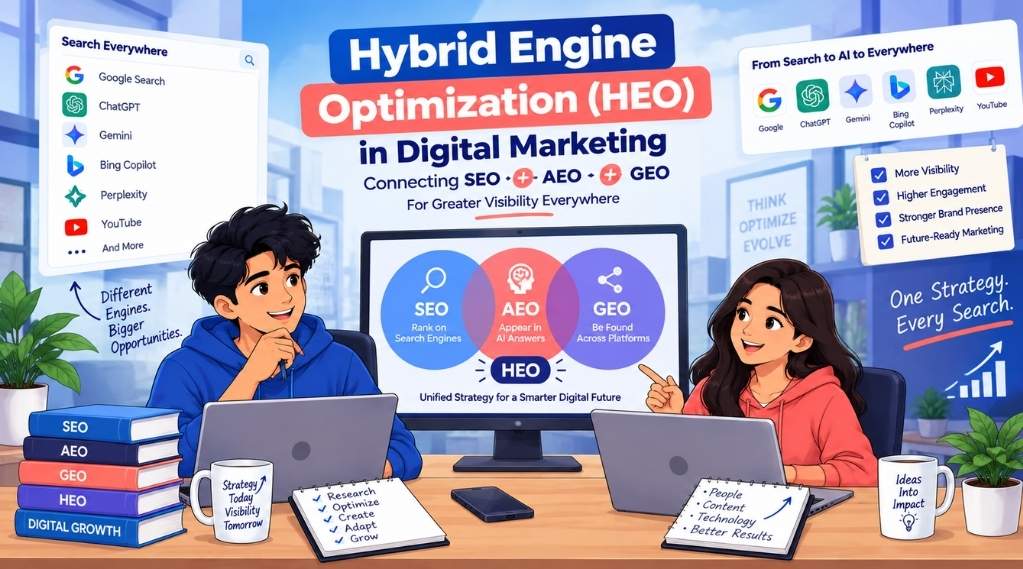
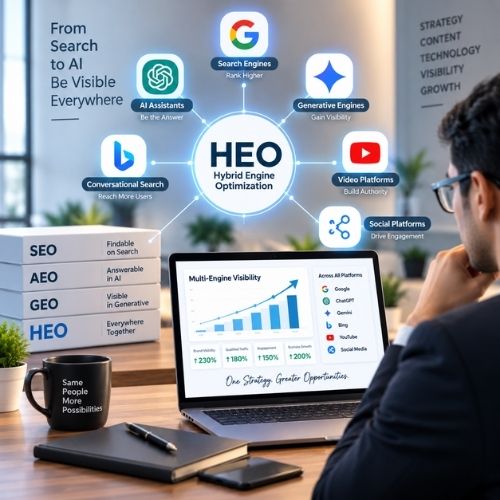
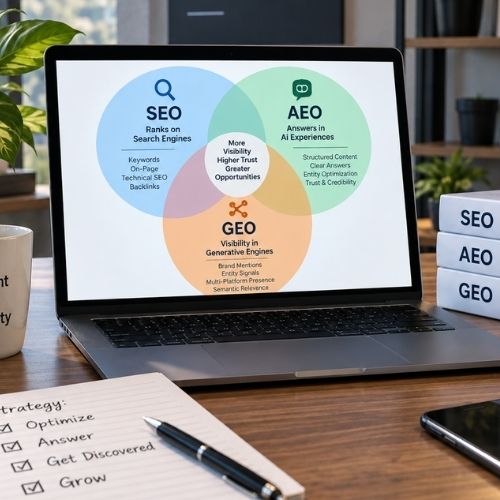
Hybrid Engine Optimization (HEO) is a broader digital visibility strategy that combines SEO, AEO and GEO with strong content, technical website optimization, brand information and other digital signals.
SEO helps pages appear in traditional search results.
AEO structures content to answer specific user questions clearly.
GEO focuses on making information easier for generative AI and AI-powered search systems to understand and reference.
HEO brings these approaches together instead of relying on only one search channel.
Businesses can use HEO to strengthen organic visibility, answer-based discovery and AI-assisted brand discovery.
HEO Services in Delhi can be useful for companies targeting Delhi and nearby markets through local and digital search.
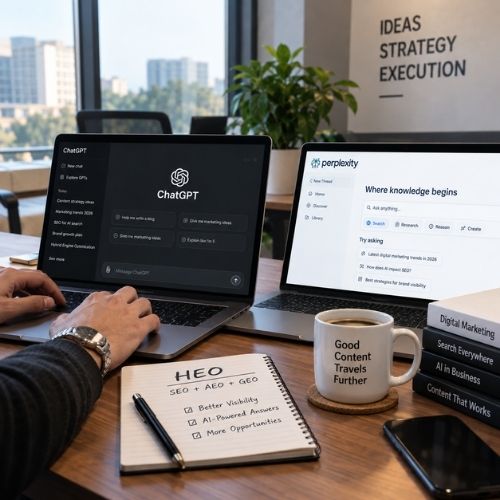
HEO Services in Delhi are designed for businesses that want their online presence to work across more than one type of search experience. Search behaviour has moved beyond traditional blue links. People now use Google Search, AI Overviews, ChatGPT, Perplexity, Bing and other answer-driven platforms to find businesses, compare services, understand solutions and make purchasing decisions.
Hybrid Engine Optimization (HEO) brings together different optimization practices to help a business remain visible across these changing discovery channels. Instead of treating SEO, Answer Engine Optimization (AEO) and Generative Engine Optimization (GEO) as completely separate activities, HEO connects them through one broader digital marketing strategy.
For businesses operating in competitive markets such as Delhi, this approach can be particularly useful. A potential customer may find a service page through Google, ask an AI platform for recommendations, read a business review, check a company website and then contact the provider. HEO focuses on building a consistent and useful presence throughout that journey.
What Is Hybrid Engine Optimization?
Hybrid Engine Optimization is a digital marketing approach that considers how people discover information across traditional search engines and AI-powered answer platforms.
Traditional SEO generally focuses on improving a website’s ability to rank for relevant search queries. That remains an important part of digital visibility. However, search experiences are becoming more diverse. Search engines can now provide direct answers, summaries and recommendations without requiring users to visit several websites.
This creates a wider optimization requirement.
A business needs content that is:
Easy for search engines to crawl and understand
Relevant to the actual search intent
Structured around useful questions and answers
Supported by clear business information
Written with subject-matter depth
Consistent across important online properties
Suitable for traditional search and AI-assisted discovery
HEO addresses these requirements as part of one connected strategy.
It does not mean creating a separate piece of content for every platform. The stronger approach is to build a reliable information ecosystem around the business and its services.
Why HEO Matters for Digital Marketing
Digital marketing has traditionally placed a strong emphasis on rankings. Ranking for a valuable keyword can bring qualified visitors to a website, but visibility is no longer limited to the standard search results page.
The person may first search Google for a service. They may then ask an AI assistant about suitable agencies, compare different providers, check reviews, visit websites and look for specific services or locations.
Each interaction creates a different opportunity for a brand to be visible.
A business that focuses only on keyword rankings may miss some of these opportunities. HEO takes a wider view by improving the information available to search engines, answer engines and generative systems.
This makes HEO particularly relevant for service-based companies where customers often research before making contact.
The Relationship Between SEO, AEO and GEO
HEO is closely connected with three important optimization disciplines: SEO, AEO and GEO.
They have different purposes, but they overlap in several areas.
SEO: Visibility in Traditional Search
Search Engine Optimization remains the foundation.
SEO helps a website communicate its relevance and value to search engines through areas such as:
Keyword research
Search intent analysis
Technical SEO
On-page optimization
Internal linking
Content quality
Website architecture
Local SEO
Authority and reputation signals
For example, a company offering digital marketing services in Delhi may create a dedicated service page targeting relevant commercial queries.
The objective is not simply to place the keyword repeatedly on the page. The page should explain the service, address customer concerns, demonstrate expertise and provide a clear next step.
AEO: Providing Direct Answers
Answer Engine Optimization focuses on questions.
Users frequently search in conversational formats such as:
What is HEO?
How does HEO work?
What does an HEO agency do?
Is HEO different from SEO?
How can HEO improve digital visibility?
AEO encourages businesses to answer these questions clearly and directly.
Good AEO content generally avoids unnecessary introductions before reaching the answer. A concise explanation followed by useful supporting information gives both users and answer systems a clearer understanding of the topic.
FAQs, definitions, step-by-step explanations and question-based subheadings can all contribute to this approach when they genuinely serve the reader.
GEO: Visibility Across Generative Search
Generative Engine Optimization focuses on how information may be understood, summarized or referenced by AI-powered search and answer systems.
Platforms such as ChatGPT, Perplexity and AI-powered search experiences can synthesize information from multiple sources. Clear and consistent information therefore becomes increasingly important.
GEO can involve:
Building strong topical coverage
Providing factual and specific information
Demonstrating relevant expertise
Maintaining consistent company details
Creating useful service and location pages
Supporting claims with credible information
Structuring content clearly
Strengthening the overall digital footprint
There is no guaranteed formula that makes a business appear in an AI-generated response. Generative systems use complex retrieval, ranking and language-processing mechanisms. HEO should therefore focus on improving the quality and clarity of the information available rather than promising guaranteed AI mentions.
How HEO Brings These Strategies Together
SEO, AEO and GEO can work independently, but they become more useful when planned around the same business objectives.
For example, a service page can be developed with a commercially relevant keyword for SEO. The same page can answer common customer questions for AEO and provide detailed, structured business information that helps AI systems understand the service for GEO.
The result is one strong resource serving multiple discovery environments.
This is the central idea behind Hybrid Engine Optimization.
Rather than creating disconnected campaigns, the strategy connects:
A professional HEO campaign can cover several areas depending on the business, competition and target audience.
Search Intent and Topic Research
The first step is understanding what potential customers actually want.
Commercial searches usually indicate that the user is considering a service provider. Transactional searches go further and may indicate an intention to contact, inquire about, or purchase a service.
An HEO strategy should separate informational queries from commercial and transactional ones.
For example:
Informational: “What is generative engine optimization?”
Commercial: “GEO agency in Delhi”
Transactional: “Hire GEO services in Delhi”
Each query represents a different stage of the customer journey.
Service Page Optimization
Service pages should explain exactly what the company provides.
A strong page can cover:
Service overview
Business applications
Key deliverables
Process
Industries served
Location relevance
Common questions
Expected outcomes
Contact or enquiry options
This creates a useful destination for both visitors and search systems.
Content Development
HEO requires content that demonstrates genuine topical coverage rather than producing large quantities of similar articles.
A business can build a content cluster around its main services.
For example, an HEO campaign could cover:
HEO fundamentals
SEO vs AEO vs GEO
AI search optimization
Local search visibility
Content optimization
Entity and brand information
Search intent
Technical website quality
AI search behaviour
Frequently asked customer questions
The subjects should connect naturally rather than existing as isolated posts.
Local Search Optimization
For companies serving Delhi customers, local relevance matters.
Business information should remain consistent across the website and relevant online profiles. Location-specific service pages can also help when they provide genuinely useful local information instead of simply replacing a city name throughout an existing page.
For example, a company targeting Delhi can develop useful content around the services it provides to businesses in the region, the industries it serves and the types of projects it handles.
Technical Website Optimization
Content cannot perform effectively when a website has serious technical problems.
HEO can therefore include technical considerations such as:
Crawlability
Indexability
Page speed
Mobile usability
Internal linking
Website architecture
Structured content
Metadata
Canonicalization
Broken links
Content accessibility
Technical SEO continues to provide the foundation for discoverability.
HEO and AI Overviews
Google’s AI-powered search experiences have changed how some users interact with search results.
Instead of receiving only a list of links, users may receive an AI-generated overview followed by supporting sources and additional search options.
This does not eliminate the importance of SEO. It increases the value of having useful, authoritative and well-structured content.
Businesses should focus on answering relevant questions comprehensively while maintaining strong technical and content foundations.
There is no ethical shortcut for forcing a website into an AI Overview. The practical strategy is to make the content useful enough to deserve consideration by search systems.
HEO for ChatGPT and Perplexity
AI platforms such as ChatGPT and Perplexity can help users research companies, services and topics.
When a user asks an AI system for information about a particular service, the system may rely on available information from websites and other sources depending on the platform, query and browsing or retrieval capabilities.
This makes brand information important.
A business should maintain clear information about:
Who the company is
What services it provides
Where it operates
Which industries it serves
What makes its services different
Relevant experience and expertise
Contact and business information
Consistency matters because conflicting information across different sources can make a business harder to understand.
How Bing Fits Into an HEO Strategy
Bing remains an important part of the broader search ecosystem, particularly because Microsoft’s search and AI products are increasingly connected.
A technically healthy website, well-structured content and clear business information can support visibility across search environments.
HEO should therefore avoid focusing exclusively on one platform.
The goal is not to chase every algorithm update. It is to build a website and digital presence that communicate the business clearly to both users and search technologies.
HEO Is More Than Adding AI Keywords
One common misunderstanding is that HEO means adding words such as “AI,” “ChatGPT” or “GEO” to website pages.
That is not an effective strategy.
Search engines and AI systems need meaningful information, not keyword repetition.
For instance, a page titled “AI SEO Services” does not automatically become valuable because it mentions AI throughout the copy.
The page should explain:
What the service actually does
Which problems it addresses
Who it is designed for
How the process works
What the business provides
Which related questions customers have
Why the information can be trusted
That is where HEO becomes a strategic discipline rather than another keyword exercise.
Content Structure Has a Bigger Role
A well-planned page makes information easy to identify.
Useful structures can include:
Clear Definitions
Explain important concepts early.
Question-Based Sections
Address realistic customer questions instead of manufacturing questions solely for SEO.
Short Direct Answers
Follow the question with a concise answer before providing additional context.
Supporting Details
Use examples, explanations and relevant facts to establish depth.
Relevant Internal Links
Connect related services and educational resources so users can continue their research.
Strong Business Context
Make it clear what the company does and who can benefit from its services.
This structure can support both human readers and automated systems attempting to understand a page.
HEO and Commercial Search Intent
For businesses investing in digital marketing, traffic alone is not the main objective.
A page may receive thousands of visitors but generate few enquiries if the visitors have no intention of purchasing.
HEO therefore needs to consider the commercial journey.
Someone searching for:
“What is HEO?”
may still be learning.
Someone searching for:
“HEO agency in Delhi”
is closer to evaluating providers.
A query such as:
“HEO Services in Delhi”
can indicate a stronger commercial requirement, particularly when the user is looking for a company that can provide the service.
Content targeting these searches should provide enough information to help the visitor make an informed decision without turning every paragraph into an advertisement.
Turning HEO Traffic Into Enquiries
Visibility is only one part of digital marketing.
Once a potential customer reaches a website, the next step should be clear.
Depending on the business, this could include:
Requesting a consultation
Calling the company
Sending an enquiry
Requesting a proposal
Booking a discussion
Reviewing service details
The landing page should support that action naturally.
A commercial HEO strategy should therefore connect search visibility with conversion-focused website content.
Why Professional HEO Strategy Requires Ongoing Work
Search behaviour changes, competitors publish new content and search engines continuously improve their systems.
A one-time optimization project can improve the foundation, but long-term visibility generally requires ongoing attention.
This may include:
Publishing new useful content
Updating older pages
Monitoring search performance
Reviewing changing search intent
Improving underperforming pages
Expanding topical coverage
Checking technical issues
Maintaining business information
Reviewing competitors
Studying conversion data
The exact activity level depends on the industry and business goals.
Choosing HEO Services in Delhi
When evaluating an HEO service provider, businesses should look beyond promises of rankings or guaranteed AI visibility.
A capable provider should be able to explain:
What will be optimized? The answer should cover more than keywords.
Which search intents are being targeted? Informational, commercial and transactional queries should have different roles.
How will SEO, AEO and GEO work together? The strategy should connect these areas instead of treating them as unrelated services.
How will results be measured? Organic visibility, qualified traffic, enquiries and other meaningful business metrics are more useful than vanity numbers alone.
How will the strategy evolve? Search behaviour changes, so the campaign should have room for testing and refinement.
For companies evaluating HEO Services in Delhi, Sync Soft Solution can structure the work around the company’s business objectives, target audience and service priorities rather than applying the same content formula to every website.
Common HEO Mistakes to Avoid
Treating HEO as a Replacement for SEO
SEO remains an important part of search visibility. HEO expands the scope; it does not make SEO irrelevant.
Creating Content Only for AI
Content written purely to influence AI systems often becomes unnatural and less useful for human readers.
Repeating Keywords
Excessive repetition can make content difficult to read and does not create genuine topical authority.
Publishing Similar Location Pages
Creating near-identical pages for Delhi, Gurgaon, Noida and other locations with only the city name changed can result in weak content.
Ignoring Technical SEO
High-quality writing cannot compensate for major crawlability, indexing or usability problems.
Making Unsupported AI Visibility Claims
No legitimate provider can guarantee that a particular AI platform will mention a business for every relevant query.
Forgetting Conversion Intent
Getting visitors is useful only when the website gives qualified prospects a logical next step.
A Practical HEO Workflow
A typical campaign can follow a straightforward sequence.
1. Audit the Existing Digital Presence
Review the website, content, technical setup, local signals and existing search visibility.
2. Map Search Intent
Identify the questions, commercial searches and transactional queries that matter to the business.
3. Build the Content Architecture
Plan service pages, supporting articles, FAQs and internal connections.
4. Improve Core Website Pages
Optimize important service, location and business-information pages.
5. Strengthen Answer-Focused Content
Add clear explanations for genuine customer questions.
6. Improve Generative Search Readiness
Make business information specific, consistent, well-structured and supported by useful topical content.
7. Monitor Performance
Review rankings, organic traffic, enquiries and relevant search visibility.
8. Refine the Strategy
Expand successful topics, improve weak pages and update content as search behaviour changes.
The Future of Digital Visibility Is More Integrated
The distinction between search engines and answer engines is becoming less rigid.
A person can start with a Google search, continue through an AI-generated answer, visit a company website and finally contact a business. Another person may begin with an AI assistant and never use a conventional search result in the same way.
That does not mean traditional SEO is disappearing.
It means digital marketing strategies need to account for more ways in which information is discovered and evaluated.
Hybrid Engine Optimization provides a framework for doing that.
For service businesses, the strongest approach is not to produce separate content for every new platform. It is to build a clear, authoritative and technically sound digital presence that can serve users wherever discovery takes place.
Final Thoughts
Hybrid Engine Optimization combines the strengths of SEO, AEO and GEO into a broader approach to digital visibility. It considers traditional search rankings, direct answers, AI-assisted discovery, local presence, website quality and the information customers use before contacting a business.
For companies operating in competitive markets, HEO Services in Delhi can provide a practical way to align website content with the changing search journey.
The foundation remains simple: understand what customers need, create genuinely useful information, structure it clearly, maintain a technically sound website and make the business easy to understand across relevant digital channels.
That approach gives SEO, AEO and GEO a common purpose: helping the right customer find the right business and take the next step with confidence.
Frequently Asked Questions About HEO
What are HEO Services in Delhi?
HEO Services in Delhi refer to digital optimization services designed to improve a business’s visibility across traditional search engines, answer-focused search experiences and AI-powered discovery platforms. These services may combine SEO, AEO, GEO, content optimization, technical improvements, and local search strategies.
Is HEO the same as SEO?
No. SEO primarily focuses on improving visibility in traditional search engines. HEO is a broader framework that can incorporate SEO along with AEO, GEO, and other digital visibility practices.
How is HEO connected with AEO?
AEO focuses on helping content provide clear answers to user questions. HEO incorporates this answer-focused approach alongside traditional SEO and generative search optimization.
What is the difference between HEO and GEO?
GEO focuses specifically on optimizing a brand’s information and content for generative AI and AI-powered search experiences. HEO is broader and can include GEO together with SEO, AEO, local search and other digital visibility activities.
Can HEO help with AI Overviews?
A strong HEO strategy can improve the quality, relevance, and structure of website information, which may support broader search visibility. However, no service provider can guarantee inclusion in Google’s AI Overviews for specific queries.
Does HEO work with ChatGPT and Perplexity?
HEO can prepare a business’s online information to be clearer and more useful for AI-assisted discovery. Whether a particular platform mentions or cites a business depends on its systems, sources, query and other factors.
Do businesses still need SEO after adopting HEO?
Yes. SEO remains an important foundation. HEO extends the optimization strategy to additional discovery and answer environments rather than replacing conventional SEO.
Who can benefit from HEO?
Service businesses, professional firms, local companies, agencies, B2B providers and other organizations that depend on online discovery can potentially benefit from an HEO strategy. The appropriate approach depends on the company’s audience, market, and objectives.
How long does HEO take to show results?
There is no universal timeframe. Results depend on the website’s existing authority, competition, technical condition, content quality, target queries, and the scope of the campaign. Search visibility should be monitored over time rather than judged from a single short-term change.
What should I check before hiring an HEO agency?
Review the provider’s approach to SEO, AEO, GEO, technical optimization, content quality and measurement. Ask how they connect these areas with commercial objectives and qualified enquiries rather than focusing only on rankings or traffic.
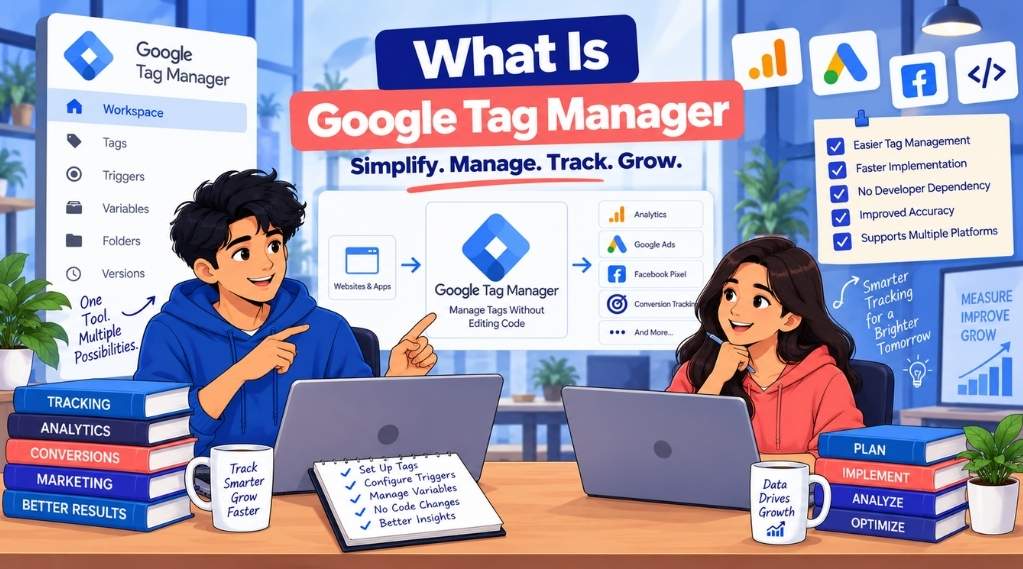
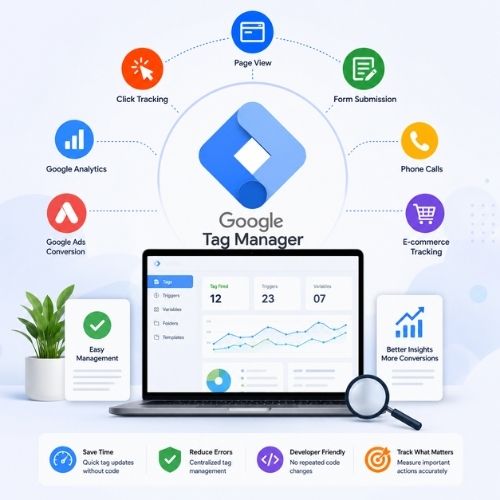
Google Tag Manager is a tag management system that allows businesses to add, update, and manage website tracking codes without repeatedly editing the website’s source code. It is widely used for implementing Google Analytics, Google Ads conversion tracking, remarketing tags, Meta Pixel, event tracking, and other third-party scripts.
For businesses investing in SEO services, Google Tag Manager helps measure user behavior, conversions, form submissions, button clicks, and other meaningful actions that influence marketing decisions. A well-planned tracking setup can simplify ongoing management and give marketing teams clearer visibility into the website data that supports business decisions.
For companies planning to improve tracking and digital marketing performance, Syn Soft Solution can help with Google Tag Manager setup, event tracking, conversion measurement, and related SEO and analytics requirements.
Google Tag Manager Explained
Google Tag Manager is a free tag management platform developed by Google. It provides a central place where website owners and marketers can manage tracking scripts, measurement codes, and other tags without making direct code changes every time a new tracking requirement is introduced.
Businesses often rely on multiple tracking tools to measure different website activities. Depending on their marketing goals, they may need to track:
Google Analytics tracking
Google Ads conversion tracking
Form submission tracking
Phone call click tracking
Meta Pixel
Remarketing tags
Scroll tracking
Button click tracking
Third-party marketing tools
Without a tag management system, adding or modifying these scripts may require changes to the website’s code. Google Tag Manager provides a more organized method for managing many of these tracking requirements.
The platform works through a container installed on the website. Once the container code is properly added, authorized users can manage supported tracking configurations through the Google Tag Manager interface.
This setup simplifies website tracking and gives businesses a more organized way to manage multiple marketing campaigns, tracking activities, and digital initiatives.
Why Google Tag Manager Matters for Business Websites
Effective tracking helps businesses understand visitor behavior and make informed marketing decisions. Without accurate data, it can be challenging to measure the results of advertising, content marketing, and SEO services or identify which actions visitors take on the website.
A visitor may:
Submit an inquiry form
Click a phone number
Request a quotation
Download a brochure
Click a WhatsApp button
Add a product to the cart
Complete a purchase
Visit important service pages
Google Tag Manager can help businesses measure these interactions.
Event tracking allows businesses to look beyond basic page views and measure important actions that may lead to inquiries, leads, and conversions. Event tracking allows businesses to look beyond basic page views and measure important actions that may lead to inquiries, leads, and conversions.
This information can support better decisions regarding SEO, paid advertising, website improvements, and marketing budgets.
How Google Tag Manager Works
Google Tag Manager is built around several important components. Understanding these components makes it easier to see how website tracking is configured.
Tags
Tags are pieces of code or tracking configurations that send information to third-party platforms.
Common examples include:
Google Analytics tags
Google Ads conversion tags
Remarketing tags
Meta Pixel
Conversion tracking scripts
A tag performs a specific tracking or marketing-related function.
Triggers
Triggers set the rules for when a tag fires.
For example, a trigger can activate when a visitor:
Loads a page
Clicks a button
Submits a form
Scrolls to a particular point
Clicks a telephone number
Completes a purchase
This helps businesses track meaningful user interactions and collect more relevant website data.
Variables
Variables provide additional information that can be used by tags and triggers.
They can capture useful details, such as:
Using variables can make tracking setups more adaptable and easier to customize.
Container
The container is the main structure used to manage Google Tag Manager configurations for a website.
The website receives a container code, which is installed in the appropriate areas of the site. Users can manage and update these configurations from within their Google Tag Manager account.
What Can You Track With Google Tag Manager?
One of the main advantages of Google Tag Manager is its ability to support detailed website interaction tracking.
Depending on the website and business requirements, tracking may include several important actions.
Form Submissions
Lead generation websites often depend heavily on inquiry forms.
Tracking form submissions can help businesses understand:
Which pages generate the most leads
Which marketing channels bring inquiries
Which campaigns produce conversions
How visitors interact with contact forms
This information can be useful for companies evaluating their SEO services and paid marketing performance.
Phone Number Clicks
Many service-based businesses receive inquiries through phone calls.
A visitor clicking a phone number on a mobile device can be tracked as an important conversion action. This can provide additional insight into lead generation that may not appear in standard form submission reports.
WhatsApp Button Clicks
WhatsApp has become a common communication channel for businesses.
Tracking WhatsApp button clicks can help determine how many website visitors initiate conversations through the platform.
Button Clicks
Lots of business sites put action buttons on the page. These buttons nudge visitors to do things like
Get a Quote
Contact Us
Book a Consultation
Request Information
Download Now
Google Tag Manager can be configured to measure interactions with these buttons.
Scroll Behavior
Scroll tracking can provide insight into how far visitors move through a page.
For very long pages, scroll tracking can tell you if people reach the main sections. It can also reveal when they quit early and end up skipping the useful parts.
Video Engagement
Video tracking helps businesses understand how visitors engage with website videos, from starting playback to pausing or watching the content completely.
This can be useful for analyzing engagement with product demonstrations, company presentations, or service-related videos.
E-Commerce Activity
For online stores, Google Tag Manager can support tracking related to:
Product views
Add-to-cart actions
Checkout activity
Purchases
Revenue
Proper e-commerce tracking can provide valuable information for advertising and website optimization.
Google Tag Manager and Google Analytics: What Is the Difference?
Although Google Tag Manager and Google Analytics both support website measurement, they perform different functions.
Google Analytics is primarily used to collect and analyze website data.
Google Tag Manager helps handle and roll out tracking setups. It is also used for Google Analytics tags.
A simple way to understand the relationship is
Google Tag Manager lets you set up and handle the tracking code. Google Analytics then looks at the data from what people do on your site.
The two platforms can work together, but they are not the same product.
You should set things up so the tracking setup gets checked. Make sure the test confirms the data comes in the right way.
How Google Tag Manager Supports SEO Services
SEO performance is not limited to keyword rankings and organic traffic.
A website may receive substantial traffic but generate very few inquiries. Another website may receive fewer visitors but produce more qualified leads.
This is why measurement matters.
When combined with professional SEO services, Google Tag Manager can help businesses understand what organic visitors do after reaching the website.
For example, tracking can help measure:
Organic enquiry submissions
Phone clicks from organic visitors
Service page engagement
CTA interactions
Brochure downloads
Conversion paths
Important user events
This information can help SEO professionals identify which pages contribute to business results.
Instead of judging SEO by traffic alone, a business can look at what organic visits lead to. This includes inquiries, potential leads, and other key actions.
For businesses focused on commercial growth, this provides a more practical way to evaluate digital marketing performance.
Google Tag Manager Setup for Business Websites
A proper Google Tag Manager setup involves more than simply placing the container code on a website.
The tracking strategy should be based on the business’s goals.
For example, a lead generation website may prioritize:
Contact form submissions
Phone calls
Email clicks
WhatsApp inquiries
Quote requests
An e-commerce website may focus on:
Product views
Add-to-cart events
Checkout activity
Purchases
Revenue tracking
The setup should reflect the actions that actually matter to the business.
This is where professional implementation can be valuable. Incorrect configurations may result in duplicate events, inaccurate conversion data, missing transactions, or misleading reports.
Syn Soft Solution can assist businesses with structured Google Tag Manager implementation based on their website, marketing activities, and conversion requirements.
Important Benefits of Using Google Tag Manager
Faster Tracking Management
Marketing requirements often change.
A business may launch a new advertising campaign, introduce a new service, or add a conversion action to its website.
Google Tag Manager can provide a central environment for managing many tracking configurations.
Reduced Dependence on Frequent Code Changes
Certain tracking updates can be managed without requesting a new website deployment for every minor tracking adjustment.
Nevertheless, developers still play an important role in website tracking. More complex implementations, data layer configurations, website modifications, and advanced tracking requirements may require technical expertise and professional support.
Better Conversion Measurement
Businesses can track the actions that contribute to inquiries and sales.
This can provide clearer insight into the effectiveness of marketing campaigns.
Improved Marketing Decisions
Accurate tracking helps businesses understand where leads are coming from.
The information can support decisions involving:
SEO investment
Google Ads campaigns
Landing page improvements
Content development
Conversion optimization
Centralized Tag Management
Managing multiple tracking scripts directly within website code can become difficult over time.
Google Tag Manager provides a more organized environment for maintaining supported tracking configurations.
Google Tag Manager for Google Ads Conversion Tracking
Businesses running paid advertising need to understand whether their campaigns are generating meaningful results and valuable customer actions.
Clicks alone do not always indicate campaign success.
Google Tag Manager helps businesses set up and manage Google Ads conversion tracking for important customer actions, such as:
Form submissions
Purchases
Quote requests
Phone clicks
Lead generation events
When conversion tracking is configured correctly, advertisers can evaluate campaign performance based on business actions rather than traffic alone.
This can be particularly important for companies with a commercial or transactional marketing strategy.
However, tracking should always be tested carefully. Incorrect implementation can affect reporting and make campaign optimization decisions less reliable.
Common Google Tag Manager Implementation Mistakes
Google Tag Manager offers flexibility, but poor configuration can create measurement problems.
Tracking the Same Event Multiple Times
Duplicate event tracking can result in inflated conversion numbers.
A form submit can be logged two times, once from each trigger.
Regular testing can help prevent this issue.
Using the Wrong Trigger Conditions
Triggers should be specific enough to identify the intended action.
A poorly configured trigger may activate on interactions that are not genuine conversions.
Publishing Changes Without Testing
Google Tag Manager includes testing and preview capabilities for a reason.
Before anything goes live, check the changes. Make sure the right tags turn on at the right moment.
Tracking Actions That Do Not Support Business Goals
Not every website interaction needs to be treated as a conversion.
A useful tracking strategy focuses on actions connected to genuine business objectives.
Ignoring Data Accuracy
Analytics decisions depend on the quality of collected data.
Businesses should periodically review their tracking setup to identify broken tags, duplicate events, or missing conversions.
When Should a Business Consider Professional Google Tag Manager Services?
A basic tracking setup may be manageable for some websites. Once the tasks feel more complicated to keep up with, getting support from experts can make it simpler to monitor everything.
A business may consider professional assistance when it needs:
Advanced event tracking
Google Ads conversion tracking
GA4 implementation
E-commerce tracking
Custom event configuration
Data layer implementation
Cross-platform tracking
Conversion auditing
Tracking issue resolution
Professional support can also be useful when a business is already investing in SEO services or paid advertising and wants reliable conversion data for performance evaluation.
Your tracking plan should match what marketing is trying to do. Do not add an event just because you can track it.
Choosing the Right Google Tag Manager Setup Approach
The best implementation depends on the type of website and its commercial objectives.
Before configuring tags, it is helpful to identify:
What counts as a conversion
Which marketing channels require measurement
Which user actions matter most
What information needs to be passed to analytics platforms
Whether the website requires advanced e-commerce tracking
How conversions will be used for marketing decisions
For many businesses, the most effective approach begins with a tracking plan.
The plan should identify important conversion actions before tags and triggers are configured.
This helps avoid an unnecessarily complicated setup and makes future reporting easier to understand.
Syn Soft Solution can support businesses that need assistance with Google Tag Manager configuration alongside SEO services, website analytics, and digital marketing measurement.
Why Tracking Should Be Part of a Commercial SEO Strategy
Commercial SEO focuses on attracting visitors who may become customers.
Traffic by itself does not show if SEO work is actually helping the business grow.
A site might show up for useful search terms and still get visitors from search. Yet without conversion tracking, it is hard to tell what is working. You may not be able to spot which pages lead to the actions you want.
Which pages generate inquiries
Which keywords lead to business opportunities
Which landing pages perform effectively
Where visitors leave the conversion journey
Google Tag Manager can help connect website interactions with marketing measurement.
Using it alongside analytics and skilled SEO support can help you make better choices. You can judge content, landing pages, calls to action, and what to focus on in each campaign.
The objective is not simply to collect more data. The objective is to measure the actions that help a business evaluate marketing performance.
Final Thoughts
Google Tag Manager provides businesses with a structured way to manage website tracking and measure important visitor interactions.
From form submissions and phone clicks to advertising conversions and e-commerce activity, a properly configured setup can provide useful information about how visitors engage with a website.
For companies investing in SEO services and digital marketing, accurate tracking can help connect traffic with measurable business actions. This makes it easier to evaluate campaigns and identify areas that may require improvement.
A carefully planned implementation is important. To track well, you need to tie it to the goals of the business. The results should help you see real patterns in how customers behave. You can keep things reliable by running checks often and doing regular reviews of results. As marketing and website needs change, those steps help you stay accurate and support better choices.
Syn Soft Solution provides professional support for businesses that require assistance with Google Tag Manager setup, conversion tracking, website analytics, and SEO-focused performance measurement.
Frequently Asked Questions
What is Google Tag Manager used for?
Google Tag Manager lets teams set up and run website tracking. It supports analytics tags, conversion tracking, remarketing tags, and event tracking.
Is Google Tag Manager free to use?
Yes, Google Tag Manager is available as a free platform for managing website tags and tracking configurations.
Do I need Google Tag Manager for SEO services?
Google Tag Manager is not required for SEO. Still, it can help you measure SEO results. It can log what organic visitors do on your site. This lets you see key actions clearly.
What is the difference between Google Tag Manager and Google Analytics?
Google Tag Manager is used to set up and run tracking codes. Google Analytics takes the data from the site and looks at how people behave there.
Can Google Tag Manager track form submissions?
Yes. Google Tag Manager can be configured to track form submissions and send event data to supported analytics and advertising platforms.
Can Google Tag Manager track phone number clicks?
Yes. Phone number clicks can be configured as events, allowing businesses to measure visitors who interact with click-to-call links.
Is professional Google Tag Manager setup important?
Professional setup can be useful for businesses with advanced tracking requirements, advertising campaigns, e-commerce websites, or complex conversion journeys. Proper configuration and testing can help reduce tracking errors and improve data accuracy.
Can Google Tag Manager help measure Google Ads conversions?
Google Tag Manager can be used to set up Google Ads conversion tracking. It tracks actions like form submissions, purchases, and other conversion events you choose.
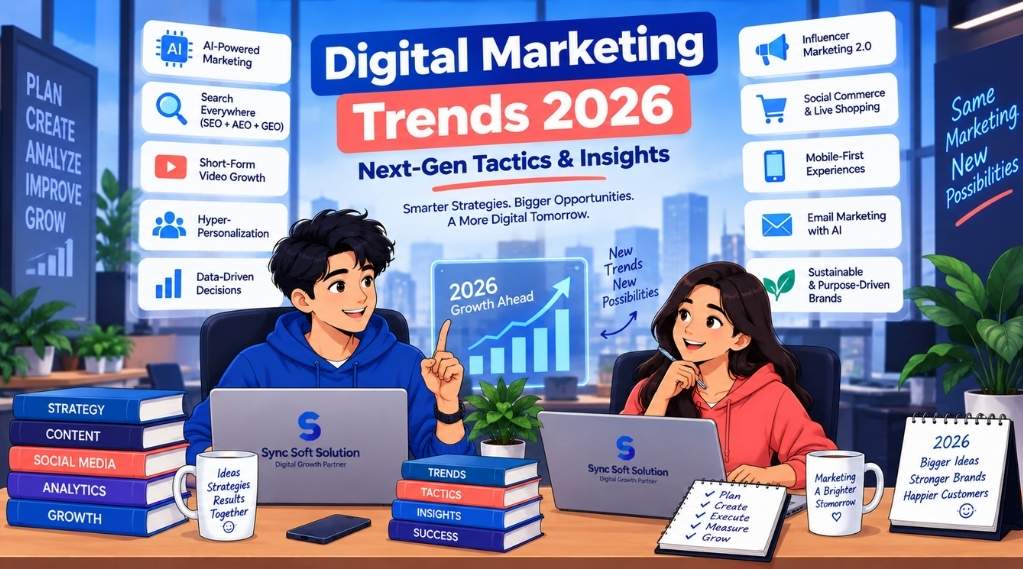
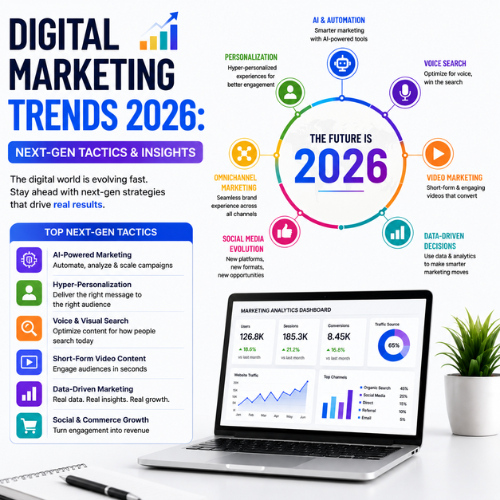
TL;DR: : Digital Marketing Trends 2026 are shaping how businesses use AI, data, privacy, content, and automation to improve marketing performance. Businesses should avoid chasing every new trend and instead build a strong marketing foundation with reliable data, clear customer insights, useful content, and measurable goals. The brands that combine AI-powered efficiency with human creativity, trust, and customer-focused experiences will be better positioned for sustainable growth.
Marketers should prioritize a clear, privacy-aware data foundation before chasing every new platform or tool. The Latest Digital Marketing Trends all point in the same direction: AI can improve speed and personalization, but it works best when customer data, content workflows, analytics, and consent practices are already organized. Google’s marketing guidance continues to emphasize first-party data, privacy-first measurement, tagging, and consent tools as core foundations for growth in a changing privacy landscape.
That means 2026 planning should start with practical questions. Do you know which channels create qualified leads? Are your customer segments based on reliable data? Can your team measure performance across search, social, email, paid media, and your website without depending on guesswork? If the answer is unclear, your first trend is not “more AI”—it is better marketing infrastructure.
AI becomes the operating layer of marketing
AI is no longer just a content assistant or chatbot add-on. In the Future of Digital Marketing, AI increasingly supports campaign planning, audience analysis, bidding, reporting, creative testing, and customer journey optimization. Gartner’s 2026 marketing predictions highlight how AI agents and GenAI-powered personal technology are reshaping channels, execution, content, and organizational design.
For business owners and marketing teams, the practical lesson is simple: use AI where it improves decisions, not where it removes judgment. AI can help summarize performance, suggest audience clusters, identify content gaps, and generate creative variations. But brand positioning, customer empathy, offer strategy, and ethical choices still need human leadership.
Smart Digital Marketing Strategies 2026 will often include:
AI-assisted keyword and topic research to identify demand patterns faster.
Automated reporting that turns raw data into clearer campaign insights.
Predictive audience modeling to guide content, ads, and email journeys.
Creative testing across headlines, visuals, landing pages, and calls to action.
Human review processes to keep messaging accurate, respectful, and on-brand.
Search expands beyond traditional results
Search is becoming more conversational, visual, and AI-assisted. Customers may discover a brand through a search engine, an AI-generated summary, a YouTube result, a social platform, a map listing, or a product recommendation—sometimes within the same journey. Google has also described AI-powered tools as always-on strategic partners that connect data, decisions, bidding, budgeting, and measurement across products.
This changes how businesses should think about SEO. Ranking for keywords still matters, but it is not enough. Brands need content that answers questions clearly, demonstrates expertise, supports comparison, and gives search systems enough context to understand relevance.
To prepare for Next-Gen Digital Marketing search behavior, focus on:
Answer-first content: Put the clearest answer near the top of each page.
Topical depth: Build clusters around services, problems, industries, and buyer questions.
Structured clarity: Use helpful headings, concise explanations, internal links, and descriptive media.
Trust signals: Show real experience, transparent processes, service details, and customer-friendly policies.
Multichannel discovery: Repurpose strong content into short videos, social posts, email insights, and sales enablement assets.
How is privacy changing digital strategies?
Privacy is changing digital strategies by making consent, first-party data, and transparent personalization essential. Consumers expect relevant experiences, but they also want control over how their information is used. Privacy regulations and platform changes have also made cross-channel data management and performance measurement more challenging for businesses.
This is why brands should avoid building campaigns around data they cannot reliably collect, explain, or protect. Instead, create value exchanges that customers understand. Offer useful downloads, consultations, account features, loyalty benefits, newsletters, or personalized recommendations in return for willingly shared information.
A privacy-aware marketing checklist for 2026 includes:
Make forms simple and clear about what users receive.
Keep consent language understandable, not buried in jargon.
Segment audiences by meaningful behavior and intent, not invasive assumptions.
Review analytics setup regularly so reports remain useful as platforms change.
Align marketing, sales, and customer service data so teams see the same customer journey.
Content gets more human, specific, and useful
As AI-generated content becomes common, generic content becomes easier to ignore. The brands that win attention in 2026 will sound specific, helpful, and credible. Gartner has reported consumer caution around GenAI in consumer-facing content, which reinforces the need for authenticity, human oversight, and brand trust.
This does not mean businesses should avoid AI. It means AI should support stronger content, not replace real insight. A helpful blog post, service page, or landing page should explain the problem, show the reader what to do next, and make the brand’s point of view clear.
Strong content in 2026 often includes:
Practical examples instead of vague claims.
Clear explanations of process, pricing factors, timelines, or expectations where appropriate.
Expert commentary from the team behind the service.
Visuals that simplify complex ideas.
Calls to action that match the reader’s stage, from “learn more” to “book a consultation.”
Social, creators, and community influence buying decisions
Digital trends in social media are shifting from polished broadcasting to participation. Short-form video, creator partnerships, niche communities, live shopping, and social search all influence how people compare brands. The opportunity is not simply to post more often; it is to show up with content that feels native to each platform.
For many businesses, that means turning expertise into small, repeatable formats. A software company might share product walkthroughs. A service provider might answer common client questions on video. A local brand might highlight behind-the-scenes work, customer education, or community involvement. These formats help people understand not only what you offer but also how you think.
Measurement becomes a growth discipline
Digital Marketing Insights 2026 are only valuable when teams can act on them. Instead of reporting every possible metric, marketers should connect performance data to business outcomes: qualified leads, sales conversations, customer acquisition cost, retention, repeat purchases, and lifetime value. Think with Google has described measurement as a modern growth engine, especially as AI-powered decision systems become more important for marketing teams.
A better measurement approach starts with fewer, clearer questions. Start by identifying which channels bring the best-fit customers. Next, examine which pages convert visitors into leads and determine which messages increase trust. Finally, focus on campaigns that create revenue rather than simply generating clicks. When reporting answers these questions, marketing becomes easier to improve.
Turning 2026 trends into action
The most effective Digital Marketing Strategies 2026 will not be built from disconnected experiments. They will combine strategy, content, technology, and measurement into a repeatable system. Start by auditing what you already have, then decide which changes will create the biggest improvement.
A simple action plan:
Review your website, analytics, SEO visibility, and conversion paths.
Identify where AI can save time or improve decision-making.
Strengthen first-party data collection and consent practices.
Refresh content so it answers real customer questions clearly.
Test creative, offers, and landing pages in small cycles.
Build reporting around revenue-related outcomes, not vanity metrics.
Digital marketing trends 2026 are not about replacing proven fundamentals. They are about upgrading those fundamentals for a faster, more intelligent, and more privacy-conscious digital environment.
The takeaway for future-ready brands
The Future of digital marketing belongs to brands that can be both advanced and trustworthy. AI, automation, search evolution, privacy-first data, and human-centered content all matter—but they work best when guided by a clear strategy. For businesses looking at Digital Marketing Trends 2026: Next-Gen Tactics & Insights, the smartest move is to build a marketing system that learns continuously, communicates clearly, and keeps the customer experience at the center.
Frequently Asked Questions
What are the biggest digital marketing trends in 2026? The biggest Digital Marketing Trends 2026 include AI-powered marketing, privacy-first strategies, first-party data, conversational and visual search, human-centered content, short-form video, social commerce, and data-driven measurement.
How will AI change digital marketing in 2026? AI will help businesses improve campaign planning, audience analysis, content creation, personalization, reporting, creative testing, and marketing automation. However, human strategy and brand judgment will remain important.
Why is privacy important in digital marketing in 2026? Privacy is important because customers expect more control over their personal information. Businesses should focus on clear consent, first-party data, transparent personalization, and responsible data practices.
Is SEO still important in 2026? Yes, SEO will remain important in 2026. However, businesses should optimize content for traditional search engines, AI-powered search experiences, conversational queries, visual discovery, and answer-focused content.
What type of content will perform best in 2026? Useful, specific, human-centered, and experience-based content will perform well. Businesses should focus on answering real customer questions, providing practical insights, using clear visuals, and demonstrating genuine expertise.
How can businesses prepare for Digital Marketing Trends 2026? Businesses should strengthen their website, SEO, analytics, first-party data strategy, content quality, and conversion tracking. They should also test AI and automation tools where these technologies can improve efficiency and decision-making.
Finding the right SEO partner can really change how people discover you, trust you, and end up choosing your business online. A good SEO company in Delhi does more than just chase rankings or do random tactics; it helps your website pull in the right visitors, match what customers actually mean when they search, and turn that attention into real business growth. This guide by Sync Soft Solution sort of breaks down what you should look for, what to avoid, and how to compare SEO experts in Delhi with confidence, even if it all sounds a bit overwhelming at first.
What should you look for in the best SEO company in Delhi?
The best SEO company in Delhi really should blend technical capability, solid content strategy, straightforward updates, ethical practices, and a real grasp of what you’re trying to accomplish with your business. Instead of selling instant outcomes, a good team will take time, review your website, map what your competitors are doing, understand your target audience, and check your current search presence, then suggest a realistic roadmap. You’ll know they’re the right fit if they seem more into steady progress over time, not only sending monthly sheets full of confusing figures that don’t actually explain much.
SEO is not a single task; it’s more like a connected set of actions. That can include website audits, keyword research, content planning, on-page tweaks, technical troubleshooting, link earning, local discoverability, and performance tracking. A professional SEO company in Delhi should be able to break down how each part feeds into your bigger objectives, whether you’re chasing more inquiries, more footfall, better brand recognition, or leads that feel higher quality.
When comparing top SEO companies in Delhi, look beyond attractive packages. Ask how they diagnose problems, how they measure progress, and how they communicate when something is not working. A reliable agency will welcome practical questions because good SEO depends on clarity, patience, and consistent decision-making.
Why SEO matters for business growth in Delhi NCR
Delhi NCR is a competitive market across almost every industry, from local services and education to healthcare, real estate, technology, retail, and professional consulting. Customers often begin their buying journey on search engines, even when they eventually call, visit, compare, or ask for recommendations elsewhere. If your website does not appear for the right searches, your business may lose opportunities to competitors that are easier to find.
Professional SEO services help bridge that gap. They make your website more discoverable, easier to understand, and more useful for people searching for your products or services. This is why businesses often search for the best SEO company in Delhi NCR when they are ready to move from occasional traffic to a more structured online growth strategy.
Strong SEO also supports trust. When users repeatedly see your brand in relevant search results, useful blog posts, service pages, map listings, and local searches, they are more likely to view your business as active and credible. This does not happen overnight, but consistent search engine optimization services can build a digital foundation that keeps working over time.
The qualities that separate professional SEO services from basic packages
Many agencies offer SEO, but not all services are equal. Some focus only on surface-level tasks, while others build a complete strategy around your website, audience, and commercial priorities. If you want growth, you need more than a checklist.
A strong SEO partner usually brings these qualities:
Clear discovery process: They ask about your services, customers, location priorities, profit areas, and current marketing challenges before suggesting a plan.
Technical understanding: They can identify issues related to crawlability, indexing, site speed, mobile usability, broken pages, poor structure, duplicate content, and weak internal linking.
Keyword intent mapping: They do not simply target high-volume terms. They identify what users actually want when they search and match keywords to the right pages.
Content improvement: They understand how to make pages helpful, readable, persuasive, and aligned with search intent.
Local SEO knowledge: For Delhi NCR businesses, they know how important location relevance, Google Business Profile optimization, local landing pages, reviews, and consistent business information can be.
Transparent reporting: They explain rankings, traffic, leads, conversions, page improvements, and next steps in plain language.
Ethical methods: They avoid shortcuts that may create temporary movement but damage long-term trust and visibility.
Affordable SEO services in Delhi can still be professional, but affordability should not mean vague work, copied content, risky backlinks, or no accountability. A good agency will explain what is included, what is not included, and what level of effort is realistic for your budget.
Understand your own SEO goals before choosing an agency.
Before hiring an SEO company in Delhi, take time to define what business growth means for you. Some companies want more organic traffic, while others need local enquiries, e-commerce sales, appointment bookings, brand visibility, or better rankings for specific service pages. If your goals are unclear, it becomes harder to judge whether the agency is performing well.
Start by identifying your most important services or products. Then consider which locations matter most, which customers are most valuable, and what actions you want website visitors to take. For example, a local service business may care about phone calls and form submissions, while a B2B company may care more about qualified leads and consultation requests.
This step also helps you communicate better with SEO experts in Delhi. When an agency understands your priorities, it can recommend the right keyword strategy, content structure, and tracking setup. Without that clarity, even a technically correct SEO campaign may fail to support the outcomes you actually need.
How do you compare top SEO companies in Delhi fairly?
Compare SEO companies by looking at their process, transparency, communication style, relevant experience, reporting method, and ability to connect SEO work with business outcomes. Do not choose only by price or bold ranking promises. A fair comparison focuses on how well each agency understands your website, your audience, and the practical steps needed to improve visibility.
During your evaluation, ask each agency to explain how they would approach your project during the first few months. You are not looking for free consulting in detail, but you should expect a clear direction. A professional SEO company in Delhi might mention audit priorities, technical fixes, keyword research, content opportunities, local SEO improvements, and conversion-focused recommendations.
Use this checklist when comparing agencies:
Website audit approach Ask whether they review technical SEO, content quality, page structure, internal links, metadata, user experience, mobile performance, and analytics setup.
Keyword strategy Check whether they separate informational, commercial, local, and transactional keywords. Good keyword planning prevents your site from attracting visitors who are unlikely to become customers.
Content planning Find out whether they improve existing pages, create new service pages, suggest blog topics, and align content with user intent.
Local SEO capability If your customers are location-based, ask how they handle local search visibility, map listings, review signals, and city-specific landing pages.
Reporting and communication Reports should explain what changed, why it changed, what results were observed, and what will happen next. Data without interpretation is not helpful.
Ethical link-building Ask how they approach backlinks. Quality, relevance, and natural placement matter more than large numbers.
Conversion awareness SEO should not stop at traffic. Your pages should guide users toward calls, forms, purchases, bookings, or other meaningful actions.
If an agency can discuss these points clearly, it is more likely to deliver professional SEO services rather than generic monthly activity.
SEO Services That Support Long-Term Business Growth
Good website SEO services in Delhi begin with understanding how search engines and visitors interact with your website. A site may look professional but still struggle to attract the right audience if important pages are difficult to find, headings lack clarity, internal links are weak, or mobile performance needs improvement. A reliable SEO strategy addresses these issues and helps turn your website into a stronger business asset.
The process usually starts with a detailed SEO audit. This helps identify what is performing well, what is holding the website back, and which improvements should be prioritized first. Based on the findings, an SEO team can optimize page titles, meta descriptions, headings, URLs, content structure, images, internal links, and other technical elements. Building a strong technical foundation makes it easier for search engines to crawl, understand, and rank your website.
Creating Content That Builds Search Visibility
Content also plays an important role in sustainable SEO growth. Your service pages should clearly explain what your business offers, who you serve, the locations or markets you cover, and why potential customers should choose you. Well-planned blog content can answer genuine customer questions, provide useful guidance, and demonstrate your industry knowledge.
When technical SEO and helpful content work together, your website becomes easier for both search engines and visitors to understand. A professional SEO company in Delhi can help align these elements with your business goals, target audience, and long-term growth strategy.
Signs you are dealing with a reliable SEO partner
A reliable SEO partner is usually easy to identify by how they communicate. They do not hide behind jargon, and they do not treat SEO like a mystery. Instead, they explain the work in a way that helps you make better decisions.
Look for these positive signs:
They ask about your business model before discussing keywords.
They review your existing website before recommending a package.
They explain realistic timelines without making extreme promises.
They provide a clear scope of work.
They discuss both technical SEO and content quality.
They care about leads, inquiries, or conversions, not only rankings.
They share progress in understandable reports.
They are willing to adjust strategy based on data.
This type of approach matters because SEO is not a one-time setup. Search behavior changes, competitors improve their websites, and your own business priorities may shift. A dependable agency keeps reviewing, improving, and aligning the campaign with your goals.
Red flags to avoid when hiring an SEO company
Not every provider that claims to be the best SEO company in Delhi is the right choice for your business. Some may use aggressive sales language, unclear deliverables, or outdated methods. Choosing the wrong agency can waste time and make it harder to recover momentum later.
Be careful if you notice these warning signs:
Guaranteed number-one rankings: No agency can control search engine results completely, especially for competitive keywords.
No website audit: Without reviewing your website, an agency cannot responsibly recommend a meaningful strategy.
Secret methods: Ethical SEO can be explained. If the process is hidden, there may be a reason.
Cheap packages with unrealistic deliverables: Very low-cost plans may rely on automation, copied content, or poor-quality backlinks.
Only ranking reports: Rankings matter, but they are not the full picture. Traffic quality, conversions, page improvements, and business results matter too.
No discussion of content: SEO without helpful content is limited, especially in competitive markets.
Poor communication: If communication is weak before you sign, it is unlikely to improve after the project starts.
Affordable SEO services in Delhi can be valuable when they are transparent and realistic. The issue is not affordability itself; the issue is choosing a service that cuts the parts of SEO your website actually needs.
What questions should you ask before signing an SEO contract?
Before signing, ask questions that reveal the agency’s process, accountability, and understanding of your goals. The answers should help you see whether the company can offer strategic search engine optimization services or only routine tasks. A good agency will answer directly and explain what you can expect without overpromising.
Useful questions include:
What problems do you see on my current website?
Which SEO activities should be prioritized first and why?
How will you choose keywords for my business?
Will you improve existing pages or only create new content?
How do you approach local SEO for Delhi NCR searches?
What kind of reports will I receive?
Which metrics should we track besides rankings?
How often will we review progress?
What support will you need from my team?
How do you handle strategy changes if results are slower than expected?
Pay attention not only to the answers but also to the attitude. The right SEO experts in Delhi should sound practical, honest, and focused on problem-solving. They should be willing to explain trade-offs, such as why a competitive keyword may take time or why a service page needs stronger content before link-building begins.
The role of local SEO for Delhi NCR businesses
Local SEO is especially important for businesses that serve customers in specific areas of Delhi NCR. People often search with location-based intent, such as looking for a nearby service provider, consultant, clinic, showroom, institute, or agency. If your business depends on local visibility, general SEO alone may not be enough.
A local SEO strategy can include optimizing your Google Business Profile, keeping business details consistent across directories, encouraging genuine customer reviews, creating location-relevant pages, and improving content around service areas. It may also involve adding clear address details, service coverage, call buttons, and local trust signals to your website.
The best SEO company in Delhi NCR for a local business should understand how people search across different areas and how location intent affects content. A page targeting South Delhi, Gurugram, Noida, or broader Delhi NCR may need different wording, examples, and calls to action. Local relevance helps users quickly understand whether your business can serve them.
Content quality is central to sustainable SEO.
Search visibility is strongly connected to the usefulness of your content. If a page only repeats keywords but does not answer customer questions, it may fail to earn trust. Strong content explains your services clearly, handles objections, addresses common concerns, and guides readers toward the next step.
This is where a professional SEO company in Delhi should work like both a strategist and a communicator. Keyword research may show what people search for, but content strategy decides how to answer those searches in a helpful way. A service page, for example, should not simply say that you offer professional SEO services. It should explain what is included, who needs it, how the process works, and what the customer can expect.
Blog content also plays an important role. It can support users who are still researching, comparing options, or learning about a problem. Over time, useful content builds topical relevance and gives your website more opportunities to appear in search results. The key is to write for real people first while keeping search structure in mind.
Technical SEO keeps your website search-friendly.
Even excellent content can underperform if the technical foundation is weak. Search engines need to discover, crawl, understand, and index your pages efficiently. Users also expect websites to load smoothly, work well on mobile devices, and guide them without confusion.
Technical SEO may include fixing broken links, improving page speed, optimizing images, creating logical site architecture, managing redirects, improving internal linking, reviewing indexation, and making pages mobile-friendly. These tasks may not always be visible to customers, but they influence how well your website performs in organic search.
For business owners, the practical takeaway is simple: do not judge SEO only by published blogs or keyword lists. Ask whether the agency will review the technical health of your website. Reliable website SEO services in Delhi should include both visible content improvements and behind-the-scenes fixes.
Reporting should turn data into decisions.
SEO reporting should help you understand progress, not overwhelm you with charts. A useful report connects activity to outcomes. It explains what work was completed, what changed in performance, what insights were found, and what actions are planned next.
Good reporting may include organic traffic trends, keyword movement, important page performance, conversions, technical fixes, content updates, backlink activity, and local visibility indicators. However, the numbers should always be interpreted in context. A temporary ranking shift, for example, may not be as important as steady growth in qualified enquiries.
The best SEO services company in Delhi will use reporting as a planning tool. A page that gets impressions but few clicks may need a better title or meta description. When traffic increases without generating enough leads, the page content or call to action may need improvement. Growing competitor visibility can also indicate a need for fresh content, stronger authority signals, or a revised SEO strategy.
How Sync Soft Solution approaches SEO with clarity
Sync Soft Solution understands that business owners want SEO that is clear, practical, and connected to growth. Instead of treating SEO as isolated technical work, the focus should be on improving how customers find, understand, and contact your business online. That means combining search visibility with better website structure, clearer content, and measurable next steps.
For companies searching for a professional SEO company in Delhi, the right approach begins with honest analysis. Your website should be reviewed for technical issues, content gaps, keyword opportunities, local visibility, and user experience. From there, SEO work can be prioritized based on what is most likely to support your goals.
This practical approach is useful whether you need affordable SEO services in Delhi, broader search engine optimization services, or a more complete strategy for Delhi NCR growth. The goal is not to use every SEO tactic at once. The goal is to choose the right actions, execute them consistently, and improve based on real performance.
Link-building: A practical decision checklist for business owners
Choosing an SEO partner becomes easier when you evaluate each option against business-focused criteria. Use the checklist below before you commit to an agency.
Goal alignment: The agency understands whether you need leads, calls, bookings, sales, local visibility, or brand awareness.
Website understanding: They review your current website before offering a plan.
Service clarity: You know what SEO activities are included each month.
Keyword relevance: They focus on search intent, not only search volume.
Content capability: They can improve service pages, blogs, and user-focused website copy.
Technical capability: They can identify and explain technical issues that affect performance.
Local SEO knowledge: They understand Delhi NCR search behavior when location matters.
Ethical execution: They avoid shortcuts and explain their link-building approach.
Reporting quality: They provide reports that connect data with action.
Communication fit: You feel comfortable asking questions and discussing priorities.
If an agency performs well across these points, it is more likely to be a long-term growth partner rather than just another vendor. The best SEO relationships are collaborative. Your business knowledge and the agency’s SEO expertise should work together.
Final takeaway
Finding the best SEO company in Delhi is not about choosing the loudest claim or the cheapest package. It is about selecting a team that understands your goals, studies your website carefully, communicates clearly, and uses professional SEO services to build sustainable visibility. The right partner will help you attract relevant traffic, improve user experience, strengthen local presence, and turn search visibility into meaningful business opportunities.
If you are comparing SEO experts in Delhi, take your time, ask practical questions, and look for a process that feels transparent from the beginning. Sync Soft Solution can help businesses think strategically about SEO, website performance, and online growth with a clear, friendly, and practical approach. A stronger search presence starts with choosing an SEO partner who treats your growth as the real objective.
A strong social media strategy helps a business build brand awareness, engage the right audience, and turn social platforms into a practical source of leads and business growth. For companies investing in social media marketing, simply posting regularly is not enough. The content, campaigns, visuals, and messaging should all have a clear purpose and support wider business goals. When social media works alongside the website, content, advertising, analytics, and broader digital marketing efforts, it creates a more consistent customer journey from the first interaction to the final inquiry. Sync Soft Solution follows this approach by focusing on meaningful communication and measurable business outcomes rather than treating social media as just another place to publish content.
Begin With the Business Objective
The foundation of an effective social media strategy is a clearly defined business objective.
Before deciding what to post, determine what the business actually wants social media to accomplish. Different goals require different approaches, and a strategy designed for brand awareness will not look the same as one created primarily for lead generation.
Common objectives include:
Increasing brand recognition within a target market
Generating qualified inquiries
Supporting product or service sales
Building authority within an industry
Increasing website engagement
Developing a stronger customer community
Supporting new product or service launches
Improving customer retention and engagement
The objective should be specific enough to influence daily decisions.
For example, “increase social media presence” is too broad to guide a campaign. A stronger objective could be to increase qualified website enquiries from a particular audience segment or establish stronger brand visibility within a defined industry.
Once the business objective is clear, content, platforms, advertising, and measurement become much easier to structure.
Understand Who You Are Trying to Reach
Strong social communication starts with understanding the audience.
Demographics can provide a useful starting point, but they rarely explain the complete buying process. Businesses should also understand customer motivations, concerns, preferences, objections, and decision-making behavior.
Ask practical questions:
What problem is the customer trying to solve?
What information do they need before contacting a business?
What makes them hesitate?
What influences their final decision?
Which platforms do they regularly use?
What type of content earns their attention?
What language do they use when describing their problems?
Customer conversations can provide valuable insights. Sales inquiries, customer support questions, reviews, emails, website searches, and feedback often reveal exactly what an audience wants to know.
These insights can then shape social content.
Instead of producing generic posts about a service, a company can address specific concerns customers repeatedly raise. This makes the content more relevant and gives the audience a reason to pay attention.
Select Platforms With a Purpose
Being active on every social platform is not necessarily a sign of a strong marketing strategy.
The right platforms depend on the target audience, business model, content capabilities, and commercial objectives.
LinkedIn is a good fit for B2B, professional services, industry expertise, and decision-maker audiences. Instagram is good for visual storytelling, short-form video, product showcases, and brand personality. Facebook is good for communities, local businesses, services, and targeted campaigns. YouTube is good for in-depth educational content, demos, tutorials, and expert-led videos.
Platform selection should answer one important question:
Where can the business communicate most effectively with the people it wants to reach?
Resource availability matters as well. Maintaining several channels with inconsistent content can weaken brand perception. A smaller number of well-managed platforms can produce a stronger result when the content is relevant and consistent.
Develop a Content Strategy That Has Direction
A social media feed should not feel like a collection of unrelated posts.
Content works better when different topics support different stages of the customer journey.
Educational Content
Educational posts answer questions and explain subjects related to the company’s area of expertise.
Examples include:
Industry explanations
Common mistakes
Practical tips
Step-by-step information
Comparisons
Frequently misunderstood concepts
Professional insights
This type of content can help establish credibility without directly pushing a sale.
Authority Content
Businesses can demonstrate expertise through original observations, industry commentary, professional opinions, research-based insights, and detailed explanations.
Authority is developed through useful information rather than repeated claims about being the best.
Social Proof
Customer testimonials, case studies, project outcomes, reviews, and real examples can reduce uncertainty.
Potential customers often want evidence that a company can deliver what it promises. Showing the work can be more convincing than making broad promotional statements.
Brand Content
A company is more than its products or services.
Team stories, workplace moments, company values, milestones, behind-the-scenes content, and professional culture can help audiences understand the organization behind the brand.
Commercial Content
There is also a place for direct business communication.
Services, products, consultations, launches, demonstrations, and relevant calls to action should be communicated clearly. The difference is that commercial content should form part of a balanced content mix rather than dominate every publication.
Give Every Post a Reason to Exist
Before publishing a post, ask what it is supposed to achieve.
It might be designed to:
Educate
Build awareness
Generate engagement
Establish credibility
Encourage website visits
Support a campaign
Generate inquiries
Move an existing prospect closer to a decision
This simple discipline improves content quality.
A post that attempts to achieve everything at once often becomes unclear. A post with one primary purpose usually communicates more effectively.
The call to action should also match the content.
An introductory educational post may encourage people to read more. A detailed service post can direct users towards an enquiry. A case study may encourage potential customers to explore related services.
The next step should feel natural rather than forced.
Create Consistency Without Becoming Repetitive
Consistency is essential for recognition, but consistency does not mean publishing the same type of post every day.
A strong content system maintains consistency in:
Brand voice
Visual identity
Core messaging
Quality standards
Publishing discipline
Audience focus
At the same time, the format can change.
A single subject might become a short video, carousel, article, infographic, customer story, or discussion post.
This allows the business to communicate the same expertise in different ways without making the social feed predictable.
A monthly content calendar can help organize these variations.
For example:
Content Focus
Primary Purpose
Educational
Build knowledge and credibility
Industry Insight
Demonstrate expertise
Customer Story
Strengthen trust
Brand Content
Improve familiarity
Service Content
Generate commercial interest
Video
Increase attention and engagement
Community Content
Encourage interaction
The calendar should remain flexible enough to accommodate relevant opportunities and customer conversations.
Use Visual Content to Communicate Faster
Visual communication plays an important role in social media marketing.
A strong visual can communicate a concept before the audience reads the accompanying copy. This is especially useful for statistics, processes, comparisons, product information, project results, and short educational messages.
However, visual design should support the message rather than overpower it.
Good business creatives generally have:
Clear hierarchy
Readable typography
Consistent branding
Strong subject relevance
Appropriate spacing
A focused message
Short-form video can also be highly effective when used with purpose.
Businesses can create videos around customer questions, product demonstrations, professional tips, common mistakes, project explanations, or behind-the-scenes processes.
The objective should be useful communication, not simply producing video because video is popular.
Connect Your Social Media Strategy With Your Website
One of the biggest strategic mistakes is treating social media as a completely separate marketing activity.
A potential customer may see a social post, visit the website, read an article, return later, and eventually submit an inquiry. The journey can involve several interactions before a decision is made.
This is why the website should support the social media strategy.
The content should lead users to relevant pages rather than generic destinations wherever possible.
For example:
Educational post → Relevant article → Service page → Enquiry
Or:
Product video → Product page → Supporting information → Purchase decision
The transition should feel natural.
Landing pages also need to deliver what the social post promised. A campaign promoting a specific service should take users to a page that clearly explains that service rather than sending them to a difficult-to-navigate homepage.
Make Paid Campaigns Part of a Larger Plan
Organic content and paid social campaigns can work together, but they have different roles.
Organic content helps build long-term visibility, credibility, communication, and community. Paid campaigns can extend reach, target specific audiences, support launches, and generate focused traffic or inquiries.
Before running a paid campaign, establish:
Campaign objective
Target audience
Core message
Creative format
Landing destination
Conversion action
Measurement method
The advertisement itself is only one part of the customer journey.
A strong campaign can still underperform when the landing page is confusing or the conversion process is unnecessarily complicated.
Marketing performance should therefore be evaluated across the entire journey rather than by advertising metrics alone.
Build Trust Before Asking for the Sale
People rarely make decisions simply because a company has posted an advertisement.
Trust develops through repeated exposure to useful information, clear communication, evidence, consistency, and professional presentation.
A potential customer may first encounter a brand through an educational post. Later, they may see a case study, watch a video, visit the website, read customer feedback, and finally make an inquiry.
Each interaction contributes to the decision.
This is why a balanced social media presence matters.
Educational content creates value. Expertise builds authority. Social proof provides reassurance. Commercial content explains the next step.
Together, these elements create a more natural path towards conversion.
Measure More Than Likes and Followers
Social media metrics are useful only when they are interpreted in context.
Follower growth can indicate increasing visibility, but it does not automatically represent commercial success.
A better measurement framework considers several levels.
Awareness
Measure reach, impressions, video views, profile visits, and audience growth.
Engagement
Track comments, shares, saves, clicks, watch time, and meaningful interactions.
Website Activity
Monitor social referral traffic, landing-page visits, engagement, and user behavior.
Measure enquiries, qualified leads, bookings, calls, form submissions, and conversion rates.
Business Outcomes
Where appropriate, connect campaigns with sales, customer acquisition, repeat business, and revenue contribution.
The most important metric should always relate to the original business objective.
A brand awareness campaign should not be judged solely by immediate sales. Likewise, a lead-generation campaign should not be considered successful simply because it received a large number of impressions.
Use Analytics to Improve Decisions
Data should guide the strategy, but numbers need interpretation.
Suppose educational videos consistently receive stronger watch time and website visits than static promotional posts. That may indicate that the audience prefers learning through video.
If a particular topic generates repeated inquiries, it may deserve a larger role in future content.
If a campaign generates significant traffic but very few inquiries, the problem may exist after the click rather than within the advertisement itself.
Regular reporting should therefore answer three questions:
What happened?
Why did it happen?
What should we change next?
This approach makes reporting useful for decision-making rather than simply presenting a collection of metrics.
Improve the Customer Journey From Social Click to Conversion
A social media strategy can generate attention, but the customer journey determines whether that attention becomes business value.
Consider the complete experience:
Social content → Click → Website experience → Information → Trust → Inquiry or purchase
Every stage can influence the outcome.
The message should remain consistent from the social post to the landing page. Navigation should be straightforward. Important information should be easy to find. Forms should be simple. Contact options should be visible.
For service-based businesses, the quality of the inquiry process is particularly important.
A strong marketing campaign can create interest, but a slow or unclear response process can result in lost opportunities.
Marketing and sales should therefore work from the same understanding of the target customer and conversion journey.
Avoid the Habits That Weaken Social Performance
Several common practices can quietly reduce the effectiveness of a social presence.
Publishing without a strategy: A busy content calendar does not guarantee meaningful results.
Chasing follower numbers: Audience quality matters more than vanity metrics.
Making every post promotional: Constant sales messaging can reduce trust and engagement.
Copying the same post across every platform: Content should respect the format and behavior of each channel.
Ignoring customer comments: Social platforms are communication channels, not one-way noticeboards.
Changing direction too quickly: A strategy needs enough time and data to reveal meaningful patterns.
Failing to connect campaigns with business data: Without proper measurement, it becomes difficult to identify what is genuinely contributing to growth.
Neglecting the website: Social traffic cannot perform effectively when the destination experience is weak.
Removing these issues often improves performance without requiring more content.
Create a Review Process That Keeps the Strategy Relevant
A social media strategy should evolve as customer behavior, business priorities, and campaign performance change.
Monthly reviews can examine:
Best-performing topics
Strongest content formats
Audience engagement patterns
Website activity
Lead quality
Campaign performance
Customer feedback
Underperforming content
New opportunities
Quarterly reviews can go further by assessing whether the overall strategy is still aligned with the company’s commercial priorities.
This distinction is important.
A monthly review asks, “What worked?”
A strategic review asks, “Are we working on the right things?”
The second question can lead to much more meaningful improvements.
A Practical 90-Day Framework
A structured 90-day period can provide a strong foundation for a new or revised social media strategy.
The result should be a repeatable process rather than a temporary social media campaign.
Where Professional Digital Marketing Support Can Add Value
A business can manage social media internally when it has the right skills, resources, creative capability, and time.
Professional support becomes valuable when the company needs a more coordinated approach across strategy, content, advertising, analytics, website activity, and lead generation.
The right partner should understand that social media is not simply about publishing attractive graphics.
It should contribute to a broader commercial objective.
A professional team can help businesses establish a clear content direction, maintain consistent communication, identify opportunities, manage campaigns, interpret performance data, and connect social activity with the wider digital marketing plan.
Sync Soft Solution can fit into this process by helping businesses approach social media as a structured marketing function rather than an isolated daily task.
The Real Value of a Well-Planned Social Media Strategy
A successful social media strategy is not measured by how busy a company’s social profiles appear.
Its value comes from what happens behind the posts.
The audience is clearly defined. The message has direction. Content serves different stages of the customer journey. Platforms are selected for a reason. The website supports the campaign. Paid and organic activity work together where appropriate. Performance is measured against meaningful business objectives.
Most importantly, the strategy remains flexible enough to learn from real customer behavior.
Brand awareness is the starting point, not the final destination. When social media builds recognition, establishes credibility, creates useful interactions, and guides relevant audiences towards the next step, it becomes a valuable part of the wider marketing system.
That is where social media marketing can contribute to sustainable business growth—not through constant promotion, but through relevant communication, consistent execution, and decisions based on evidence.
How AI-Powered Landing Page Design Can Increase Conversion Rates is becoming an important consideration for businesses that want more value from their paid campaigns, content, and website traffic. AI Content Creation for Marketing can support this process by helping businesses create relevant landing page content that matches customer needs and encourages meaningful action.
Modern AI tools are changing how landing pages are planned, written, designed, tested, and improved. Instead of treating design and content as separate activities, businesses can use data and automation to understand visitor behavior and create more relevant page experiences. This approach also connects closely with AI content creation for marketing, where content is developed around customer needs, campaign objectives, search behavior, and conversion goals.
For businesses investing in digital advertising, content campaigns, or website development, the commercial value is straightforward: a better landing page can help turn existing traffic into more qualified leads and customers without necessarily increasing advertising spend.
Why Landing Page Performance Matters to Revenue
A landing page has a more focused job than a typical website homepage. It usually supports one primary action.
That action could be
Requesting a quotation
Booking a consultation
Buying a product
Registering for a service
Downloading a resource
Submitting an inquiry
Starting a free trial
Calling a business
Completing a lead form
The difference between a visitor leaving and taking that action can come down to relatively small details. A confusing headline, lengthy form, weak call-to-action, poor mobile layout, or irrelevant message can create friction.
AI-powered design helps businesses examine these details systematically.
Rather than relying entirely on assumptions, marketers can use behavioral data, audience information, campaign performance, and content analysis to identify where visitors may be losing interest. This gives design teams a stronger basis for making decisions.
For example, if a paid campaign promises a specific service but the landing page opens with a broad corporate message, the visitor may not immediately see the connection. AI-assisted analysis can help identify the mismatch and suggest changes to the page structure, messaging, or content.
What Makes an AI-Powered Landing Page Different?
AI does not simply mean adding an automated chatbot or generating a page with one click.
A genuinely useful AI-powered landing page process can involve several stages:
Audience and intent analysis
Content planning
Layout recommendations
Copy development
Personalization
Conversion analysis
Testing
Performance improvement
These functions work together.
A business may first analyze which audiences are arriving on the page and what they are trying to accomplish. The next step is creating messaging that addresses those needs. AI-assisted design can then help arrange the information in a way that makes the intended action easier to understand.
This creates a more connected workflow between marketing, design, and conversion strategy.
How AI Content Creation for Marketing Supports Landing Pages
Design alone cannot solve a messaging problem.
A visually attractive landing page may still perform poorly when visitors cannot quickly answer three basic questions:
What is being offered?
Why does it matter to me?
What should I do next?
AI can assist marketers in analyzing customer queries, campaign data, website behavior, existing content, and audience segments to identify common concerns and expectations.
This is where an AI content marketing strategy becomes useful. Instead of creating content simply to fill sections of a page, businesses can structure the message around actual customer priorities.
For example, a B2B service landing page might need to address:
Service capability
Industry experience
Delivery timelines
Pricing considerations
Trust factors
Customer support
Process clarity
Common objections
The page can then present these points in an order that reflects the visitor’s decision-making process.
The result is not necessarily more content. In many cases, it is more relevant content with less unnecessary information.
AI Content Creation for Marketing Can Strengthen Landing Page Copy
AI content creation for marketing has become increasingly useful for developing first drafts, variations, campaign messages, product descriptions, headlines, calls to action, and supporting copy.
However, the strongest commercial pages should not depend on automatically generated text without editorial review.
Human input remains important because conversion copy needs context. A business understands its customers, services, pricing model, competitive position, limitations, and brand voice better than a generic system.
AI can support the process by producing multiple directions quickly.
For example, a single headline can be developed into several alternatives:
Benefit-focused
Problem-focused
Service-focused
Industry-specific
Trust-focused
Action-oriented
The marketing team can then evaluate which version best matches the campaign and audience.
This is particularly useful when several advertising campaigns direct traffic to different landing pages. Instead of using identical messaging everywhere, businesses can create page variations that correspond more closely with each campaign.
Personalization Can Make the Page More Relevant
Not every visitor arrives with the same requirements.
A first-time visitor may need basic information. A returning visitor may already understand the service and simply need pricing, proof, or a clear next step.
AI-powered systems can help businesses create experiences based on factors such as
Traffic source
Campaign
Device type
Geographic market
Previous website behavior
Customer segment
Product interest
Stage in the buying journey
Personalization does not have to mean dramatically changing the entire page.
Small adjustments can make a difference. A visitor coming from a campaign about enterprise services might see a headline and supporting information focused on business requirements, while another audience may receive messaging centered on affordability or speed.
The goal is relevance, not unnecessary complexity.
Smarter Layouts Can Reduce Conversion Friction
A landing page should guide attention naturally.
Visitors typically scan before they read. They look for signals that confirm they are in the right place. A strong structure makes important information easy to locate.
AI-assisted design tools can help evaluate page hierarchy and recommend changes involving:
Headline placement
CTA positioning
Section order
Form length
Visual balance
Content density
Mobile presentation
Supporting proof
Navigation distractions
Consider a lead-generation page with a form buried after several long sections. The business may have valuable information on the page, but the visitor has to work too hard to reach the action.
A revised structure could introduce the core offer, explain the benefit, establish credibility, address common questions, and provide a visible enquiry option at appropriate points.
The objective is not to force the visitor into a decision. It is to remove unnecessary obstacles.
AI-Powered Content Marketing Brings Campaigns and Landing Pages Together
One of the biggest advantages of an integrated approach is consistency.
A paid advertisement makes a promise. The landing page should continue that conversation.
The same principle applies to email campaigns, social media promotions, content marketing, and referral traffic.
An AI-powered content marketing approach can help teams coordinate messages across these channels while adapting the presentation for each audience.
Suppose an advertisement promotes a specific business service. A visitor clicking that advertisement should not arrive at a generic page that talks about the company in broad terms. The landing page should reinforce the reason the visitor clicked.
AI-assisted content analysis can help identify gaps between campaign language and landing-page messaging.
This can improve message continuity, which matters because visitors make quick judgments about relevance.
Conversion Rate Improvement Comes From Testing, Not Guesswork
No landing page should be considered finished simply because it looks professional.
Performance needs to be measured.
Businesses can test different versions of:
Headlines
CTA wording
Button placement
Images
Forms
Section order
Testimonials
Pricing presentation
Trust signals
Length of copy
AI can make this testing process more efficient by helping teams identify patterns in the results and prioritize potential improvements.
For example, if one version consistently produces more form submissions but attracts slightly fewer visitors, the business can examine whether the traffic quality or page messaging explains the difference.
The important point is that AI should support evidence-based decisions rather than replace them.
A design recommendation is only valuable when it contributes to a measurable business outcome.
What AI Can Learn From Visitor Behavior
A landing page contains more information than its visible text and graphics.
Visitor behavior can reveal where the experience is working and where it is creating friction.
Useful signals may include:
Time spent on key sections
Scroll depth
Form abandonment
CTA interactions
Mobile versus desktop behavior
Repeat visits
Conversion paths
Traffic-source performance
AI-assisted analytics can help identify patterns across these signals.
For instance, if many users reach a pricing section but very few continue to the inquiry form, the business may need to reconsider how pricing is presented or what information appears between the two sections.
Similarly, high engagement with a particular service section could indicate that visitors need more information there.
These insights can influence future page design and content decisions.
AI Content Marketing Trends 2026 and Landing Page Development
Several AI content marketing trends for 2026 are particularly relevant to landing pages.
The first is the shift from producing more content to producing more relevant content. Businesses are increasingly concerned with whether content helps customers make decisions rather than simply increasing publishing volume.
Another trend is the growing use of AI for content variation. Marketing teams can create different messages for different customer groups without rebuilding their entire content process from scratch.
A third trend is the closer connection between content and behavioral data. Instead of developing copy independently, marketers can use performance information to decide what needs to change.
There is also greater attention on brand consistency. AI tools can generate content quickly, but businesses still need clear editorial standards to prevent generic or inconsistent messaging.
For landing pages, these trends point toward a more adaptive model: create, measure, learn, and refine.
Where Human Editorial Judgement Still Matters
Automation can accelerate production, but conversion-focused content needs more than speed.
A professional landing page should sound like the business behind it. It should understand the customer’s concerns and communicate the offer without exaggerated claims.
Human review is particularly important for:
Brand tone
Industry terminology
Product accuracy
Claims and guarantees
Customer objections
Pricing information
Legal or regulatory considerations
Differentiation from competitors
AI can suggest ten headlines in seconds. That does not mean all ten deserve to be published.
An experienced marketing team should select, rewrite, combine, or reject suggestions according to the actual business objective.
This balance gives businesses the efficiency of AI without sacrificing credibility.
How Businesses Can Use AI Without Redesigning Everything
A complete website rebuild is not always necessary.
Businesses can introduce AI into the landing page process gradually.
Start with the page receiving the most valuable traffic. Review its conversion rate, visitor behavior, traffic sources, and existing messaging. Identify one or two areas where improvement could have a measurable impact.
For example, the first phase might focus only on:
Headline and opening section: Does the visitor immediately understand the offer?
CTA: Is the next action clear?
Form: Are unnecessary fields creating resistance?
Trust: Does the page provide enough evidence to support a buying decision?
Mobile experience: Is the same information easy to use on smaller screens?
Once these areas are addressed, testing can continue.
This approach is often more practical than making dozens of changes simultaneously because the business can better understand which improvements influence results.
A Practical Workflow for AI-Assisted Landing Page Design
A structured process can keep AI implementation focused on business outcomes.
1. Define the conversion objective.
Choose one primary action. A page designed to generate calls should not compete with five different CTAs.
Determine what the visitor already knows and what information they need before taking action.
4. Develop the content
Use AI to create content options, variations, supporting sections, and messaging ideas. Apply human editorial judgement before publication.
5. Build the page hierarchy.
Place the most important information where visitors are likely to see it naturally.
6. Add credibility.
Use relevant reviews, case studies, certifications, statistics, process details, or other genuine evidence.
7. Test the experience.
Compare meaningful variations instead of changing everything at once.
8. Review performance
Use conversion data and behavioral signals to decide what should be improved next.
This workflow makes AI part of the marketing process rather than treating it as a standalone design feature.
When Professional Support Makes Sense
Businesses can handle some AI-assisted landing page work internally, especially when they already have marketing and design resources.
Professional support becomes useful when the page is tied to significant advertising spend, multiple customer segments, complex services, or an established conversion funnel.
A specialist team can connect design, content, analytics, and campaign requirements into one process.
For companies evaluating this type of work, Sync Soft Solution can be considered when the requirement involves combining website design with digital marketing and content development. The important factor is not simply whether AI tools are being used, but whether those tools are being applied to a clear commercial objective.
A good implementation should make the customer journey easier to understand, easier to navigate, and easier to measure.
The Commercial Value Goes Beyond a Higher Conversion Rate
Conversion rate is an important metric, but it is not the only one.
A landing page can also influence:
Lead quality
Cost per lead
Advertising efficiency
Sales team productivity
Customer acquisition cost
Engagement quality
Bounce behavior
Return on marketing investment
Suppose two landing pages generate the same number of leads. One produces mostly unqualified enquiries, while the other attracts prospects who already understand the service and are ready to speak with sales.
The second page may be considerably more valuable even if its headline conversion rate is similar.
That is why businesses should connect landing-page performance with actual commercial outcomes.
AI can assist with this broader analysis by helping marketing teams identify relationships between campaigns, content, visitor behavior, and conversions.
Common Mistakes to Avoid
AI-powered design can create problems when businesses use it without a clear strategy.
One common mistake is allowing AI-generated copy to dominate the page. Generic phrases and predictable claims can make a business sound interchangeable.
Another is making too many design changes at once. When everything changes simultaneously, it becomes difficult to identify what actually improved performance.
A third issue is excessive personalization. Not every visitor needs a completely different experience. Personalization should solve a real communication problem.
Businesses should also avoid treating conversion rate as the only measure of success. Lead quality, customer value, and sales outcomes should remain part of the evaluation.
Finally, automation should not replace customer research. Data can show what visitors do, but customer conversations often explain why they do it.
Final Thoughts
A high-performing landing page is not created by design software alone. It comes from understanding what a visitor expects, presenting the right information at the right point, and making the next action straightforward.
That is where AI-powered landing page design has practical commercial value. It can help businesses analyze behavior, produce relevant content variations, improve page structures, personalize experiences, and make testing more systematic.
The strongest results come when these capabilities are combined with a clear AI content marketing strategy, thoughtful AI content creation for marketing, and ongoing measurement. The technology can accelerate the work, but the business still needs to decide what it wants customers to understand, trust, and do.
For companies investing in digital campaigns, website development, or content-led acquisition, improving the landing page can be one of the most practical ways to get more value from traffic they are already paying to attract.
Hyperlocal SEO strategies help small businesses appear in front of nearby customers who are actively searching for their products or services. When someone searches on Google Maps for a business nearby, a strong local presence can make the difference between winning that customer and losing them to a competitor.
Google Maps can drive valuable local traffic, calls, inquiries, and store visits. By using hyperlocal SEO strategies focused on specific neighborhoods, service areas, and local search terms, small businesses can improve their visibility and connect with customers who are ready to take action.
At Sync Soft Solution, we’ve spent years decoding search engine algorithms and helping brands scale. While our digital marketing and web development reach extends across PAN India and the globe, we know firsthand that for many small businesses, the most lucrative battles are fought—and won—at the neighborhood level.
In this comprehensive, deep-dive guide, we are going to break down the exact strategies, technical tweaks, and localized content tactics you need to dominate Google Maps. Grab a notebook; we’re getting granular.
What Exactly Is Hyperlocal SEO?
Before we dive into the “how,” let’s clarify the “what.”
Traditional local SEO focuses on ranking your business within a specific city or region (e.g., “digital marketing agency in New Delhi“). Hyperlocal SEO, on the other hand, zooms in much closer. It targets extremely specific geographic areas—think neighborhoods, streets, blocks, or even specific landmarks (e.g., “digital marketing agency near Connaught Place” or “coffee shop in Sector 12 Dwarka”).
Google’s algorithm has become incredibly sophisticated. It knows exactly where a searcher is standing when they pull out their phone. When someone searches for “plumber near me,” Google isn’t just looking at the city; it is calculating the exact latitude and longitude to serve up the most immediate, relevant results.
If your small business isn’t optimized for these micro-moments, you are leaving money on the table.
Decoding the Google Maps Algorithm
To win the game, you have to understand the rules. Google Maps (and the Local 3-Pack that appears in standard search results) relies on three primary pillars to determine who gets the top spots:
Relevance
How well does your business match what the user is searching for? If someone searches for “vegan bakery,” Google needs to be absolutely certain your bakery sells vegan goods.
Distance (Proximity)
How far is your business from the searcher’s physical location or the location term used in their search query? While you can’t pick up your brick-and-mortar store and move it closer to the searcher, you can optimize your digital footprint so Google accurately understands your service area.
Prominence
How well-known is your business? This is where the algorithm looks at your offline reputation translated into online signals—things like review count, review scores, local backlinks, directory citations, and overall brand authority.
Your hyperlocal strategy must fire on all three of these cylinders simultaneously.
The Command Center – Google Business Profile (GBP)
Your Google Business Profile (formerly Google My Business) is the undisputed king of local search. You cannot rank on Google Maps without an optimized GBP. Here is how to turn yours into a lead-generation machine.
Claim, Verify, and Audit
If you haven’t already, claim your business on Google. If a profile already exists but you don’t own it, request ownership. Once claimed, verify it (usually via a postcard, video verification, or phone call).
Precision in NAP (Name, Address, Phone)
Your business name, address, and phone number (NAP) must be identical across the entire internet.
Name
Use your actual, legal business name. Do not stuff keywords into your business name (e.g., “Sync Soft Solution – Best Digital Marketing Agency”). Google can and will suspend your profile for this.
Address
Ensure the formatting is exact. If you use “St.” on your website, don’t use “Street” on your GBP.
Phone
Use a local number with a local area code rather than a toll-free number whenever possible. It sends a stronger local signal.
Master Your Categories
Your primary category is one of the strongest ranking factors on Google Maps. Choose the category that most accurately describes what your business is, not just what it does.
Example: If you run a web development agency, your primary category should be “Web Designer” or “Marketing Agency.”
Don’t stop at the primary category. Add highly relevant secondary categories to capture nuanced searches, but avoid category stuffing.
Write a Hyperlocal Business Description.
You have 750 characters to tell Google and your customers who you are. The first 250 characters are the most crucial. Weave in your core keywords and, importantly, your hyperlocal targets.
Good: “We are a digital marketing agency helping small businesses grow.”
Great: “Sync Soft Solution is a premier digital marketing and web development agency based in [City/Neighborhood]. We specialize in helping local businesses across PAN India and globally scale their online presence through SEO, Meta Ads, and cutting-edge web design.”
Populate High-Quality Attributes and Photos
Google loves visual data. Upload high-resolution photos of the exterior of your building (so people can find you), the interior, your team at work, and your products.
Furthermore, utilize GBP attributes. Does your business have wheelchair access? Do you offer free Wi-Fi? Are you a women-owned business? These attributes act as secondary keywords and help you show up in highly specific, long-tail voice searches.
The Power of Hyperlocal SEO for On-Page Optimization
Your website and your Google Business Profile are deeply intertwined. A highly optimized website will push your Maps listing higher.
Create Location-Specific Landing Pages
If your business serves multiple neighborhoods or cities, you need a dedicated landing page for each location. Do not just list 15 cities on your homepage.
Use hyperlocal H1 and H2 tags where appropriate on dedicated location pages.
Unique Localized Content
Create unique content about the specific services offered in that area.
Local Testimonials
Include testimonials from clients specifically in that geographic area.
Embedded Google Map
Add an embedded Google Map of your exact location or service area.
Speak the Local Language
To rank hyperlocally, you need to sound like a local. Don’t just use the city name; use neighborhood names, local landmarks, intersecting streets, and colloquial regional terms within your website copy.
If your office is near a major transit hub or a famous monument, mention it: “Located just two blocks from the main metro station…” This builds geographic context for Google’s crawlers.
Implement Local Business Schema Markup
Schema markup (structured data) is code you put on your website to help search engines return more informative results for users. By implementing the LocalBusiness schema, you are feeding Google your NAP, business hours, geographic coordinates, and accepted payment methods in a language it natively understands. This eliminates any guesswork for the algorithm.
Mastering Citations and the Local Ecosystem
A citation is any online mention of the name, address, and phone number of a local business. Think of them as digital footprints. The more consistent footprints Google finds across reputable websites, the more it trusts your business, which boosts your prominence.
Citations (The Non-Negotiables)
These are the heavy hitters. You must have accurate, fully fleshed-out profiles on:
Apple Maps
Bing Places for Business
Facebook Business Page
Yelp
and Geo-Specific Directories
Next, target localized and industry-specific directories. For businesses operating in PAN India, platforms like Justdial, Sulekha, and IndiaMART carry significant local weight.
The Golden Rule of Citations: Consistency is Everything.
If your business moved two years ago and half the internet still lists your old address, Google will get confused. A confused search engine will not rank you in the top 3. Use citation management tools to audit your online presence and clean up any rogue, inaccurate data.
The Review Engine (Social Proof as a Ranking Factor)
Reviews are the lifeblood of hyperlocal SEO. They not only influence the algorithm (prominence) but also drastically impact click-through rates. A listing with a 4.8-star average and 150 reviews will almost always steal the click from a listing ranked slightly higher but with only three 3.0-star reviews.
How to Build a Review Machine
Ask at the Point of Peak Satisfaction
Don’t wait three months to ask for a review. Ask immediately after a project is successfully completed or a product is delivered.
Make It Frictionless
Generate a direct Google Review link from your GBP dashboard. Send this link via email or SMS. Don’t make the customer search for your business to leave a review.
Encourage Keywords and Photos
Google scans the text of your reviews. If a customer writes, “Sync Soft Solution built an amazing WordPress e-commerce site for my business,” that review acts as a massive keyword injection for your profile.
The Art of Responding
You must respond to every single review—good, bad, or indifferent.
Responding to Positive Reviews
Thank the customer by name, reiterate the service provided (for keyword value), and wish them well.
Responding to Negative Reviews
Respond promptly, professionally, and without defensiveness. Apologize for the experience, take the conversation offline by providing a contact email/number, and show future prospects that you handle criticism with grace. Google tracks how active owners are on their profiles.
Building Hyperlocal SEO Backlinks
In traditional SEO, you want backlinks from massive, high-domain-authority websites (like Forbes or TechCrunch). In hyperlocal SEO, the game changes. A link from a small, local community blog in your exact city is often more powerful for Map rankings than a link from a national news outlet.
How Do You Get Local Links?
Local Sponsorships
Sponsor a local little league team, a charity 5k run, or a community theater. They almost always link to sponsors on their websites.
Local Chamber of Commerce
Join your local business associations. They provide authoritative, hyper-localized backlinks.
Hyperlocal PR
Do something newsworthy in your community and pitch it to local newspapers, radio stations, and regional bloggers.
B2B Partnerships
If you are a web developer, partner with a local IT support company. You can feature each other on your respective “Trusted Partners” pages.
Leveraging Google Posts and Q&A
Google wants your business profile to function like a social media feed. Active profiles rank higher.
Google Posts
Use the Posts feature to share updates, offers, and events directly on your Maps listing.
Update Posts
Share news about your business, a new blog post, or a recent project launch.
Offer Posts
Run a hyper-local special. “20% off web audits for local businesses this month!”
Event Posts
Hosting a webinar or a local meetup? Put it on your GBP.
Pro-Tip
Treat Google Posts like micro-blogs. Include a strong image, punchy copy, localized keywords, and a clear Call to Action (CTA) button linking back to your website.
Pre-Populate the Q&A Section
Anyone can ask a question on your Google profile, and anyone can answer it. Don’t leave your brand reputation to the public.
Log in to your owner account and ask the most common questions your business gets (e.g., “Do you build custom Shopify websites?” and “Do you take clients outside of India?”). Then, answer them yourself. This allows you to control the narrative, inject keywords naturally, and provide instant value to searchers.
Tracking, Measuring, and Refining
SEO is never a “set it and forget it” endeavor. You must monitor your hyperlocal performance to know what is working.
Track the Right Metrics
Inside your Google Business Profile performance tab, ignore the vanity metrics and focus on the data that drives revenue:
Direction Requests
Are people actively trying to physically find you?
Phone Calls
How many direct dials are coming from the Maps listing?
Website Clicks
Is your profile driving traffic to your localized landing pages?
Use Geo-Grid Trackers.
Standard rank trackers tell you where you rank generally. Geo-grid trackers (like Local Falcon or BrightLocal) show you exactly where you rank block-by-block.
You might find that you rank #1 when a user is standing within a 1-mile radius of your office, but you drop to #8 when they are 3 miles away. This data allows you to create highly targeted local content or run localized Google Ads in the specific neighborhoods where your organic Maps ranking is weak.
The Hyperlocal SEO Advantage
Ranking in the top 3 of Google Maps is one of the most transformative things you can do for a small business. It connects you directly with high-intent buyers exactly when they are looking to spend money.
By obsessing over NAP consistency, optimizing your Google Business Profile to its fullest potential, building localized content, and managing your digital reputation through reviews and citations, you create an insurmountable moat around your local market.
At Sync Soft Solution, we understand that navigating the nuances of local search algorithms can feel overwhelming when you are busy running a business. Whether you are aiming to dominate your local neighborhood in India or expand your digital footprint to a global audience, hyper-targeted SEO is the foundation of sustainable growth.
Start small. Claim your profile, clean up your data, and ask your best client for a review today. The map is yours to conquer.