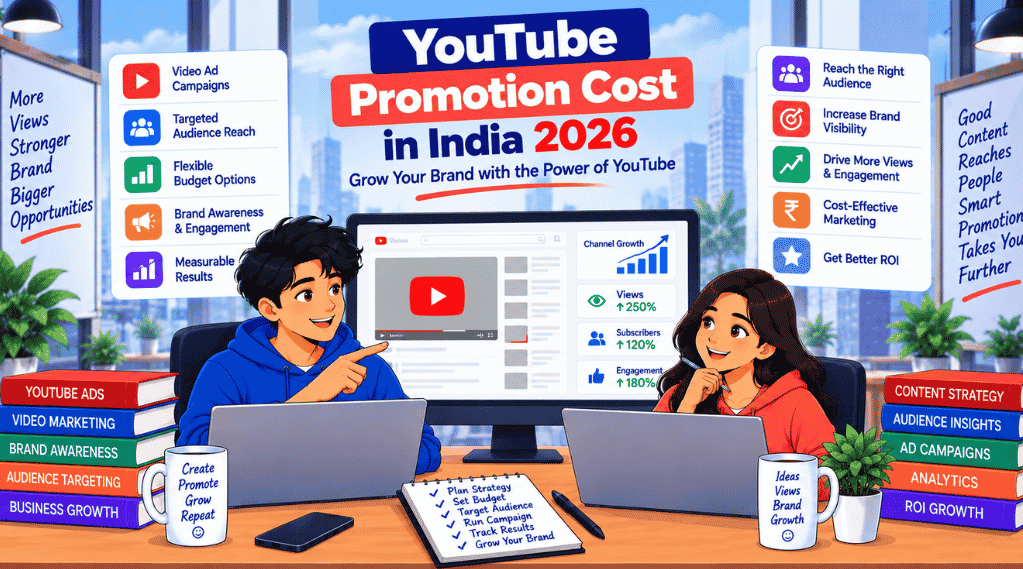
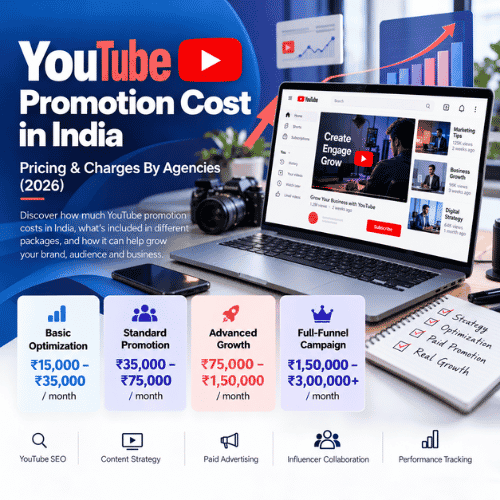
YouTube promotion cost in India typically ranges from ₹15,000 to ₹3,00,000+ per month, depending on the level of optimization, audience targeting, paid advertising, influencer collaborations, and campaign management. Packages generally include Basic YouTube Optimization (₹15,000–₹35,000), Standard Promotion (₹35,000–₹75,000), Advanced YouTube Growth (₹75,000–₹1,50,000), and Full-Funnel YouTube Campaigns (₹1,50,000–₹3,00,000+). Paid YouTube ad spend is separate from agency fees. Sync Soft Solution can help businesses improve YouTube visibility, reach targeted audiences, optimize content, and manage performance-focused campaigns.
YouTube has become one of the most influential platforms for brand visibility, discovery, and conversions. For businesses that want to reach larger audiences, build trust, or drive sales, YouTube promotion can be highly effective—if executed strategically.
However, one common question business owners ask is:
How much does YouTube promotion cost in India?
YouTube promotion cost in India typically ranges from ₹15,000 to ₹3,00,000+ per month, depending on the scope of services, campaign goals, and whether the promotion includes organic optimization, paid advertising, influencer collaborations, or a full-funnel strategy.
Basic YouTube optimization starts at ₹15,000–₹35,000 per month
Standard promotion by agencies costs ₹35,000–₹75,000 per month
Advanced growth and performance campaigns range from ₹75,000–₹1,50,000 per month
Enterprise or large-scale YouTube campaigns can exceed ₹3,00,000 per month
Paid YouTube advertising budget is separate from agency fees and is paid directly to Google Ads.
What YouTube Promotion Really Means
YouTube promotion is not simply uploading videos and hoping they perform. It includes:
– Audience research – Channel strategy and positioning – Content optimization – Video distribution and syndication – Paid advertising on YouTube – Influencer collaborations – Performance tracking and reporting
Many businesses confuse video creation with video promotion. Creation is only one part. Promotion is how your content reaches the right audience and ultimately how it drives measurable business impact.
Why YouTube Promotion Costs Vary
The cost of promoting on YouTube depends on multiple factors:
Target audience – Niche vs mass
Type of promotion – Organic optimization vs paid ads
Video volume – Number of videos being promoted
Influencer fees
Campaign duration
Level of reporting
Because of this complexity, agencies do not follow a one-size-fits-all fee structure. Instead, packages are based on the level of service and business outcomes.
How Agencies Price YouTube Promotion in India
Agencies typically use three pricing models for YouTube promotion:
Monthly Retainer
A fixed fee per month covering a set range of services.
Project-Based Pricing
A one-time fee for a campaign, channel launch, or video series.
Performance-Based Pricing
Fees tied to agreed outcomes, such as views, leads, or conversions.
Each model has its advantages, but for sustained growth, a monthly retainer model is commonly used.
YouTube Promotion Cost in India (2026): Pricing Overview
Package Type
Typical Monthly Fees (₹)
Best Suited For
Basic YouTube Optimization
₹15,000 – ₹35,000
Small brands building an initial presence
Standard Promotion Package
₹35,000 – ₹75,000
Brands looking consistent organic visibility
Advanced YouTube Growth
₹75,000 – ₹1,50,000
Brands focusing on performance & strategy
Full-Funnel YouTube Campaign
₹1,50,000 – ₹3,00,000+
Large brands, enterprise-level campaigns
Note: Paid advertising budget on YouTube (Google Ads) is separate from agency fees.
What Each YouTube Promotion Package Includes
Basic YouTube Optimization (₹15,000 – ₹35,000)
This tier focuses on the foundation of your YouTube presence:
– Channel setup and optimization – Keyword and tag strategy – Video metadata optimization – Basic thumbnails and titles – Monthly reporting
This is suitable for businesses establishing their presence but not yet ready for aggressive growth.
Standard Promotion Package (₹35,000 – ₹75,000)
This tier aims for consistent visibility:
– Full content optimization – Posting strategy – Audience engagement monitoring – Performance reporting – Basic paid support guidance
This suits businesses that want regular visibility without heavy investment.
Advanced YouTube Growth (₹75,000 – ₹1,50,000)
This tier focuses on meaningful performance improvement:
– Audience targeting strategy – Paid campaign setup and optimization – Engagement and community building – Analytics and trend insights – Monthly performance strategy calls
This is suited for brands that measure success by both views and engagement quality.
A well-managed paid YouTube campaign is one where the cost per view or cost per acquisition aligns with your business goals, not just impression counts.
How to Choose the Right YouTube Promotion Package
When evaluating YouTube promotion packages, ask:
Does this agency provide a goal-aligned strategy or just execution?
How do they measure success? Views? Engagement? Leads? Revenue?
What platforms beyond YouTube are they considering?
How will my videos reach the right audience?
Do they support both organic and paid promotion?
The right answers distinguish high-value agencies from vendors who offer only activity.
YouTube Promotion Cost vs Organic Growth
Both organic optimization and paid promotion have value.
Organic optimization:
– Improves discoverability over time – Builds long-term authority – Reduces dependency on budgets
A balanced approach uses both, aligned with brand goals and budgets.
Frequently Asked Questions
1. How much do agencies charge for YouTube promotion in India?
Agency fees usually range from ₹15,000 to ₹3,00,000+ per month depending on strategy depth and goals.
2. Is YouTube ad spend included in promotion fees?
No. Paid ad spend is separate and paid directly to the advertising platform.
3. How soon can YouTube promotion show results?
Basic visibility improvements can be seen within 4–8 weeks. Meaningful engagement and conversions generally take longer.
4. Does YouTube promotion include video production?
Video production is usually separate. Promotion focuses on visibility, optimization, and campaign management.
5. Does YouTube promotion help with sales?
Yes, when the strategy aligns with audience targeting, content relevance, and performance optimization.
Final Thoughts
YouTube promotion is not a quick fix. It is a strategic investment in visibility, audience growth, and brand authority.
Businesses that structure promotion around audience relevance, content quality, and performance metrics see stronger, sustainable outcomes.
Choosing the right promotion package ensures your investment leads to measurable results rather than temporary views.
Sync Soft Solution can help businesses with YouTube promotion, optimization, audience targeting, paid campaigns, and performance-focused digital marketing strategies.
TL;DR: Keyword research identifies the terms people search for, while audience research explains who those people are, what they need, and why they search. A successful SEO strategy combines both to create relevant content, match search intent, attract qualified traffic, and improve conversions. Sync Soft Solution helps businesses use audience insights and keyword data to build focused, result-oriented SEO strategies.
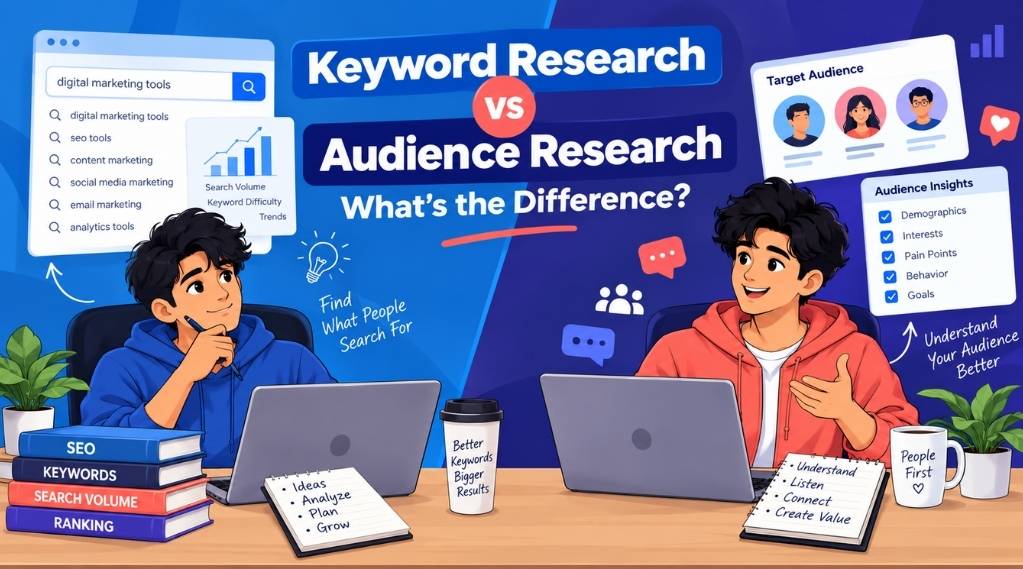
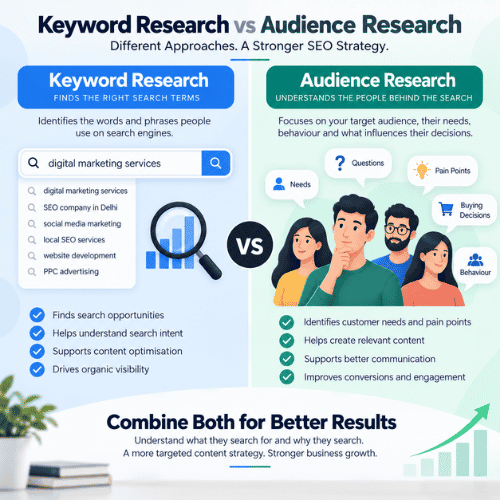
Keyword Research vs Audience Research is an important comparison for businesses building an effective SEO and digital marketing strategy. Keyword research identifies the words and phrases people use on search engines, while audience research focuses on understanding who those people are, what problems they face, what information they need, and what influences their decisions. For businesses working with Sync Soft Solution, combining both approaches can create a more focused content strategy, improve search visibility, and connect organic traffic with genuine business opportunities.
What Is Keyword Research?
Keyword research is the process of identifying and analyzing search terms that potential customers use on search engines such as Google and Bing. It helps businesses understand what people are searching for and how those searches relate to their products, services, or information needs.
A professional keyword research process generally considers:
Search relevance
Search intent
Search volume
Competition
Keyword difficulty
Long-tail variations
Location-based searches
Commercial value
Customer journey stage
For example, a business offering digital marketing services may identify keywords such as SEO company in Delhi, digital marketing services, website SEO services, or local SEO services.
However, selecting keywords only because they have high search volume does not always produce valuable traffic. The keyword should also match the audience, business objective, and content purpose.
What Is Audience Research?
Audience research focuses on understanding the people a business wants to reach. It examines their needs, interests, behavior, challenges, preferences, expectations, and purchasing decisions.
A business may use audience research to understand:
Who its ideal customers are
What problems they want to solve
What questions they ask before purchasing
What factors influence their decisions
What concerns prevent them from taking action
Which platforms they use
What type of content they prefer
How they describe their problems
For SEO, these insights are valuable because they provide context behind the search query.
A keyword tells you what someone searches for. Audience research helps explain why they are searching for it.
Keyword Research vs Audience Research: Key Difference
Keyword research and audience research serve different purposes, but neither should be treated as completely separate from the other.
Keyword Research
Audience Research
Identifies search terms
Identifies target customers
Studies search behaviour
Studies customer behavior
Finds keyword opportunities
Finds customer needs and pain points
Focuses on search queries
Focuses on people behind the queries
Helps plan SEO content
Helps shape the content message
Analyses search intent
Analyses customer intent and motivation
Supports organic visibility
Supports relevance and engagement
Uses search data
Uses customer and behavioral insights
The simplest way to understand the difference is:
Keyword research tells you what people type. Audience research helps you understand why they type it.
A strong SEO strategy uses both pieces of information.
Why Keyword Research Matters for SEO
Search engines need clear signals about the subject and purpose of a webpage. Relevant keywords help businesses identify the topics their potential customers are actively searching for.
Identifying Search Opportunities
Keyword research can reveal topics with meaningful search demand. Businesses can use these opportunities to develop blog posts, service pages, landing pages, FAQs, and supporting content.
Understanding Search Intent
A keyword can represent different types of intent.
For example:
Informational intent: “What is technical SEO?”
Commercial intent: “Best SEO company for small business”
Transactional intent: “Hire SEO company in Delhi”
Navigational intent: “Sync Soft Solution”
Understanding these differences helps businesses create content that matches the user’s expectations.
Building a Strong Content Strategy
Keyword research can also help organize content around broader topics and related search queries. Instead of creating isolated articles, businesses can develop topic clusters that cover a subject from multiple relevant angles.
Why Audience Research Matters for SEO
SEO is ultimately about connecting people with useful information. Audience research helps businesses understand what information is actually valuable to their target customers.
Understanding Customer Pain Points
Customers rarely search only for a product or service. They often search because they have a specific problem.
For example, a business owner may search for an SEO agency because:
Website traffic has declined
Competitors are ranking higher
Leads from Google are limited
Local visibility is poor
Existing content is not generating results
The website has technical SEO problems
Understanding these problems allows a company to create content that addresses the actual reason behind the search.
Creating More Relevant Content
Audience insights can influence the tone, format, depth, and subject of content.
A technical audience may prefer detailed explanations, while a business owner may want practical information about costs, timelines, results, and implementation.
Supporting Conversion-Focused Content
Audience research can reveal the questions customers ask before contacting a company. Businesses can address those questions through service pages, comparison articles, case studies, FAQs, and supporting content.
This makes SEO content more closely connected to the conversion journey.
How Keyword Research and Audience Research Work Together
The strongest approach is not keyword research versus audience research. It is the combination of both.
Consider a digital marketing company targeting small and medium-sized businesses.
That process is more effective than writing an article around a keyword without understanding the person searching for it.
How to Conduct Keyword Research
A professional keyword research process can follow several stages.
1. Start With Business Goals
Identify the products, services, locations, and business objectives that SEO should support.
2. Identify Seed Keywords
Start with broad terms related to the business and expand them into relevant search variations.
3. Analyze Search Intent
Determine whether users are looking for information, comparing solutions, researching a company, or ready to make a purchase.
4. Find Long-Tail Keywords
Long-tail keywords often provide more specific context about the user’s requirements.
For example:
“SEO services” is broad.
“SEO services for small businesses in Delhi” provides considerably more context.
5. Group Related Keywords
Closely related keywords can be organized into topic groups to create comprehensive content instead of multiple repetitive pages.
6. Evaluate Business Relevance
Search volume should not be the only deciding factor. Relevance, intent, competition, and potential commercial value also matter.
How to Conduct Audience Research
Audience research can involve both quantitative and qualitative information.
Study Existing Customers
Customer conversations, inquiries, reviews, feedback, and support requests can reveal recurring problems and questions.
Analyze Website Behavior
Website analytics can provide insights into which pages attract visitors, how users navigate the website, and where they leave.
Review Search Queries
Search performance data can show the actual queries bringing visitors to a website. These queries can reveal unexpected customer interests and information needs.
Study Competitors
Competitor websites can provide useful clues about the audiences they target, topics they cover, and questions they attempt to answer.
Monitor Online Discussions
Forums, social platforms, review websites, and community discussions can help identify the language customers naturally use when describing their problems.
Which Comes First: Keyword Research or Audience Research?
There is no single rule for every campaign, but audience research can provide valuable direction before detailed keyword research begins.
Understanding the target audience first helps establish:
Customer segments
Common problems
Search motivations
Purchase barriers
Relevant topics
Customer journey stages
Keyword research can then turn these insights into measurable search opportunities.
For established websites, the process can also work in reverse. Existing keyword and search-query data can uncover new information about the audience.
Therefore, the most effective process is often iterative rather than strictly linear.
Common Mistakes Businesses Should Avoid
Choosing Keywords Only by Search Volume
High-volume keywords can be highly competitive or poorly aligned with the business.
Ignoring Search Intent
A page may rank for a keyword but still fail to satisfy the searcher’s purpose.
Creating Content for Everyone
Content aimed at everyone often becomes too generic. A defined audience allows for more specific messaging.
Using Industry Language Instead of Customer Language
Customers may describe a problem differently from industry professionals. Audience research helps bridge this gap.
Publishing Content Without a Business Objective
Not every article needs to sell directly, but important content should contribute to visibility, trust, engagement, or conversion.
Treating SEO and Audience Research as Separate Activities
SEO teams can get better results when search data and customer insights are considered together.
Example: Keyword Research vs Audience Research for a Digital Marketing Agency
Suppose a business targets the keyword:
“Digital Marketing Company in Delhi”
Keyword research helps identify related searches such as
digital marketing agency in Delhi
SEO company in Delhi
digital marketing services in Delhi
best SEO agency in Delhi
social media marketing company in Delhi
Audience research adds another layer.
The target business owner may want to know:
Which services are included?
How does SEO generate leads?
How long does SEO take?
What reporting is provided?
Can the agency handle local SEO?
What experience does the agency have?
How is campaign performance measured?
This information can shape a more useful content strategy.
Instead of simply repeating the target keyword, the content can answer the questions that influence a potential customer’s decision.
How Sync Soft Solution Approaches SEO Research
Sync Soft Solution focuses on developing digital marketing strategies around both search behavior and audience needs. Keyword research helps identify relevant search opportunities, while audience research provides the context required to create useful and commercially relevant content.
A combined approach can help businesses:
Identify valuable search opportunities
Understand customer intent
Develop relevant content topics
Improve website visibility
Build topical authority
Target different stages of the customer journey
Create stronger landing pages
Improve the connection between SEO traffic and business goals
The objective is not simply to rank for more keywords. The objective is to attract the right audience with the right content at the right stage of their search journey.
Conclusion
Keyword Research vs Audience Research should not be viewed as a choice between two competing SEO techniques. Keyword research shows businesses what people search for, while audience research explains the needs and motivations behind those searches.
When these insights are combined, businesses can create content that is more relevant, targeted, and useful. The result is a stronger SEO strategy that focuses not only on rankings and traffic but also on attracting qualified visitors and supporting meaningful business outcomes.
For businesses looking to build a sustainable digital presence, Sync Soft Solution can use this combined approach to develop SEO strategies based on search data, audience needs, and clear business objectives.
Frequently Asked Questions
What is the difference between keyword research and audience research?
Keyword research identifies the search terms people use, while audience research studies the people behind those searches, including their needs, behavior, challenges, and motivations.
Is keyword research enough for SEO?
Keyword research is an important part of SEO, but it is not enough by itself. Audience insights and search intent help businesses create content that is genuinely relevant to potential customers.
Why is audience research important for content marketing?
Audience research helps businesses understand what their customers care about, what questions they have, and what problems they want to solve. This information supports more relevant and useful content.
Can audience research improve keyword selection?
Yes. Understanding the target audience can reveal the language, questions, problems, and search behaviors that should influence keyword selection.
Which is more important: keyword research or audience research?
Both are important for different reasons. Keyword research provides search-market data, while audience research provides customer context. Combining them produces a more informed SEO strategy.
How does Sync Soft Solution help with SEO?
Sync Soft Solution can help businesses develop SEO and digital marketing strategies that combine keyword research, audience understanding, content planning, website optimization, and search-intent analysis.
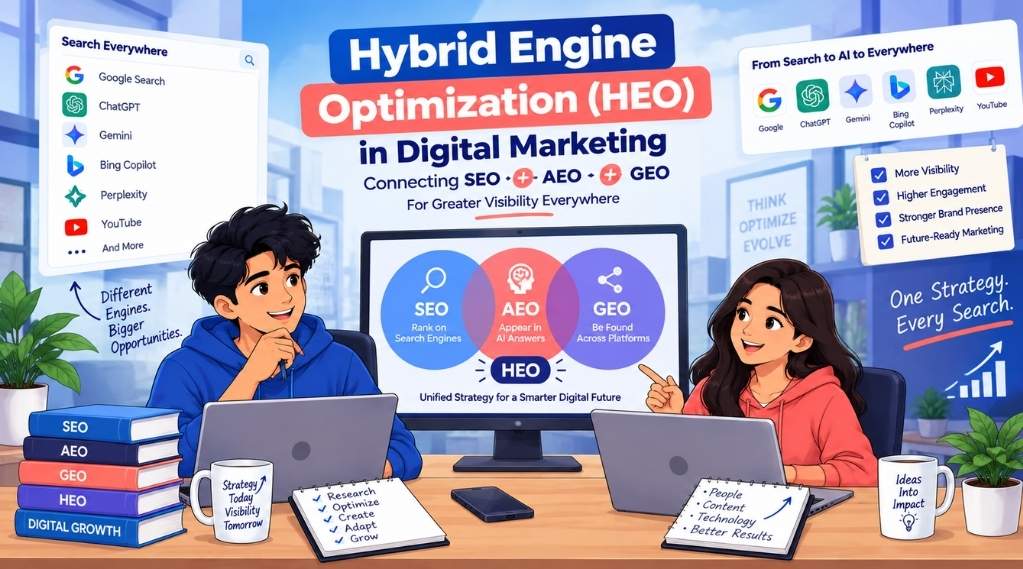
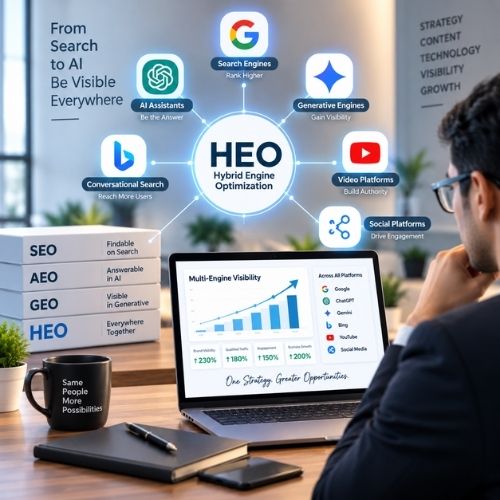
Hybrid Engine Optimization (HEO) is a broader digital visibility strategy that combines SEO, AEO and GEO with strong content, technical website optimization, brand information and other digital signals.
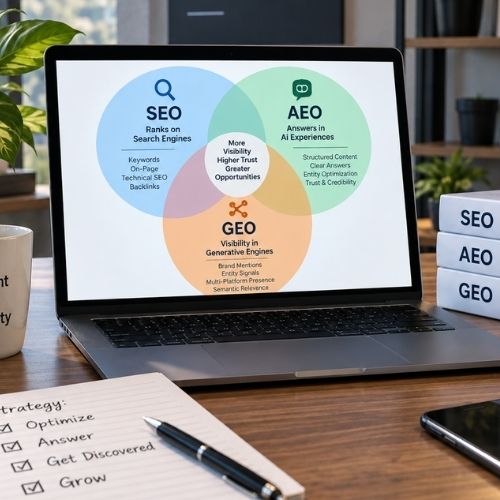
SEO helps pages appear in traditional search results.
AEO structures content to answer specific user questions clearly.
GEO focuses on making information easier for generative AI and AI-powered search systems to understand and reference.
HEO brings these approaches together instead of relying on only one search channel.
Businesses can use HEO to strengthen organic visibility, answer-based discovery and AI-assisted brand discovery.
HEO Services in Delhi can be useful for companies targeting Delhi and nearby markets through local and digital search.
HEO Services in Delhi are designed for businesses that want their online presence to work across more than one type of search experience. Search behaviour has moved beyond traditional blue links. People now use Google Search, AI Overviews, ChatGPT, Perplexity, Bing and other answer-driven platforms to find businesses, compare services, understand solutions and make purchasing decisions.
Hybrid Engine Optimization (HEO) brings together different optimization practices to help a business remain visible across these changing discovery channels. Instead of treating SEO, Answer Engine Optimization (AEO) and Generative Engine Optimization (GEO) as completely separate activities, HEO connects them through one broader digital marketing strategy.
For businesses operating in competitive markets such as Delhi, this approach can be particularly useful. A potential customer may find a service page through Google, ask an AI platform for recommendations, read a business review, check a company website and then contact the provider. HEO focuses on building a consistent and useful presence throughout that journey.
What Is Hybrid Engine Optimization?
Hybrid Engine Optimization is a digital marketing approach that considers how people discover information across traditional search engines and AI-powered answer platforms.
Traditional SEO generally focuses on improving a website’s ability to rank for relevant search queries. That remains an important part of digital visibility. However, search experiences are becoming more diverse. Search engines can now provide direct answers, summaries and recommendations without requiring users to visit several websites.
This creates a wider optimization requirement.
A business needs content that is:
Easy for search engines to crawl and understand
Relevant to the actual search intent
Structured around useful questions and answers
Supported by clear business information
Written with subject-matter depth
Consistent across important online properties
Suitable for traditional search and AI-assisted discovery
HEO addresses these requirements as part of one connected strategy.
It does not mean creating a separate piece of content for every platform. The stronger approach is to build a reliable information ecosystem around the business and its services.
Why HEO Matters for Digital Marketing
Digital marketing has traditionally placed a strong emphasis on rankings. Ranking for a valuable keyword can bring qualified visitors to a website, but visibility is no longer limited to the standard search results page.
The person may first search Google for a service. They may then ask an AI assistant about suitable agencies, compare different providers, check reviews, visit websites and look for specific services or locations.
Each interaction creates a different opportunity for a brand to be visible.
A business that focuses only on keyword rankings may miss some of these opportunities. HEO takes a wider view by improving the information available to search engines, answer engines and generative systems.
This makes HEO particularly relevant for service-based companies where customers often research before making contact.
The Relationship Between SEO, AEO and GEO
HEO is closely connected with three important optimization disciplines: SEO, AEO and GEO.
They have different purposes, but they overlap in several areas.
SEO: Visibility in Traditional Search
Search Engine Optimization remains the foundation.
SEO helps a website communicate its relevance and value to search engines through areas such as:
Keyword research
Search intent analysis
Technical SEO
On-page optimization
Internal linking
Content quality
Website architecture
Local SEO
Authority and reputation signals
For example, a company offering digital marketing services in Delhi may create a dedicated service page targeting relevant commercial queries.
The objective is not simply to place the keyword repeatedly on the page. The page should explain the service, address customer concerns, demonstrate expertise and provide a clear next step.
AEO: Providing Direct Answers
Answer Engine Optimization focuses on questions.
Users frequently search in conversational formats such as:
What is HEO?
How does HEO work?
What does an HEO agency do?
Is HEO different from SEO?
How can HEO improve digital visibility?
AEO encourages businesses to answer these questions clearly and directly.
Good AEO content generally avoids unnecessary introductions before reaching the answer. A concise explanation followed by useful supporting information gives both users and answer systems a clearer understanding of the topic.
FAQs, definitions, step-by-step explanations and question-based subheadings can all contribute to this approach when they genuinely serve the reader.
GEO: Visibility Across Generative Search
Generative Engine Optimization focuses on how information may be understood, summarized or referenced by AI-powered search and answer systems.
Platforms such as ChatGPT, Perplexity and AI-powered search experiences can synthesize information from multiple sources. Clear and consistent information therefore becomes increasingly important.
GEO can involve:
Building strong topical coverage
Providing factual and specific information
Demonstrating relevant expertise
Maintaining consistent company details
Creating useful service and location pages
Supporting claims with credible information
Structuring content clearly
Strengthening the overall digital footprint
There is no guaranteed formula that makes a business appear in an AI-generated response. Generative systems use complex retrieval, ranking and language-processing mechanisms. HEO should therefore focus on improving the quality and clarity of the information available rather than promising guaranteed AI mentions.
How HEO Brings These Strategies Together
SEO, AEO and GEO can work independently, but they become more useful when planned around the same business objectives.
For example, a service page can be developed with a commercially relevant keyword for SEO. The same page can answer common customer questions for AEO and provide detailed, structured business information that helps AI systems understand the service for GEO.
The result is one strong resource serving multiple discovery environments.
This is the central idea behind Hybrid Engine Optimization.
Rather than creating disconnected campaigns, the strategy connects:
A professional HEO campaign can cover several areas depending on the business, competition and target audience.
Search Intent and Topic Research
The first step is understanding what potential customers actually want.
Commercial searches usually indicate that the user is considering a service provider. Transactional searches go further and may indicate an intention to contact, inquire about, or purchase a service.
An HEO strategy should separate informational queries from commercial and transactional ones.
For example:
Informational: “What is generative engine optimization?”
Commercial: “GEO agency in Delhi”
Transactional: “Hire GEO services in Delhi”
Each query represents a different stage of the customer journey.
Service Page Optimization
Service pages should explain exactly what the company provides.
A strong page can cover:
Service overview
Business applications
Key deliverables
Process
Industries served
Location relevance
Common questions
Expected outcomes
Contact or enquiry options
This creates a useful destination for both visitors and search systems.
Content Development
HEO requires content that demonstrates genuine topical coverage rather than producing large quantities of similar articles.
A business can build a content cluster around its main services.
For example, an HEO campaign could cover:
HEO fundamentals
SEO vs AEO vs GEO
AI search optimization
Local search visibility
Content optimization
Entity and brand information
Search intent
Technical website quality
AI search behaviour
Frequently asked customer questions
The subjects should connect naturally rather than existing as isolated posts.
Local Search Optimization
For companies serving Delhi customers, local relevance matters.
Business information should remain consistent across the website and relevant online profiles. Location-specific service pages can also help when they provide genuinely useful local information instead of simply replacing a city name throughout an existing page.
For example, a company targeting Delhi can develop useful content around the services it provides to businesses in the region, the industries it serves and the types of projects it handles.
Technical Website Optimization
Content cannot perform effectively when a website has serious technical problems.
HEO can therefore include technical considerations such as:
Crawlability
Indexability
Page speed
Mobile usability
Internal linking
Website architecture
Structured content
Metadata
Canonicalization
Broken links
Content accessibility
Technical SEO continues to provide the foundation for discoverability.
HEO and AI Overviews
Google’s AI-powered search experiences have changed how some users interact with search results.
Instead of receiving only a list of links, users may receive an AI-generated overview followed by supporting sources and additional search options.
This does not eliminate the importance of SEO. It increases the value of having useful, authoritative and well-structured content.
Businesses should focus on answering relevant questions comprehensively while maintaining strong technical and content foundations.
There is no ethical shortcut for forcing a website into an AI Overview. The practical strategy is to make the content useful enough to deserve consideration by search systems.
HEO for ChatGPT and Perplexity
AI platforms such as ChatGPT and Perplexity can help users research companies, services and topics.
When a user asks an AI system for information about a particular service, the system may rely on available information from websites and other sources depending on the platform, query and browsing or retrieval capabilities.
This makes brand information important.
A business should maintain clear information about:
Who the company is
What services it provides
Where it operates
Which industries it serves
What makes its services different
Relevant experience and expertise
Contact and business information
Consistency matters because conflicting information across different sources can make a business harder to understand.
How Bing Fits Into an HEO Strategy
Bing remains an important part of the broader search ecosystem, particularly because Microsoft’s search and AI products are increasingly connected.
A technically healthy website, well-structured content and clear business information can support visibility across search environments.
HEO should therefore avoid focusing exclusively on one platform.
The goal is not to chase every algorithm update. It is to build a website and digital presence that communicate the business clearly to both users and search technologies.
HEO Is More Than Adding AI Keywords
One common misunderstanding is that HEO means adding words such as “AI,” “ChatGPT” or “GEO” to website pages.
That is not an effective strategy.
Search engines and AI systems need meaningful information, not keyword repetition.
For instance, a page titled “AI SEO Services” does not automatically become valuable because it mentions AI throughout the copy.
The page should explain:
What the service actually does
Which problems it addresses
Who it is designed for
How the process works
What the business provides
Which related questions customers have
Why the information can be trusted
That is where HEO becomes a strategic discipline rather than another keyword exercise.
Content Structure Has a Bigger Role
A well-planned page makes information easy to identify.
Useful structures can include:
Clear Definitions
Explain important concepts early.
Question-Based Sections
Address realistic customer questions instead of manufacturing questions solely for SEO.
Short Direct Answers
Follow the question with a concise answer before providing additional context.
Supporting Details
Use examples, explanations and relevant facts to establish depth.
Relevant Internal Links
Connect related services and educational resources so users can continue their research.
Strong Business Context
Make it clear what the company does and who can benefit from its services.
This structure can support both human readers and automated systems attempting to understand a page.
HEO and Commercial Search Intent
For businesses investing in digital marketing, traffic alone is not the main objective.
A page may receive thousands of visitors but generate few enquiries if the visitors have no intention of purchasing.
HEO therefore needs to consider the commercial journey.
Someone searching for:
“What is HEO?”
may still be learning.
Someone searching for:
“HEO agency in Delhi”
is closer to evaluating providers.
A query such as:
“HEO Services in Delhi”
can indicate a stronger commercial requirement, particularly when the user is looking for a company that can provide the service.
Content targeting these searches should provide enough information to help the visitor make an informed decision without turning every paragraph into an advertisement.
Turning HEO Traffic Into Enquiries
Visibility is only one part of digital marketing.
Once a potential customer reaches a website, the next step should be clear.
Depending on the business, this could include:
Requesting a consultation
Calling the company
Sending an enquiry
Requesting a proposal
Booking a discussion
Reviewing service details
The landing page should support that action naturally.
A commercial HEO strategy should therefore connect search visibility with conversion-focused website content.
Why Professional HEO Strategy Requires Ongoing Work
Search behaviour changes, competitors publish new content and search engines continuously improve their systems.
A one-time optimization project can improve the foundation, but long-term visibility generally requires ongoing attention.
This may include:
Publishing new useful content
Updating older pages
Monitoring search performance
Reviewing changing search intent
Improving underperforming pages
Expanding topical coverage
Checking technical issues
Maintaining business information
Reviewing competitors
Studying conversion data
The exact activity level depends on the industry and business goals.
Choosing HEO Services in Delhi
When evaluating an HEO service provider, businesses should look beyond promises of rankings or guaranteed AI visibility.
A capable provider should be able to explain:
What will be optimized? The answer should cover more than keywords.
Which search intents are being targeted? Informational, commercial and transactional queries should have different roles.
How will SEO, AEO and GEO work together? The strategy should connect these areas instead of treating them as unrelated services.
How will results be measured? Organic visibility, qualified traffic, enquiries and other meaningful business metrics are more useful than vanity numbers alone.
How will the strategy evolve? Search behaviour changes, so the campaign should have room for testing and refinement.
For companies evaluating HEO Services in Delhi, Sync Soft Solution can structure the work around the company’s business objectives, target audience and service priorities rather than applying the same content formula to every website.
Common HEO Mistakes to Avoid
Treating HEO as a Replacement for SEO
SEO remains an important part of search visibility. HEO expands the scope; it does not make SEO irrelevant.
Creating Content Only for AI
Content written purely to influence AI systems often becomes unnatural and less useful for human readers.
Repeating Keywords
Excessive repetition can make content difficult to read and does not create genuine topical authority.
Publishing Similar Location Pages
Creating near-identical pages for Delhi, Gurgaon, Noida and other locations with only the city name changed can result in weak content.
Ignoring Technical SEO
High-quality writing cannot compensate for major crawlability, indexing or usability problems.
Making Unsupported AI Visibility Claims
No legitimate provider can guarantee that a particular AI platform will mention a business for every relevant query.
Forgetting Conversion Intent
Getting visitors is useful only when the website gives qualified prospects a logical next step.
A Practical HEO Workflow
A typical campaign can follow a straightforward sequence.
1. Audit the Existing Digital Presence
Review the website, content, technical setup, local signals and existing search visibility.
2. Map Search Intent
Identify the questions, commercial searches and transactional queries that matter to the business.
3. Build the Content Architecture
Plan service pages, supporting articles, FAQs and internal connections.
4. Improve Core Website Pages
Optimize important service, location and business-information pages.
5. Strengthen Answer-Focused Content
Add clear explanations for genuine customer questions.
6. Improve Generative Search Readiness
Make business information specific, consistent, well-structured and supported by useful topical content.
7. Monitor Performance
Review rankings, organic traffic, enquiries and relevant search visibility.
8. Refine the Strategy
Expand successful topics, improve weak pages and update content as search behaviour changes.
The Future of Digital Visibility Is More Integrated
The distinction between search engines and answer engines is becoming less rigid.
A person can start with a Google search, continue through an AI-generated answer, visit a company website and finally contact a business. Another person may begin with an AI assistant and never use a conventional search result in the same way.
That does not mean traditional SEO is disappearing.
It means digital marketing strategies need to account for more ways in which information is discovered and evaluated.
Hybrid Engine Optimization provides a framework for doing that.
For service businesses, the strongest approach is not to produce separate content for every new platform. It is to build a clear, authoritative and technically sound digital presence that can serve users wherever discovery takes place.
Final Thoughts
Hybrid Engine Optimization combines the strengths of SEO, AEO and GEO into a broader approach to digital visibility. It considers traditional search rankings, direct answers, AI-assisted discovery, local presence, website quality and the information customers use before contacting a business.
For companies operating in competitive markets, HEO Services in Delhi can provide a practical way to align website content with the changing search journey.
The foundation remains simple: understand what customers need, create genuinely useful information, structure it clearly, maintain a technically sound website and make the business easy to understand across relevant digital channels.
That approach gives SEO, AEO and GEO a common purpose: helping the right customer find the right business and take the next step with confidence.
Frequently Asked Questions About HEO
What are HEO Services in Delhi?
HEO Services in Delhi refer to digital optimization services designed to improve a business’s visibility across traditional search engines, answer-focused search experiences and AI-powered discovery platforms. These services may combine SEO, AEO, GEO, content optimization, technical improvements, and local search strategies.
Is HEO the same as SEO?
No. SEO primarily focuses on improving visibility in traditional search engines. HEO is a broader framework that can incorporate SEO along with AEO, GEO, and other digital visibility practices.
How is HEO connected with AEO?
AEO focuses on helping content provide clear answers to user questions. HEO incorporates this answer-focused approach alongside traditional SEO and generative search optimization.
What is the difference between HEO and GEO?
GEO focuses specifically on optimizing a brand’s information and content for generative AI and AI-powered search experiences. HEO is broader and can include GEO together with SEO, AEO, local search and other digital visibility activities.
Can HEO help with AI Overviews?
A strong HEO strategy can improve the quality, relevance, and structure of website information, which may support broader search visibility. However, no service provider can guarantee inclusion in Google’s AI Overviews for specific queries.
Does HEO work with ChatGPT and Perplexity?
HEO can prepare a business’s online information to be clearer and more useful for AI-assisted discovery. Whether a particular platform mentions or cites a business depends on its systems, sources, query and other factors.
Do businesses still need SEO after adopting HEO?
Yes. SEO remains an important foundation. HEO extends the optimization strategy to additional discovery and answer environments rather than replacing conventional SEO.
Who can benefit from HEO?
Service businesses, professional firms, local companies, agencies, B2B providers and other organizations that depend on online discovery can potentially benefit from an HEO strategy. The appropriate approach depends on the company’s audience, market, and objectives.
How long does HEO take to show results?
There is no universal timeframe. Results depend on the website’s existing authority, competition, technical condition, content quality, target queries, and the scope of the campaign. Search visibility should be monitored over time rather than judged from a single short-term change.
What should I check before hiring an HEO agency?
Review the provider’s approach to SEO, AEO, GEO, technical optimization, content quality and measurement. Ask how they connect these areas with commercial objectives and qualified enquiries rather than focusing only on rankings or traffic.
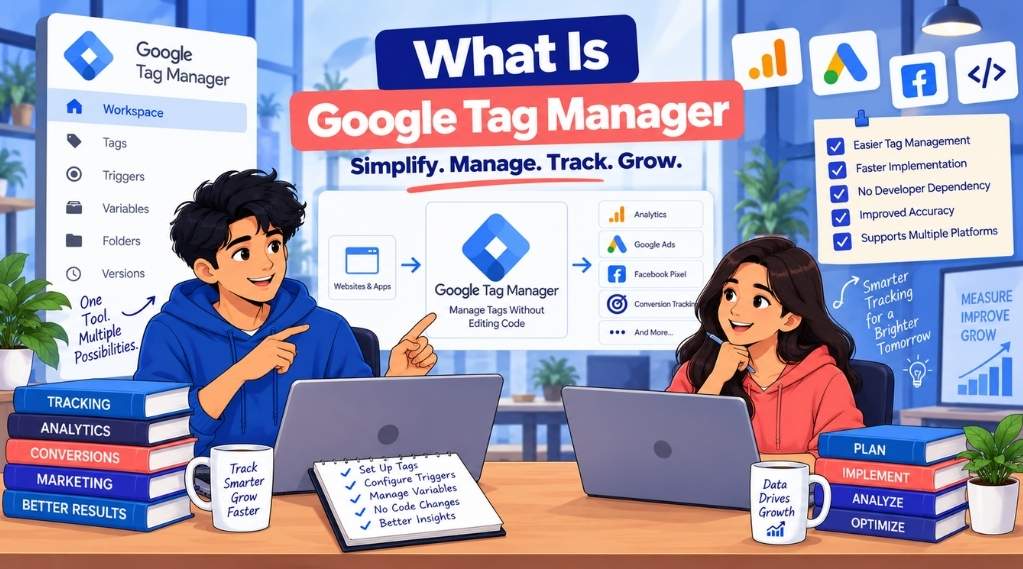
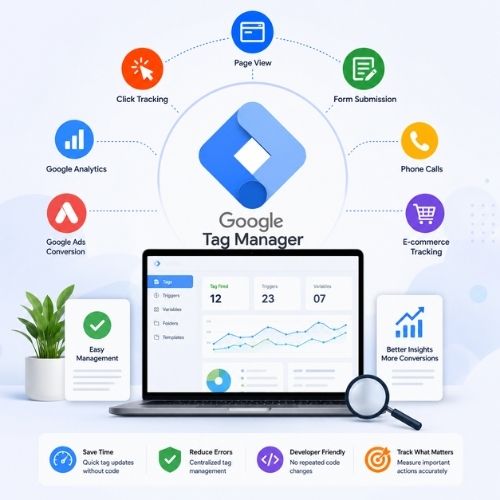
Google Tag Manager is a tag management system that allows businesses to add, update, and manage website tracking codes without repeatedly editing the website’s source code. It is widely used for implementing Google Analytics, Google Ads conversion tracking, remarketing tags, Meta Pixel, event tracking, and other third-party scripts.
For businesses investing in SEO services, Google Tag Manager helps measure user behavior, conversions, form submissions, button clicks, and other meaningful actions that influence marketing decisions. A well-planned tracking setup can simplify ongoing management and give marketing teams clearer visibility into the website data that supports business decisions.
For companies planning to improve tracking and digital marketing performance, Syn Soft Solution can help with Google Tag Manager setup, event tracking, conversion measurement, and related SEO and analytics requirements.
Google Tag Manager Explained
Google Tag Manager is a free tag management platform developed by Google. It provides a central place where website owners and marketers can manage tracking scripts, measurement codes, and other tags without making direct code changes every time a new tracking requirement is introduced.
Businesses often rely on multiple tracking tools to measure different website activities. Depending on their marketing goals, they may need to track:
Google Analytics tracking
Google Ads conversion tracking
Form submission tracking
Phone call click tracking
Meta Pixel
Remarketing tags
Scroll tracking
Button click tracking
Third-party marketing tools
Without a tag management system, adding or modifying these scripts may require changes to the website’s code. Google Tag Manager provides a more organized method for managing many of these tracking requirements.
The platform works through a container installed on the website. Once the container code is properly added, authorized users can manage supported tracking configurations through the Google Tag Manager interface.
This setup simplifies website tracking and gives businesses a more organized way to manage multiple marketing campaigns, tracking activities, and digital initiatives.
Why Google Tag Manager Matters for Business Websites
Effective tracking helps businesses understand visitor behavior and make informed marketing decisions. Without accurate data, it can be challenging to measure the results of advertising, content marketing, and SEO services or identify which actions visitors take on the website.
A visitor may:
Submit an inquiry form
Click a phone number
Request a quotation
Download a brochure
Click a WhatsApp button
Add a product to the cart
Complete a purchase
Visit important service pages
Google Tag Manager can help businesses measure these interactions.
Event tracking allows businesses to look beyond basic page views and measure important actions that may lead to inquiries, leads, and conversions. Event tracking allows businesses to look beyond basic page views and measure important actions that may lead to inquiries, leads, and conversions.
This information can support better decisions regarding SEO, paid advertising, website improvements, and marketing budgets.
How Google Tag Manager Works
Google Tag Manager is built around several important components. Understanding these components makes it easier to see how website tracking is configured.
Tags
Tags are pieces of code or tracking configurations that send information to third-party platforms.
Common examples include:
Google Analytics tags
Google Ads conversion tags
Remarketing tags
Meta Pixel
Conversion tracking scripts
A tag performs a specific tracking or marketing-related function.
Triggers
Triggers set the rules for when a tag fires.
For example, a trigger can activate when a visitor:
Loads a page
Clicks a button
Submits a form
Scrolls to a particular point
Clicks a telephone number
Completes a purchase
This helps businesses track meaningful user interactions and collect more relevant website data.
Variables
Variables provide additional information that can be used by tags and triggers.
They can capture useful details, such as:
Using variables can make tracking setups more adaptable and easier to customize.
Container
The container is the main structure used to manage Google Tag Manager configurations for a website.
The website receives a container code, which is installed in the appropriate areas of the site. Users can manage and update these configurations from within their Google Tag Manager account.
What Can You Track With Google Tag Manager?
One of the main advantages of Google Tag Manager is its ability to support detailed website interaction tracking.
Depending on the website and business requirements, tracking may include several important actions.
Form Submissions
Lead generation websites often depend heavily on inquiry forms.
Tracking form submissions can help businesses understand:
Which pages generate the most leads
Which marketing channels bring inquiries
Which campaigns produce conversions
How visitors interact with contact forms
This information can be useful for companies evaluating their SEO services and paid marketing performance.
Phone Number Clicks
Many service-based businesses receive inquiries through phone calls.
A visitor clicking a phone number on a mobile device can be tracked as an important conversion action. This can provide additional insight into lead generation that may not appear in standard form submission reports.
WhatsApp Button Clicks
WhatsApp has become a common communication channel for businesses.
Tracking WhatsApp button clicks can help determine how many website visitors initiate conversations through the platform.
Button Clicks
Lots of business sites put action buttons on the page. These buttons nudge visitors to do things like
Get a Quote
Contact Us
Book a Consultation
Request Information
Download Now
Google Tag Manager can be configured to measure interactions with these buttons.
Scroll Behavior
Scroll tracking can provide insight into how far visitors move through a page.
For very long pages, scroll tracking can tell you if people reach the main sections. It can also reveal when they quit early and end up skipping the useful parts.
Video Engagement
Video tracking helps businesses understand how visitors engage with website videos, from starting playback to pausing or watching the content completely.
This can be useful for analyzing engagement with product demonstrations, company presentations, or service-related videos.
E-Commerce Activity
For online stores, Google Tag Manager can support tracking related to:
Product views
Add-to-cart actions
Checkout activity
Purchases
Revenue
Proper e-commerce tracking can provide valuable information for advertising and website optimization.
Google Tag Manager and Google Analytics: What Is the Difference?
Although Google Tag Manager and Google Analytics both support website measurement, they perform different functions.
Google Analytics is primarily used to collect and analyze website data.
Google Tag Manager helps handle and roll out tracking setups. It is also used for Google Analytics tags.
A simple way to understand the relationship is
Google Tag Manager lets you set up and handle the tracking code. Google Analytics then looks at the data from what people do on your site.
The two platforms can work together, but they are not the same product.
You should set things up so the tracking setup gets checked. Make sure the test confirms the data comes in the right way.
How Google Tag Manager Supports SEO Services
SEO performance is not limited to keyword rankings and organic traffic.
A website may receive substantial traffic but generate very few inquiries. Another website may receive fewer visitors but produce more qualified leads.
This is why measurement matters.
When combined with professional SEO services, Google Tag Manager can help businesses understand what organic visitors do after reaching the website.
For example, tracking can help measure:
Organic enquiry submissions
Phone clicks from organic visitors
Service page engagement
CTA interactions
Brochure downloads
Conversion paths
Important user events
This information can help SEO professionals identify which pages contribute to business results.
Instead of judging SEO by traffic alone, a business can look at what organic visits lead to. This includes inquiries, potential leads, and other key actions.
For businesses focused on commercial growth, this provides a more practical way to evaluate digital marketing performance.
Google Tag Manager Setup for Business Websites
A proper Google Tag Manager setup involves more than simply placing the container code on a website.
The tracking strategy should be based on the business’s goals.
For example, a lead generation website may prioritize:
Contact form submissions
Phone calls
Email clicks
WhatsApp inquiries
Quote requests
An e-commerce website may focus on:
Product views
Add-to-cart events
Checkout activity
Purchases
Revenue tracking
The setup should reflect the actions that actually matter to the business.
This is where professional implementation can be valuable. Incorrect configurations may result in duplicate events, inaccurate conversion data, missing transactions, or misleading reports.
Syn Soft Solution can assist businesses with structured Google Tag Manager implementation based on their website, marketing activities, and conversion requirements.
Important Benefits of Using Google Tag Manager
Faster Tracking Management
Marketing requirements often change.
A business may launch a new advertising campaign, introduce a new service, or add a conversion action to its website.
Google Tag Manager can provide a central environment for managing many tracking configurations.
Reduced Dependence on Frequent Code Changes
Certain tracking updates can be managed without requesting a new website deployment for every minor tracking adjustment.
Nevertheless, developers still play an important role in website tracking. More complex implementations, data layer configurations, website modifications, and advanced tracking requirements may require technical expertise and professional support.
Better Conversion Measurement
Businesses can track the actions that contribute to inquiries and sales.
This can provide clearer insight into the effectiveness of marketing campaigns.
Improved Marketing Decisions
Accurate tracking helps businesses understand where leads are coming from.
The information can support decisions involving:
SEO investment
Google Ads campaigns
Landing page improvements
Content development
Conversion optimization
Centralized Tag Management
Managing multiple tracking scripts directly within website code can become difficult over time.
Google Tag Manager provides a more organized environment for maintaining supported tracking configurations.
Google Tag Manager for Google Ads Conversion Tracking
Businesses running paid advertising need to understand whether their campaigns are generating meaningful results and valuable customer actions.
Clicks alone do not always indicate campaign success.
Google Tag Manager helps businesses set up and manage Google Ads conversion tracking for important customer actions, such as:
Form submissions
Purchases
Quote requests
Phone clicks
Lead generation events
When conversion tracking is configured correctly, advertisers can evaluate campaign performance based on business actions rather than traffic alone.
This can be particularly important for companies with a commercial or transactional marketing strategy.
However, tracking should always be tested carefully. Incorrect implementation can affect reporting and make campaign optimization decisions less reliable.
Common Google Tag Manager Implementation Mistakes
Google Tag Manager offers flexibility, but poor configuration can create measurement problems.
Tracking the Same Event Multiple Times
Duplicate event tracking can result in inflated conversion numbers.
A form submit can be logged two times, once from each trigger.
Regular testing can help prevent this issue.
Using the Wrong Trigger Conditions
Triggers should be specific enough to identify the intended action.
A poorly configured trigger may activate on interactions that are not genuine conversions.
Publishing Changes Without Testing
Google Tag Manager includes testing and preview capabilities for a reason.
Before anything goes live, check the changes. Make sure the right tags turn on at the right moment.
Tracking Actions That Do Not Support Business Goals
Not every website interaction needs to be treated as a conversion.
A useful tracking strategy focuses on actions connected to genuine business objectives.
Ignoring Data Accuracy
Analytics decisions depend on the quality of collected data.
Businesses should periodically review their tracking setup to identify broken tags, duplicate events, or missing conversions.
When Should a Business Consider Professional Google Tag Manager Services?
A basic tracking setup may be manageable for some websites. Once the tasks feel more complicated to keep up with, getting support from experts can make it simpler to monitor everything.
A business may consider professional assistance when it needs:
Advanced event tracking
Google Ads conversion tracking
GA4 implementation
E-commerce tracking
Custom event configuration
Data layer implementation
Cross-platform tracking
Conversion auditing
Tracking issue resolution
Professional support can also be useful when a business is already investing in SEO services or paid advertising and wants reliable conversion data for performance evaluation.
Your tracking plan should match what marketing is trying to do. Do not add an event just because you can track it.
Choosing the Right Google Tag Manager Setup Approach
The best implementation depends on the type of website and its commercial objectives.
Before configuring tags, it is helpful to identify:
What counts as a conversion
Which marketing channels require measurement
Which user actions matter most
What information needs to be passed to analytics platforms
Whether the website requires advanced e-commerce tracking
How conversions will be used for marketing decisions
For many businesses, the most effective approach begins with a tracking plan.
The plan should identify important conversion actions before tags and triggers are configured.
This helps avoid an unnecessarily complicated setup and makes future reporting easier to understand.
Syn Soft Solution can support businesses that need assistance with Google Tag Manager configuration alongside SEO services, website analytics, and digital marketing measurement.
Why Tracking Should Be Part of a Commercial SEO Strategy
Commercial SEO focuses on attracting visitors who may become customers.
Traffic by itself does not show if SEO work is actually helping the business grow.
A site might show up for useful search terms and still get visitors from search. Yet without conversion tracking, it is hard to tell what is working. You may not be able to spot which pages lead to the actions you want.
Which pages generate inquiries
Which keywords lead to business opportunities
Which landing pages perform effectively
Where visitors leave the conversion journey
Google Tag Manager can help connect website interactions with marketing measurement.
Using it alongside analytics and skilled SEO support can help you make better choices. You can judge content, landing pages, calls to action, and what to focus on in each campaign.
The objective is not simply to collect more data. The objective is to measure the actions that help a business evaluate marketing performance.
Final Thoughts
Google Tag Manager provides businesses with a structured way to manage website tracking and measure important visitor interactions.
From form submissions and phone clicks to advertising conversions and e-commerce activity, a properly configured setup can provide useful information about how visitors engage with a website.
For companies investing in SEO services and digital marketing, accurate tracking can help connect traffic with measurable business actions. This makes it easier to evaluate campaigns and identify areas that may require improvement.
A carefully planned implementation is important. To track well, you need to tie it to the goals of the business. The results should help you see real patterns in how customers behave. You can keep things reliable by running checks often and doing regular reviews of results. As marketing and website needs change, those steps help you stay accurate and support better choices.
Syn Soft Solution provides professional support for businesses that require assistance with Google Tag Manager setup, conversion tracking, website analytics, and SEO-focused performance measurement.
Frequently Asked Questions
What is Google Tag Manager used for?
Google Tag Manager lets teams set up and run website tracking. It supports analytics tags, conversion tracking, remarketing tags, and event tracking.
Is Google Tag Manager free to use?
Yes, Google Tag Manager is available as a free platform for managing website tags and tracking configurations.
Do I need Google Tag Manager for SEO services?
Google Tag Manager is not required for SEO. Still, it can help you measure SEO results. It can log what organic visitors do on your site. This lets you see key actions clearly.
What is the difference between Google Tag Manager and Google Analytics?
Google Tag Manager is used to set up and run tracking codes. Google Analytics takes the data from the site and looks at how people behave there.
Can Google Tag Manager track form submissions?
Yes. Google Tag Manager can be configured to track form submissions and send event data to supported analytics and advertising platforms.
Can Google Tag Manager track phone number clicks?
Yes. Phone number clicks can be configured as events, allowing businesses to measure visitors who interact with click-to-call links.
Is professional Google Tag Manager setup important?
Professional setup can be useful for businesses with advanced tracking requirements, advertising campaigns, e-commerce websites, or complex conversion journeys. Proper configuration and testing can help reduce tracking errors and improve data accuracy.
Can Google Tag Manager help measure Google Ads conversions?
Google Tag Manager can be used to set up Google Ads conversion tracking. It tracks actions like form submissions, purchases, and other conversion events you choose.
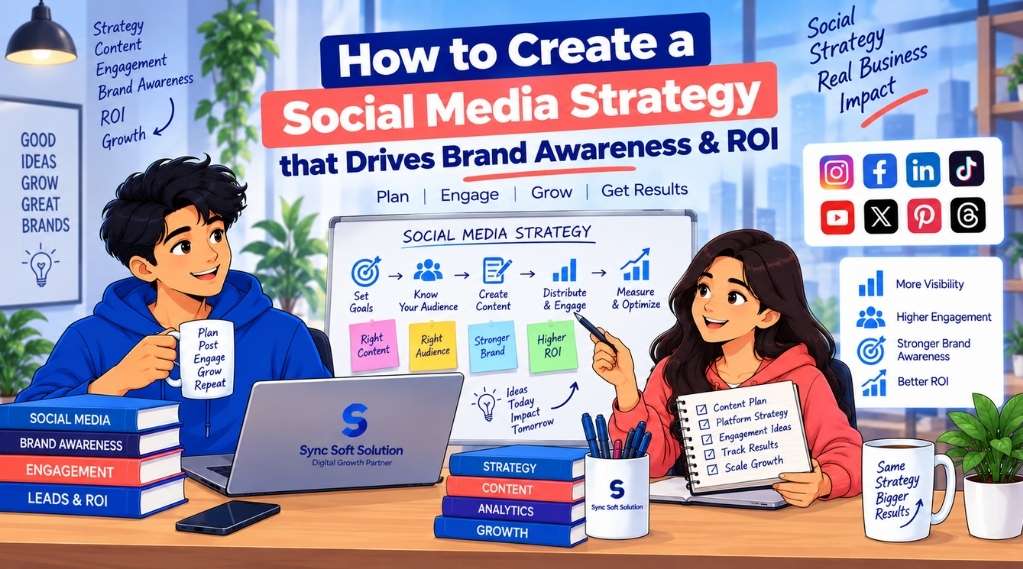
A strong social media strategy helps a business build brand awareness, engage the right audience, and turn social platforms into a practical source of leads and business growth. For companies investing in social media marketing, simply posting regularly is not enough. The content, campaigns, visuals, and messaging should all have a clear purpose and support wider business goals. When social media works alongside the website, content, advertising, analytics, and broader digital marketing efforts, it creates a more consistent customer journey from the first interaction to the final inquiry. Sync Soft Solution follows this approach by focusing on meaningful communication and measurable business outcomes rather than treating social media as just another place to publish content.
Begin With the Business Objective
The foundation of an effective social media strategy is a clearly defined business objective.
Before deciding what to post, determine what the business actually wants social media to accomplish. Different goals require different approaches, and a strategy designed for brand awareness will not look the same as one created primarily for lead generation.
Common objectives include:
Increasing brand recognition within a target market
Generating qualified inquiries
Supporting product or service sales
Building authority within an industry
Increasing website engagement
Developing a stronger customer community
Supporting new product or service launches
Improving customer retention and engagement
The objective should be specific enough to influence daily decisions.
For example, “increase social media presence” is too broad to guide a campaign. A stronger objective could be to increase qualified website enquiries from a particular audience segment or establish stronger brand visibility within a defined industry.
Once the business objective is clear, content, platforms, advertising, and measurement become much easier to structure.
Understand Who You Are Trying to Reach
Strong social communication starts with understanding the audience.
Demographics can provide a useful starting point, but they rarely explain the complete buying process. Businesses should also understand customer motivations, concerns, preferences, objections, and decision-making behavior.
Ask practical questions:
What problem is the customer trying to solve?
What information do they need before contacting a business?
What makes them hesitate?
What influences their final decision?
Which platforms do they regularly use?
What type of content earns their attention?
What language do they use when describing their problems?
Customer conversations can provide valuable insights. Sales inquiries, customer support questions, reviews, emails, website searches, and feedback often reveal exactly what an audience wants to know.
These insights can then shape social content.
Instead of producing generic posts about a service, a company can address specific concerns customers repeatedly raise. This makes the content more relevant and gives the audience a reason to pay attention.
Select Platforms With a Purpose
Being active on every social platform is not necessarily a sign of a strong marketing strategy.
The right platforms depend on the target audience, business model, content capabilities, and commercial objectives.
LinkedIn is a good fit for B2B, professional services, industry expertise, and decision-maker audiences. Instagram is good for visual storytelling, short-form video, product showcases, and brand personality. Facebook is good for communities, local businesses, services, and targeted campaigns. YouTube is good for in-depth educational content, demos, tutorials, and expert-led videos.
Platform selection should answer one important question:
Where can the business communicate most effectively with the people it wants to reach?
Resource availability matters as well. Maintaining several channels with inconsistent content can weaken brand perception. A smaller number of well-managed platforms can produce a stronger result when the content is relevant and consistent.
Develop a Content Strategy That Has Direction
A social media feed should not feel like a collection of unrelated posts.
Content works better when different topics support different stages of the customer journey.
Educational Content
Educational posts answer questions and explain subjects related to the company’s area of expertise.
Examples include:
Industry explanations
Common mistakes
Practical tips
Step-by-step information
Comparisons
Frequently misunderstood concepts
Professional insights
This type of content can help establish credibility without directly pushing a sale.
Authority Content
Businesses can demonstrate expertise through original observations, industry commentary, professional opinions, research-based insights, and detailed explanations.
Authority is developed through useful information rather than repeated claims about being the best.
Social Proof
Customer testimonials, case studies, project outcomes, reviews, and real examples can reduce uncertainty.
Potential customers often want evidence that a company can deliver what it promises. Showing the work can be more convincing than making broad promotional statements.
Brand Content
A company is more than its products or services.
Team stories, workplace moments, company values, milestones, behind-the-scenes content, and professional culture can help audiences understand the organization behind the brand.
Commercial Content
There is also a place for direct business communication.
Services, products, consultations, launches, demonstrations, and relevant calls to action should be communicated clearly. The difference is that commercial content should form part of a balanced content mix rather than dominate every publication.
Give Every Post a Reason to Exist
Before publishing a post, ask what it is supposed to achieve.
It might be designed to:
Educate
Build awareness
Generate engagement
Establish credibility
Encourage website visits
Support a campaign
Generate inquiries
Move an existing prospect closer to a decision
This simple discipline improves content quality.
A post that attempts to achieve everything at once often becomes unclear. A post with one primary purpose usually communicates more effectively.
The call to action should also match the content.
An introductory educational post may encourage people to read more. A detailed service post can direct users towards an enquiry. A case study may encourage potential customers to explore related services.
The next step should feel natural rather than forced.
Create Consistency Without Becoming Repetitive
Consistency is essential for recognition, but consistency does not mean publishing the same type of post every day.
A strong content system maintains consistency in:
Brand voice
Visual identity
Core messaging
Quality standards
Publishing discipline
Audience focus
At the same time, the format can change.
A single subject might become a short video, carousel, article, infographic, customer story, or discussion post.
This allows the business to communicate the same expertise in different ways without making the social feed predictable.
A monthly content calendar can help organize these variations.
For example:
Content Focus
Primary Purpose
Educational
Build knowledge and credibility
Industry Insight
Demonstrate expertise
Customer Story
Strengthen trust
Brand Content
Improve familiarity
Service Content
Generate commercial interest
Video
Increase attention and engagement
Community Content
Encourage interaction
The calendar should remain flexible enough to accommodate relevant opportunities and customer conversations.
Use Visual Content to Communicate Faster
Visual communication plays an important role in social media marketing.
A strong visual can communicate a concept before the audience reads the accompanying copy. This is especially useful for statistics, processes, comparisons, product information, project results, and short educational messages.
However, visual design should support the message rather than overpower it.
Good business creatives generally have:
Clear hierarchy
Readable typography
Consistent branding
Strong subject relevance
Appropriate spacing
A focused message
Short-form video can also be highly effective when used with purpose.
Businesses can create videos around customer questions, product demonstrations, professional tips, common mistakes, project explanations, or behind-the-scenes processes.
The objective should be useful communication, not simply producing video because video is popular.
Connect Your Social Media Strategy With Your Website
One of the biggest strategic mistakes is treating social media as a completely separate marketing activity.
A potential customer may see a social post, visit the website, read an article, return later, and eventually submit an inquiry. The journey can involve several interactions before a decision is made.
This is why the website should support the social media strategy.
The content should lead users to relevant pages rather than generic destinations wherever possible.
For example:
Educational post → Relevant article → Service page → Enquiry
Or:
Product video → Product page → Supporting information → Purchase decision
The transition should feel natural.
Landing pages also need to deliver what the social post promised. A campaign promoting a specific service should take users to a page that clearly explains that service rather than sending them to a difficult-to-navigate homepage.
Make Paid Campaigns Part of a Larger Plan
Organic content and paid social campaigns can work together, but they have different roles.
Organic content helps build long-term visibility, credibility, communication, and community. Paid campaigns can extend reach, target specific audiences, support launches, and generate focused traffic or inquiries.
Before running a paid campaign, establish:
Campaign objective
Target audience
Core message
Creative format
Landing destination
Conversion action
Measurement method
The advertisement itself is only one part of the customer journey.
A strong campaign can still underperform when the landing page is confusing or the conversion process is unnecessarily complicated.
Marketing performance should therefore be evaluated across the entire journey rather than by advertising metrics alone.
Build Trust Before Asking for the Sale
People rarely make decisions simply because a company has posted an advertisement.
Trust develops through repeated exposure to useful information, clear communication, evidence, consistency, and professional presentation.
A potential customer may first encounter a brand through an educational post. Later, they may see a case study, watch a video, visit the website, read customer feedback, and finally make an inquiry.
Each interaction contributes to the decision.
This is why a balanced social media presence matters.
Educational content creates value. Expertise builds authority. Social proof provides reassurance. Commercial content explains the next step.
Together, these elements create a more natural path towards conversion.
Measure More Than Likes and Followers
Social media metrics are useful only when they are interpreted in context.
Follower growth can indicate increasing visibility, but it does not automatically represent commercial success.
A better measurement framework considers several levels.
Awareness
Measure reach, impressions, video views, profile visits, and audience growth.
Engagement
Track comments, shares, saves, clicks, watch time, and meaningful interactions.
Website Activity
Monitor social referral traffic, landing-page visits, engagement, and user behavior.
Measure enquiries, qualified leads, bookings, calls, form submissions, and conversion rates.
Business Outcomes
Where appropriate, connect campaigns with sales, customer acquisition, repeat business, and revenue contribution.
The most important metric should always relate to the original business objective.
A brand awareness campaign should not be judged solely by immediate sales. Likewise, a lead-generation campaign should not be considered successful simply because it received a large number of impressions.
Use Analytics to Improve Decisions
Data should guide the strategy, but numbers need interpretation.
Suppose educational videos consistently receive stronger watch time and website visits than static promotional posts. That may indicate that the audience prefers learning through video.
If a particular topic generates repeated inquiries, it may deserve a larger role in future content.
If a campaign generates significant traffic but very few inquiries, the problem may exist after the click rather than within the advertisement itself.
Regular reporting should therefore answer three questions:
What happened?
Why did it happen?
What should we change next?
This approach makes reporting useful for decision-making rather than simply presenting a collection of metrics.
Improve the Customer Journey From Social Click to Conversion
A social media strategy can generate attention, but the customer journey determines whether that attention becomes business value.
Consider the complete experience:
Social content → Click → Website experience → Information → Trust → Inquiry or purchase
Every stage can influence the outcome.
The message should remain consistent from the social post to the landing page. Navigation should be straightforward. Important information should be easy to find. Forms should be simple. Contact options should be visible.
For service-based businesses, the quality of the inquiry process is particularly important.
A strong marketing campaign can create interest, but a slow or unclear response process can result in lost opportunities.
Marketing and sales should therefore work from the same understanding of the target customer and conversion journey.
Avoid the Habits That Weaken Social Performance
Several common practices can quietly reduce the effectiveness of a social presence.
Publishing without a strategy: A busy content calendar does not guarantee meaningful results.
Chasing follower numbers: Audience quality matters more than vanity metrics.
Making every post promotional: Constant sales messaging can reduce trust and engagement.
Copying the same post across every platform: Content should respect the format and behavior of each channel.
Ignoring customer comments: Social platforms are communication channels, not one-way noticeboards.
Changing direction too quickly: A strategy needs enough time and data to reveal meaningful patterns.
Failing to connect campaigns with business data: Without proper measurement, it becomes difficult to identify what is genuinely contributing to growth.
Neglecting the website: Social traffic cannot perform effectively when the destination experience is weak.
Removing these issues often improves performance without requiring more content.
Create a Review Process That Keeps the Strategy Relevant
A social media strategy should evolve as customer behavior, business priorities, and campaign performance change.
Monthly reviews can examine:
Best-performing topics
Strongest content formats
Audience engagement patterns
Website activity
Lead quality
Campaign performance
Customer feedback
Underperforming content
New opportunities
Quarterly reviews can go further by assessing whether the overall strategy is still aligned with the company’s commercial priorities.
This distinction is important.
A monthly review asks, “What worked?”
A strategic review asks, “Are we working on the right things?”
The second question can lead to much more meaningful improvements.
A Practical 90-Day Framework
A structured 90-day period can provide a strong foundation for a new or revised social media strategy.
The result should be a repeatable process rather than a temporary social media campaign.
Where Professional Digital Marketing Support Can Add Value
A business can manage social media internally when it has the right skills, resources, creative capability, and time.
Professional support becomes valuable when the company needs a more coordinated approach across strategy, content, advertising, analytics, website activity, and lead generation.
The right partner should understand that social media is not simply about publishing attractive graphics.
It should contribute to a broader commercial objective.
A professional team can help businesses establish a clear content direction, maintain consistent communication, identify opportunities, manage campaigns, interpret performance data, and connect social activity with the wider digital marketing plan.
Sync Soft Solution can fit into this process by helping businesses approach social media as a structured marketing function rather than an isolated daily task.
The Real Value of a Well-Planned Social Media Strategy
A successful social media strategy is not measured by how busy a company’s social profiles appear.
Its value comes from what happens behind the posts.
The audience is clearly defined. The message has direction. Content serves different stages of the customer journey. Platforms are selected for a reason. The website supports the campaign. Paid and organic activity work together where appropriate. Performance is measured against meaningful business objectives.
Most importantly, the strategy remains flexible enough to learn from real customer behavior.
Brand awareness is the starting point, not the final destination. When social media builds recognition, establishes credibility, creates useful interactions, and guides relevant audiences towards the next step, it becomes a valuable part of the wider marketing system.
That is where social media marketing can contribute to sustainable business growth—not through constant promotion, but through relevant communication, consistent execution, and decisions based on evidence.
Artificial Intelligence is transforming industries, but does it threaten or empower human work?
Learn the real impact of AI on employment, future skills, and how to adapt for the next decade.
Short answer: AI automates repetitive tasks, not creativity or empathy. Most jobs aren’t disappearing—they’re evolving.
AI changes how we work, not whether we work.
1️⃣ How AI Is Changing Jobs
AI streamlines operations by handling routine and analytical work—data entry, report generation, and response drafting.
This shift allows humans to focus on creative strategy, emotional intelligence, and problem-solving.
For example, at Sync Soft Solution, our marketers use AI for keyword clustering, while human experts craft
compelling brand stories and SEO-optimized campaigns that connect emotionally with users.
To see how this works in real performance campaigns, check out our case study on
Performance Marketing in Delhi,
where AI-driven ad optimization improved ROI by 42%.
Quick Insight: The most successful teams combine human creativity with AI efficiency — “AI + You” is the future.
2️⃣ Why AI Can’t Replace Humans
AI can analyze data, but humans apply ethics and intuition.
AI can generate content, but humans ensure authenticity and creativity.
AI can suggest decisions, but humans take responsibility for them.
Our blog on Google SGE Optimisation
explains how AI-assisted search still needs human SEO experts to interpret data, refine content, and ensure alignment with user intent.
Where AI Shines:
Processing and analyzing large datasets
Automating predictable workflows
Generating summaries, reports, and drafts
Where Humans Excel:
Empathy and emotional intelligence
Creative and strategic thinking
Ethical judgment and trust building
3️⃣ Jobs Most Affected by AI (and How They’ll Evolve)
AI transforms—not terminates—roles. Here’s what changes across industries:
Marketing: AI automates A/B testing and analytics; humans tell the brand story.
Healthcare: AI supports diagnostics; doctors provide care and reassurance.
Education: AI personalizes learning; teachers inspire and mentor.
Our insights in SEO Playbook 2025
show how AI tools are revolutionizing keyword research, competitor tracking, and user experience — while strategy still depends on people.
4️⃣ New AI-Driven Career Opportunities
As automation rises, entirely new jobs are emerging:
AI Prompt Engineer
Machine Learning Auditor
AI Ethics Specialist
Human-AI Experience Designer
Data Quality Analyst
According to the
World Economic Forum, automation will displace 85 million jobs by 2030 but create 97 million new ones.
5️⃣ How to Future-Proof Your Career
Professionals must evolve with AI. Here’s how:
Learn AI Tools: Explore ChatGPT, Jasper, Gemini, and automation platforms.
Strengthen Human Skills: Communication, creativity, empathy, and decision-making.
Develop Tech Synergy: Basic coding, analytics, and data storytelling.
Personal Branding: Share AI-related insights on LinkedIn and build your thought leadership.
Pro Tip: Treat AI like your colleague — let it handle repetitive work while you lead innovation and relationships.
6️⃣ Responsible AI for Businesses
Businesses must balance innovation with responsibility. Follow these steps for ethical AI adoption:
Start with small pilot projects (marketing automation, analytics, customer service)
Establish an AI ethics policy
Train employees on AI literacy
Measure ROI through productivity and quality improvements
Keep a human review in every critical decision loop
Our blog on
Digital Marketing Services in Delhi showcases how AI-enhanced marketing strategies are already reshaping ROI and conversions for clients.
7️⃣ Final Thoughts
AI isn’t a replacement—it’s a revolution. It redefines roles, enhances productivity, and challenges us to grow creatively.
The winners will be those who embrace collaboration between humans and machines.
Hashtags may look like simple pound signs followed by words, but they are the secret sauce behind content discoverability on Instagram. In 2025, using the right hashtags can mean the difference between a post going viral or falling flat. Whether you’re an influencer, a business, or just someone who wants more eyes on their content, understanding how to wield Instagram hashtags effectively is crucial. This guide takes you step-by-step through everything you need to know.
What Are Instagram Hashtags?
Instagram hashtags are keywords or phrases preceded by the “#” symbol, used to categorize content and make it searchable. They were first popularized on Twitter but found a true home on Instagram, where they help users discover content, follow topics, and engage with communities.
Hashtags connect your post to a larger conversation or interest, which boosts your chances of being discovered by someone who doesn’t follow you—yet.
Why Hashtags Still Matter in 2025
Despite algorithm updates and the rise of AI-powered suggestions, hashtags remain a powerful tool:
Increased discoverability: Posts with relevant hashtags appear in search results and hashtag feeds.
Higher engagement: Posts with at least one hashtag can see 12% more engagement.
Community building: Hashtags create and sustain niche groups.
Instagram’s recent updates show continued support for hashtags, integrated into explore feeds, Reels, and Stories.
Types of Instagram Hashtags
Not all hashtags are created equal. Here’s a breakdown of popular types:
Branded Hashtags: Specific to your brand (e.g., #NikeAir)
Community Hashtags: Connect people with shared interests (e.g., #PlantParents)
Niche Hashtags: Target highly specific audiences (e.g., #GlutenFreeDessert)
Trending Hashtags: Related to current events (e.g., #MetGala2025)
Campaign Hashtags: Used for specific marketing pushes (e.g., #ShareYourJoy)
Contest Hashtags: For giveaways or contests (e.g., #WinWithUs)
Using a mix of these helps diversify reach and improve targeting.
How Instagram’s Algorithm Uses Hashtags
Instagram’s algorithm uses hashtags to:
Index your content by topic
Determine who to show your post to based on user interests
Improve relevance by matching user behavior with tagged content
In 2025, AI-enhanced sorting makes hashtag relevancy even more critical.
How Many Hashtags Should You Use in 2025?
According to Instagram’s latest creator guidelines, the sweet spot is 3-5 well-researched hashtags—not 30 random ones.
Placement Tip:
Captions for visibility
First comment for a cleaner aesthetic (no impact on reach)
The focus should be quality, not quantity.
Best Practices for Choosing the Right Hashtags
To find effective hashtags:
Use Instagram Search: Explore popular tags in your niche.
Study competitors: See what works for others in your field.
Combine high, medium, and low competition hashtags for balanced exposure.
Avoid generic tags like #love or #instagood—they’re oversaturated.
Here are the best tools for research, tracking, and analytics:
Display Purposes – Free hashtag generator
Hashtagify.me – Keyword research for hashtags
Flick – Deep analytics and banned hashtag warnings
Later – Scheduling with hashtag suggestions
Inflact – AI-powered hashtag suggestions
Most Searches Of Instagram hashtags
These are the top 50 most searched hashtags on Instagram:
#love (1.835B)
#instagood (1.150B)
#fashion (812.7M)
#photooftheday (797.3M)
#beautiful (661.0M)
#art (649.9M)
#photography (583.1M)
#happy (578.8M)
#picoftheday (570.8M)
#cute (569.1M)
#follow (560.9M)
#tbt (536.4M)
#followme (528.5M)
#nature (525.7M)
#like4like (515.6M)
#travel (497.3M)
#instagram (482.6M)
#style (472.3M)
#repost (471.4M)
#summer454.2M
#instadaily (444.0M)
#selfie (422.6M)
#me (420.3M)
#friends (396.7M)
#fitness (395.8M)
#girl (393.8M)
#food (391.9M)
#fun (385.6M)
#beauty (382.8M)
#instalike (374.6M)
#smile (364.5M)
#family (357.7M)
#photo (334.6M)
#life (334.5M)
#likeforlike (328.2M)
#music (316.1M)
#ootd (308.2M)
#follow4follow (290.6M)
#makeup (285.3M)
#amazing (277.5M)
#igers (276.5M)
#nofilter (268.9M)
#dog (264.0M)
#model (254.7M)
#sunset (249.8M)
#beach (246.8M)
#instamood (238.1M)
#foodporn (229.4M)
#motivation (229.1M)
#followforfollow (227.9M)
Popular B2B Hashtags
These are the top 25 most popular B2B hashtags on Instagram:
#business (101M)
#entrepreneur (93M)
#success (82M)
#onlineshop (70M)
#smallbusiness (104M)
#marketing (69M)
#branding (38M)
#marketingdigital (39M)
#innovation (14M)
#ecommerce (12M)
#retail (8.2M)
#onlinemarketing (8M)
#contentmarketing (6.5M)
#marketingtips (6.2M)
#marketingstrategy (6M)
#marketingstrategy (6M)
#startups (5.3M)
#management (5.1M)
#businesstips (5.1M)
#software (5M)
#B2B (2.6M)
#instagramforbusiness (1.4M)
#b2bmarketing (528k)
#eventmarketing (408k)
#b2bsales (125k)
Popular B2C Hashtags
These are the top 26 most popular B2c hashtags on Instagram:
#training (133M)
#smallbusiness (104M)
#business (101M)
#sale (95M)
#onlineshopping (85M)
#marketing (69M)
#marketingdigital (39M)
#promo (35M)
#socialmedia (32M)
#digitalmarketing (25M)
#startup (24M)
#socialmediamarketing (19.7M)
#sales (19M)
#advertising (15M)
#ecommerce (12.3M)
#networking (12.1M)
#onlinebusiness (11.4M)
#onlinemarketing (8M)
#smallbiz (7M)
#company (7.9M)
#startuplife (5.6M)
#contentmarketing (6.5M)
#socialmediatips (3.2M)
#marketplace (2.5M)
#b2c (350k)
#b2cmarketing (185k)
Creating a Custom Hashtag Strategy
Creating a winning hashtag strategy in 2025 involves more than just pasting a few trendy tags. Here’s how to tailor your approach:
Step 1: Define Your Goals
Are you trying to:
Build brand awareness?
Drive website traffic?
Increase post engagement?
Gain followers?
Step 2: Identify Your Niche
Choose hashtags that align with your industry or personal brand. For example:
A fitness coach might use #FitFam, #HealthyLifestyle
A travel blogger might prefer #Wanderlust, #TravelPhotography
Step 3: Mix Hashtags Intelligently
Use a combination of:
High-volume hashtags for exposure
Medium-competition hashtags for niche visibility
Branded or campaign-specific hashtags for tracking
Step 4: Track & Tweak
Regularly monitor performance and replace underperforming tags with new options from hashtag tools.
Common Hashtag Mistakes to Avoid
Avoid these pitfalls to ensure your content performs at its best:
Overusing hashtags – Instagram recommends 3–5, not 30.
Using banned or spammy hashtags – These can hide your post.
Not researching hashtags – Relevancy is key to visibility.
Reusing the same hashtags – This can reduce reach over time.
Too many generic tags – They bury your post in millions of others.
Instagram Shadowban & Hashtags
Shadowbanning happens when your posts become invisible to non-followers due to guideline violations.
Causes:
Repeated use of banned hashtags
Spammy behavior
Violating Instagram’s community rules
How to Avoid It:
Stay updated on banned hashtags
Avoid repetitive, copy-paste tag blocks
Use trustworthy tools to scan for risky hashtags
If shadowbanned, pause posting, refresh your strategy, and report the issue to Instagram.
Using Hashtags for Instagram Reels and Stories
Hashtags on Reels and Stories increase reach dramatically. Here’s how to optimize:
Add hashtags as text overlays or in stickers on Stories.
For Reels, place them in the caption and focus on niche relevancy.
Use trending Reels-specific hashtags like #ReelsInstagram or #ReelsOfInstagram.
In 2025, Reels remain one of the most discoverable content types on Instagram—hashtags help fuel that visibility.
1. Instagram Hashtags for Likes and Follows
#instadaily
#LikesForLikes
#instagram
#fashion
#me
#FollowMe
#love
#photography
#LikeForLike
#like
#followers
#likes
#LikeForLikes
#FollowForFollow
#myself
#f
#instalike
#comment
#beautiful
#LikeForFollow
#instagood
#l
#FollowBack
#smile
#PhotoOfTheDay
#FollowForFollowBack
#follow
#bhfyp
#PicOfTheDay
2. Instagram Hashtags for Pet Lovers
#CatLover
#of
#DogLovers
#cute
#cats
#dogstagram
#puppy
#catstagram
#dogs
#animal
#animals
#DogLife
#cachorro
#instagram
#DogOfTheDay
#love
#pets
#petstagram
#PetLovers
#DogsOfInstagram
#dog
#doglover
#instagood
#instapet
#PetsOfInstagram
#CatsOfInstagram
#pet
#cat
#instadog
3. Instagram Hashtags for Travel Lovers
#TravelPhotography
#PicOfTheDay
#NaturePhotography
#TravelBlogger
#beautiful
#landscape
#adventure
#explore
#instatravel
#photo
#trip
#summer
#travelgram
#photography
#art
#travel
#wanderlust
#nature
#instagood
#PhotoOfTheDay
4. Instagram Hashtags for Fashion
#bhfyp
#smile
#OutfitOfTheDay
#FashionPhotography
#FollowBack
#ootd
#FashionBlogger
#WhatIWore
#follow
#fashionista
#PhotoOfTheDay
#StyleInspo
#instastyle
#love
#CurrentlyWearing
#FashionBlog
#ShoppingAddict
#LookGoodFeelGood
#FashionAddict
#FashionStyle
#BeautyDoesntHaveToBePain
#style
#fashion
#FollowForFollowBack
#fashionable
#l
#PicOfTheDay
#fashiongram
5. Instagram Hashtags for Fitness
#exercise
#bodybuilding
#life
#gymlife
#motivation
#healthy
#lifestyle
#health
#gym
#sport
#training
#workout
#HealthyLifestyle
#muscle
#fit
#CrossFit
#fitness
#FitFam
#goals
#PersonalTrainer
#FitnessMotivation
6. Instagram Hashtags for Giveaways
#giveaway
#sweepstakes
#WinItWednesday
#freebie
#ContestAlert
#ContestEntry
#instacontest
#instagiveaway
#WinIt
#contest
#GiveawayAlert
#giveaway
7. Instagram Hashtags for Reels
#ReelsInstagram
#VideoOfTheDay
#ReelsIndia
#ReelSteady
#disney
#ForYouPage
#InstagramReels
#bhfyp
#instareels
#reelsinsta
#fyp
#ReelsOfInstagram
#TikTokIndia
#HolaReels
#reels
#ReelsBrasil
#k
#ReelsVideo
#instareel
#music
8. Instagram Hashtags for Foodies
#instafood
#FoodBlogger
#lunch
#PicOfTheDay
#instadaily
#FoodPhotography
#PhotoOfTheDay
#food
#healthy
#foodie
#FoodLover
#bhfyp
#instagood
#tasty
#delicious
#foodstagram
#homemade
#cooking
#FoodPorn
#love
#foodgasm
#foodies
#HealthyFood
#dinner
#yummy
#restaurant
Instagram Hashtags for Small Businesses
Small businesses can gain big visibility with targeted hashtags:
Local hashtags: #TorontoEats, #NYCFitness
Industry-specific: #HandmadeJewelry, #CraftBeer
Event-related: #ValentinesSale2025
Branded: Create your own to promote campaigns, e.g., #ShopWithSara
Hashtags also support user-generated content. Encourage customers to post using your branded tag.
Measuring Hashtag Performance
To know if your hashtags are working, track these metrics:
Reach – How many unique accounts saw your post
Impressions – Total views including repeats
Engagement rate – Likes, comments, shares
Saves – A great indicator of valuable content
Use Instagram Insights or tools like Flick and Later to deep dive into analytics.
Future of Instagram Hashtags
Looking ahead to 2030, hashtags might evolve to:
AI-generated tags tailored to user behavior
Voice or image recognition hashtags
Contextual auto-tagging using content scans
While innovation continues, hashtags will likely remain a core element of content discovery.
FAQs About Instagram Hashtags in 2025
Q1: Can I use the same hashtags for every post? A: It’s better to rotate them. Instagram may penalize repetitive hashtag usage.
Q2: How do I find banned hashtags? A: Tools like Flick and Hashtagify can help identify outdated or banned tags.
Q3: Are hashtags in Stories effective? A: Yes, especially for niche discovery and Reels Story shares.
Q4: Do hashtags work on private accounts? A: No. Only public accounts allow hashtags to extend reach.
Q5: Should I use hashtags in comments or captions? A: Either works, but captions are recommended for Reels and Stories.
Q6: What are some current trending hashtags? A: #ReelsInstagram, #PicOfTheDay, #OOTD2025, #HealthyEats, #MindfulLiving
Final Thoughts
Instagram Hashtags: Ultimate Instagram Hashtag Guide 2025 is more than a guide—it’s your blueprint for building a stronger presence on Instagram this year. With smart research, relevant use, and regular updates, hashtags remain your most powerful (and free) tool for growth.
Start by auditing your current hashtag habits. Use the categories and tips above to refine your strategy. The digital landscape may evolve, but one truth remains: hashtags help people find you. Use them wisely—and often.
Must Have Website Features For Businesses In Delhi– In a fast-paced digital city like Delhi, having a basic website is no longer enough. Whether you’re running a retail store in Lajpat Nagar, a law firm in Connaught Place, or an ed-tech startup in Noida, your website needs to do more than “exist” — it needs to convert, engage, rank, and scale.
So, what makes a website successful in 2025?
At Sync Soft Solution, we build future-ready websites that drive growth for Delhi businesses. This guide covers the top 10 must have website features every Delhi-based business should implement to stay ahead in today’s competitive online landscape.
A high-performing website is your brand’s most powerful digital asset. When built with the right features, your website can:
Attract the right visitors
Guide them through your sales funnel
Provide value and support
Generate quality leads and revenue
Establish local authority in Delhi’s competitive market
Now, let’s dive into the essentials.
Top 10 Must Have Features for Business Websites in Delhi
1. Mobile-Responsive Design
In 2025, over 85% of website traffic in Delhi comes from mobile users. A mobile-friendly, responsive website adjusts to any screen size — smartphone, tablet, or desktop — ensuring excellent user experience across devices.
🔹 Why it matters: Google uses mobile-first indexing. A responsive website improves your SEO and reduces bounce rates.
Delhi users are impatient — your website must load in under 3 seconds or risk losing visitors. Speed affects user experience, bounce rate, and search rankings.
🔹 Quick Tip: Optimize images, use caching, enable lazy loading, and host on a high-performance server.
3. Secure HTTPS & SSL Certificate
Trust is everything. A secure website with HTTPS not only protects customer data but also boosts Google ranking.
🔐 All Sync Soft Solution packages include free SSL certificates for every website — whether basic or advanced.
4. Clear & Actionable Call-to-Actions (CTAs)
From “Book Now” to “Call for Quote” — CTAs guide users toward conversion. A good website places well-designed CTAs throughout the homepage, service pages, and blog content.
📱 On mobile, sticky CTA buttons can increase conversions by 30% or more.
5. Live Chat or WhatsApp Integration
Delhi users expect instant replies. Integrating WhatsApp chat or a live chatbot improves lead generation and builds customer trust.
💬 Bonus: You can enable 24/7 auto-replies for FAQs and lead capture.
6. SEO Optimization & Keyword Targeting
A beautiful site is useless if nobody finds it. That’s why on-page SEO (title tags, meta descriptions, image alt tags, schema) and local keyword integration are essential.
📖 At Sync Soft Solution, we offer content writing and branding services to ensure your messaging resonates with the Delhi audience.
8. Contact Form with Smart Validation
Your contact form should be:
Short and easy to fill
Mobile-friendly
Protected with spam filters
Smart (auto-suggest or validate inputs)
📧 Bonus: Connect your form to email, CRM, or WhatsApp for instant notifications.
9. Google Maps & Local Business Schema
If you serve a physical area (like South Delhi or Gurgaon), embed Google Maps and add local business schema to appear in “near me” searches.
📍 Sync Soft ensures your business is optimized for local SEO, GMB, and map rankings.
10. Testimonials & Case Studies | Must Have Website Features For Businesses In Delhi
Trust is a dealbreaker. Add real reviews, testimonials, or mini case studies of your happy clients. Bonus points for video reviews or Google review embeds.
⭐ Sync Soft websites include review carousels, testimonial grids, and client logos to build instant trust.
Feature Summary Table
Feature
Purpose
Mobile Responsiveness
Improves UX and SEO rankings
Fast Page Load
Reduces bounce rate, improves conversions
SSL/HTTPS Security
Builds trust and ranks better on Google
Clear CTAs
Guides users to take action
Live Chat / WhatsApp
Boosts engagement and lead capture
SEO Optimization
Improves discoverability on search engines
Quality Content & Visuals
Increases time on site and brand recall
Smart Contact Form
Captures leads efficiently
Google Map & Local Schema
Improves local search visibility
Reviews/Testimonials
Builds social proof and credibility
Why Delhi Businesses Trust Sync Soft Solution
Whether you’re building your first site or revamping an outdated one, Sync Soft Solution helps Delhi-based companies craft feature-rich, SEO-optimized websites that rank, convert, and scale.
✅ 300+ websites built ✅ Based in Delhi – local understanding ✅ Affordable packages with premium features ✅ Mobile-first, fast, and future-ready websites
Final Thoughts | Must Have Website Features For Businesses In Delhi
A modern business website in Delhi isn’t just about looks — it’s about performance, speed, trust, and user experience. The top features listed above are essential if you want your business to thrive online in 2025 and beyond.
Don’t fall behind — let us help you build a website that works as hard as you do.
Responsive Webste Design -If you’re running a business in Delhi, you already know that first impressions matter — especially online. Whether your customers find you through Google, Instagram, or a referral, the first thing they’ll probably see is your website. But if that site doesn’t work well on their mobile, tablet, or laptop, you may lose them in seconds. That’s where responsive website design comes in.
In a city as fast-moving and digitally connected as Delhi, your website needs to do more than just look good — it has to work perfectly on every device. With over 85% of users in India accessing the internet through mobile phones, having a responsive website design is no longer optional. It’s the foundation of modern online success.
In this article, we’ll break down exactly what responsive web design means, why it’s especially critical for Delhi-based businesses, and how it can help improve your visibility, engagement, and conversions.
Responsive website design is a method of designing websites so that they automatically adjust and display correctly on all screen sizes — from desktops and laptops to smartphones and tablets. A responsive site ensures:
Text is readable without zooming
Navigation is easy to use with a finger or mouse
Images and videos scale without breaking the layout
Page speed is optimized across all devices
Think of it as a flexible layout that adapts to your customer’s screen, no matter where they are in Delhi — whether they’re in Connaught Place, Gurgaon, or Karol Bagh.
Why Responsive Webste Design is Essential for Delhi Businesses
1. Your Customers Are on Mobile
Most people in Delhi browse the internet on their smartphones — booking appointments, searching for local businesses, ordering food, or shopping online. If your website doesn’t offer a smooth mobile experience, they’ll likely leave and choose a competitor.
💡 Responsive web design ensures your website looks and works flawlessly on any device.
2. Google Ranks Responsive Sites Higher
Google’s algorithms now use mobile-first indexing, which means your mobile version of the site is what Google evaluates first for ranking. If your website isn’t responsive, you risk losing valuable traffic from local searches like:
Sync Soft Solution buildsresponsive websites in Delhi with technical SEO at the core, helping you rank higher and convert more visitors.
3. Boosts User Experience (UX) and Engagement
Imagine landing on a website where text is too small, buttons don’t work, or images don’t load properly. That’s what happens when your site isn’t responsive.
A responsive website design ensures:
Smooth navigation
Consistent branding
Touch-friendly buttons
Fast load time — even on slow networks
For Delhi’s diverse audience, from students and professionals to older citizens, a user-friendly website experience matters.
4. Improves Conversions on All Devices
If your website isn’t easy to use, people won’t take action — whether it’s making a purchase, booking a service, or filling out a form.
A responsive layout means:
Clickable phone numbers for instant calls
Mobile-optimized contact forms
One-tap WhatsApp or chatbot access
One of our clients in East Delhi saw a 60% boost in leads after we upgraded their outdated site to a fully responsive one.
5. Cost-Effective and Easy to Manage
Having one responsive site is more efficient than managing separate versions for mobile and desktop. You only need:
If your site fails these, it’s time for a responsive design upgrade.
✅ Real Results from Delhi-Based Businesses
Client Example: East Delhi Salon
Problem: High bounce rate on mobile
Solution: Rebuilt website using responsive web design
Outcome:
3X mobile engagement
2X appointments booked
50% faster page load time
Sync Soft Solution has delivered similar results for businesses in Rohini, Dwarka, Noida, and beyond.
Expert Tips for Responsive Webste Design Success
Keep your navigation simple and sticky
Use high-resolution images that load quickly on mobile
Make sure buttons are easy to tap with a thumb
Avoid pop-ups that block mobile view
Focus on fast-loading content — especially for users on 4G or slower networks
Why Choose Sync Soft Solution for Responsive Web Design in Delhi?
We’re not just building websites — we’re creating responsive digital experiences designed to grow your business. With a team of skilled designers, developers, and SEO experts, Sync Soft Solution offers:
Final Word: Responsive Website Design is Non-Negotiable
A non-responsive website in 2025 is like owning a shop with the shutter half-closed. You might exist — but you’re not open for real business.
If you want to grow your leads, increase your visibility on Google, and offer a world-class experience to your users — investing in a responsive website design is the smartest move you can make.
✅ FAQs: Responsive Webste Design
1. What is responsive website design and why is it important for businesses in Delhi?
Responsive website design ensures your website adapts to all screen sizes — mobiles, tablets, and desktops. For Delhi-based businesses, it’s essential to serve a diverse, mobile-first audience and boost your SEO rankings.
2. How does responsive design improve user experience on mobile devices?
A responsive design provides easy navigation, faster loading, readable text, and touch-friendly features. This creates a seamless experience for users across Delhi, improving engagement and conversions.
3. Is responsive website design good for SEO in 2025?
Yes. Google uses mobile-first indexing, meaning a responsive website helps you rank higher on search engines. It also reduces bounce rate, which is crucial for local SEO success in Delhi.
4. What are the benefits of responsive web design for small businesses in Delhi?
Small businesses benefit from responsive design by gaining better mobile visibility, attracting more customers, saving development costs, and offering a consistent brand experience online.
5. How much does a responsive website design cost in Delhi?
The cost depends on features, pages, and customizations. At Sync Soft Solution, responsive website packages start from ₹9,999 and scale up based on business needs.
6. Do all websites built by Sync Soft Solution include responsive design?
Yes. Every website we create — whether it’s a corporate site, eCommerce platform, or landing page — includes responsive design as a standard feature to ensure device compatibility and SEO performance.
7. Can I convert my existing static website into a responsive one?
Absolutely. Sync Soft Solution specializes in redesigning outdated websites and transforming them into modern, responsive versions without affecting your existing content or branding.
8. What technologies are used to create responsive websites?
We use HTML5, CSS3, Bootstrap, Tailwind, media queries, and CMS platforms like WordPress with mobile-friendly themes to build fully responsive websites for businesses across Delhi NCR.
9. How long does it take to build a responsive website?
Depending on complexity, a responsive website typically takes 7–15 business days. Faster delivery is possible for basic websites with predefined structures.
10. Why should I choose a local Delhi-based company like Sync Soft Solution for responsive design?
Working with a local Delhi-based web design company ensures better communication, faster revisions, and a deeper understanding of your local target audience — all of which are crucial for building a high-performing responsive website.
In a city like Delhi, where every street buzzes with entrepreneurial energy and digital transformation, having a website isn’t just a checkbox — it’s a business necessity. From local boutiques in Lajpat Nagar to tech startups in Gurgaon, brands are recognizing that their website is often the first interaction customers have with them. But simply having a website isn’t enough anymore. To truly stand out, businesses need to adopt modern, user-focused web design that keeps up with evolving customer behavior. In 2025, web design trends in Delhi are shaping not only how brands look online, but also how they connect, convert, and grow.
Delhi is one of India’s fastest-growing tech and commerce hubs. Whether you run a startup in Nehru Place, a café in Hauz Khas, or an IT firm in Noida, your website often makes the first impression. Design trends directly impact:
User experience (UX)
Conversion rates
Mobile responsiveness
SEO rankings
Brand credibility
Staying current with design trends ensures your website doesn’t just look good, but also performs brilliantly across devices and platforms.
Top Web Design Trends in Delhi for 2025
1️⃣ Minimalistic Design with Maximum Clarity
Gone are the days of flashy colors and cluttered layouts. The modern Delhi consumer expects clean, intuitive interfaces. Brands are embracing white space, limited color palettes, and clear typography to highlight the core message.
Why it works:
Improves readability
Loads faster (important for SEO)
Focuses user attention on CTAs
Sync Soft Tip: Use a single accent color (like violet or deep blue) to draw focus on buttons or forms, and limit fonts to 2–3 styles across the website.
2️⃣ Mobile-First & Thumb-Friendly Navigation
Over 80% of Delhi’s users access websites via smartphones. A mobile-first design isn’t a trend — it’s a necessity. With foldable phones and high-speed 5G, the experience must be:
Real-World Use Case: Sync Soft Solution redesigned a local fashion retailer’s website with sticky buttons, collapsible menus, and vertical swipes — boosting their mobile conversions by 45%.
3️⃣ AI-Powered Personalization
Personalization has gone from “nice-to-have” to critical for conversions. In 2025, expect to see websites in Delhi using:
Chatbots that adapt responses based on user behavior
Product recommendations tailored to location and past visits
Dynamic content that changes based on the time of day or user device
Tools to Try:
ChatGPT integrations
Smart pop-ups with exit-intent logic
Personalized landing pages based on geolocation
4️⃣ Dark Mode and Neumorphism
The aesthetic shift toward dark UIs and neumorphic (soft 3D) elements is dominating high-end business and tech websites in Delhi.
Benefits:
Reduces eye strain
Conserves battery on OLED screens
Gives a sleek, modern vibe
Design Tip: Combine dark backgrounds with neon accents and soft shadows for a futuristic look — ideal for digital agencies, startups, and tech firms.
5️⃣ Micro-Interactions & Scroll Animations
Subtle animations and interactions make websites feel more alive and engaging. In 2025, the focus is on:
Hover effects on buttons
Scroll-triggered reveals
Interactive infographics
Progress bars and parallax movement
Why it’s trending in Delhi: Young, tech-savvy consumers love immersive experiences. Well-placed micro-interactions can guide users naturally through the buyer’s journey.
6️⃣ Inclusive & Accessible Design
Delhi’s diverse audience includes all age groups and abilities. Accessibility is no longer a compliance checkbox—it’s a UX necessity.
Incorporate:
High-contrast text
Keyboard navigation
Screen-reader support
Alt text on images
SEO Bonus: Google rewards accessible websites with better rankings.
7️⃣ Storytelling Through Visuals
Whether it’s a café in Saket or a luxury brand in South Delhi, websites in 2025 will increasingly tell stories visually:
Full-screen video headers
Cinematic transitions
Animated SVGs and Lottie files
Scroll-based storytelling
Example: Sync Soft Solution’s homepage uses storytelling techniques to showcase brand impact, journey, and client success through seamless visuals and timelines.
8️⃣ Sustainable & Eco-Friendly UX
This trend is emerging fast in India — websites are being designed to consume fewer resources by:
Optimizing images for speed
Reducing server calls
Using energy-efficient design themes
Brands are proudly showcasing their green web practices, which appeals to eco-conscious Delhi customers.
9️⃣ Interactive Testimonials & Case Studies
Static testimonials are fading. In 2025, Delhi businesses are upgrading to:
Video reviews
Interactive sliders with filters (industry, service)
Real-time ratings
Conversion Tip: Add a “Verified by Google” or Trustpilot badge to boost credibility.
🔟 3D Elements and Augmented Reality (AR) Integrations
Though not mainstream, top-tier eCommerce and tech brands in Delhi are adopting 3D product previews and AR try-ons.
Examples:
Real estate sites with 360° property tours
Apparel brands with virtual try-ons
Furniture stores with “place in room” views
How These Trends Are Being Used in Delhi Right Now
Several Delhi-based companies are already ahead of the curve. Some examples include:
Edtech Startups: Using micro-interactions and mobile-first UI to engage Gen Z
Healthcare Providers: Leveraging dark mode and accessibility for patient comfort
Real Estate Firms: Utilizing storytelling and 3D for immersive virtual walkthroughs
How Sync Soft Solution Implements These Web Design Trends in Delhi
At Sync Soft Solution, we specialize in integrating the latest web design trends to ensure that your website is not only beautiful but also:
✅ Optimized for search ✅ Built for speed ✅ Responsive across devices ✅ Designed for higher conversions
Our team continuously monitors design innovations across Delhi NCR to keep your website future-ready.
Bonus: Web Design Trends in Delhi Performance Checklist for 2025
Design Element
Impact
Priority
Mobile-First UX
SEO, UX
✅ High
Page Speed < 2s
SEO, Conversion
✅ High
Dark Mode Option
Engagement
⚡ Medium
Chatbot Integration
Conversion
✅ High
ADA Accessibility
Compliance, UX
✅ High
Micro-Animations
Engagement
⚡ Medium
Personalization
UX, Retention
✅ High
Video Storytelling
Branding
⚡ Medium
Final Thoughts | Web Design Trends in Delhi
Web design in Delhi is no longer just about aesthetics — it’s about experience, inclusivity, speed, and strategy. The brands winning in 2025 are the ones investing in future-proof web experiences.
Sync Soft Solution is at the forefront of this revolution — whether you’re redesigning an outdated website or launching a bold new brand online, we’re here to make your vision a reality.