
Table of Contents
- 1) What is an SEO Funnel?
- 2) Why most SEO fails without a funnel
- 3) SEO funnel stages: TOFU / MOFU / BOFU
- 4) How to build your funnel (step-by-step)
- 5) Funnel assets: pages, posts, lead magnets
- 6) SEO Funnel Tool (interactive)
- 7) Tracking & measurement
- 8) Templates you can copy
- 9) Lead capture version
- 10) FAQs
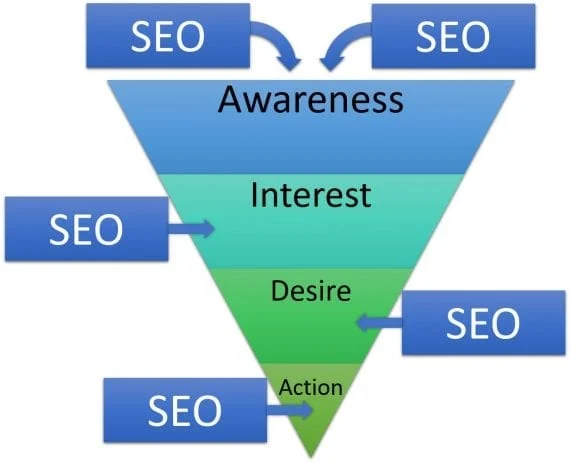
1) What is an SEO Funnel?
An SEO Funnel is a structured journey where search demand is captured at different intent levels and systematically moved toward a business outcome (lead, sale, booking, quote request). Unlike “random blog posting,” a funnel answers one clear question: How does this keyword become revenue?
What a real SEO funnel includes
- Intent mapping: TOFU / MOFU / BOFU keywords mapped to pages.
- Internal link design: TOFU → MOFU → BOFU pathways.
- Conversion design: lead magnets, forms, CTAs, trust blocks, proof.
- Measurement: Search Console + GA4 events + CRM outcomes.
If you want Sync Soft Solution to build this funnel for your website, check: SEO Services and Contact.
2) Why most SEO fails without a funnel
Most businesses chase “high volume keywords” and publish articles that don’t connect to a conversion. You end up with content that ranks but doesn’t sell.
Common failure points
- Wrong intent: Writing informational blogs for buyers who need pricing/service pages.
- No next step: Great blog, but no offer, no lead magnet, no CTA.
- Weak internal links: TOFU pages don’t push to MOFU/BOFU.
- No proof: No case studies, results, testimonials, process, guarantees.
- Tracking gaps: Traffic is measured, but lead quality isn’t.
3) SEO funnel stages: TOFU / MOFU / BOFU
TOFU (Top of Funnel): Awareness
TOFU SEO targets broad, informational queries. Your job here is attention + trust — not immediate selling. Think: “what is…”, “how to…”, “guide”, “checklist”, “templates”.
- Best assets: definitive guides, beginner tutorials, industry definitions, tool pages.
- Core CTA: free checklist, newsletter, calculator, PDF template.
- Internal link goal: point to MOFU comparisons, frameworks, and “how to choose” pages.
MOFU (Middle of Funnel): Consideration
MOFU SEO targets people evaluating options. This is where you prove value: frameworks, comparisons, alternatives, case studies, and “best for X” pages.
- Best assets: “X vs Y”, “best tools”, “pricing guide”, “process explanation”, “case study”.
- Core CTA: free audit, strategy call, demo, quote estimator.
- Internal link goal: push to BOFU pages (services, pricing, contact).
BOFU (Bottom of Funnel): Conversion
BOFU SEO targets ready-to-buy intent: service pages, pricing pages, local pages, booking pages. This is where your sales page quality matters.
- Best assets: SEO service pages, “SEO pricing”, “SEO agency in Delhi”, “book consultation”.
- Core CTA: form, WhatsApp, call, booking calendar.
- Trust blocks: testimonials, client logos, process steps, guarantees, FAQs.
4) How to build your SEO Funnel (step-by-step)
Step 1: Define the funnel conversion
Pick the funnel outcome you want from SEO. Examples: Lead form (B2B), WhatsApp inquiry (services), booking (appointments), checkout (e-commerce), or quote request (logistics).
Step 2: Create a keyword-to-intent map
Use a simple rule: informational = TOFU, comparison = MOFU, transactional = BOFU. You can validate with Google results: if the top pages are guides → TOFU; if they’re service pages → BOFU.
Helpful official resources: Google SEO Starter Guide, Search Console, GA4 documentation.
Step 3: Build your core BOFU pages first
Before publishing 50 blogs, finalize the BOFU assets: SEO Services, Pricing, Case Studies, Contact. TOFU content should always have a “next step” toward these.
- Service page: What you do + who it’s for + deliverables + timeline + FAQs
- Pricing: packages + included items + expectations + “request custom plan”
- Case studies: before/after metrics + process + screenshots + testimonial
- Contact: form + WhatsApp + phone + response time promise
Step 4: Publish TOFU content in clusters
Clusters keep your funnel organized. Each cluster has: 1 pillar (big guide) + 6–12 supporting articles + internal links to MOFU/BOFU.
- Pillar: “SEO Funnel: Complete Guide” (this page style)
- Support: “SEO funnel stages”, “SEO lead magnets”, “SEO internal linking”, “GA4 events for leads”
- MOFU: “Best SEO funnel tools”, “SEO funnel templates”, “SEO strategy for B2B”
- BOFU: “SEO services in Delhi”, “Performance marketing agency in Delhi”
Step 5: Add conversion layers
Without conversion layers, SEO is “traffic only.” Conversion layers include: lead magnets, calculators, interactive tools, WhatsApp CTAs, and trust proof.
5) Funnel assets: pages, posts, lead magnets
Here’s a practical asset list that performs well for service businesses:
- Definitions + guides
- Checklists
- Tool pages
- FAQs
- Comparisons
- Alternatives
- Templates
- Case studies
- Service pages + deliverables
- Pricing + packages
- Local landing pages (Delhi / Noida / Gurgaon, etc.)
- Contact / consultation / WhatsApp
If you want a ready service funnel, start here: SEO Services → Get a Free Consultation.
6) SEO Funnel Tool (interactive)
SEO Funnel Forecast Tool
7) Tracking & measurement
A funnel becomes powerful when you can measure each step: sessions → leads → qualified leads → customers.
- Search Console: track queries, CTR, index coverage.
- GA4: track conversions (form_submit, whatsapp_click, call_click).
- CRM / Sheets: track lead quality & close rate by landing page.
If you want, Sync Soft Solution can implement conversion tracking + events + dashboards for your funnel. Reach us on WhatsApp: 8750347699.
8) Templates you can copy
SEO Funnel Content Map Template
- Cluster: (Topic)
- TOFU: 6–12 articles (guides/checklists/tools)
- MOFU: 2–5 pages (comparisons/alternatives/case study)
- BOFU: service + pricing + contact
- Internal links: every TOFU links to at least 1 MOFU + 1 BOFU
BOFU Service Page Outline
- Hero: “Result-focused SEO services” + CTA
- Who it’s for + outcomes
- Deliverables + timeline
- Proof: case studies + testimonials
- Process: step-by-step
- FAQs + contact
10) FAQs
1. What is the difference between SEO and an SEO Funnel?
SEO brings visibility. An SEO Funnel turns that visibility into leads and customers with intent mapping, internal links, and conversion assets.
2. How long does it take for an SEO Funnel to start generating leads?
Typically 6–12 weeks for early movement (depending on competition and site authority). BOFU improvements can convert faster if you already have traffic.
3. Which pages should I build first?
Start with BOFU pages: services, pricing, contact, and 1–2 case studies. Then publish TOFU clusters that push visitors into those BOFU pages.
4. How many TOFU articles do I need?
One cluster often starts with 6–12 TOFU articles. Quality + internal linking matters more than quantity.
5. What’s the best lead magnet for an SEO funnel?
Checklist + template + calculator is a strong combo. Pick a magnet that solves a small but urgent problem for your buyer.
6. How do I track WhatsApp leads from SEO?
Use GA4 events (whatsapp_click) + UTM parameters on the WhatsApp link and measure conversions per landing page.
7. Is an SEO funnel only for B2B?
No. E-commerce funnels use category pages + product comparisons + buying guides, and BOFU includes product and collection pages.
8. What conversion rate should I expect from SEO traffic?
Many service businesses see 0.5%–3% lead conversion from organic sessions depending on offer, page intent, and trust.
9. Do I need tools like Ahrefs or Semrush?
They help with research, but you can start with Google Search Console + Google Trends + competitor SERP analysis.
10. Can Sync Soft Solution build my SEO funnel end-to-end?
Yes. We can plan content clusters, create landing pages, implement tracking, and optimize conversions. WhatsApp us at 8750347699.