Courier & logistics / Client case study

Global India ExpressCourier information, connected to the next enquiry.

A service-led international courier website that brings shipping information, route discovery and quotation enquiries into one connected experience.

Client
Global India Express
Industry
Courier & logistics
Website focus
Services, destinations & enquiries
Explore more
All client case studies

The business context

Help senders understand their next step.

Global India Express is an international courier and logistics business. Its website introduces shipping services, helps visitors explore destination information and provides routes to shipment enquiries. The project sits at the meeting point of a broad service catalogue and a customer who needs a practical answer.

A sender may arrive with a document, parcel or business shipment in mind. Before contacting the team, they need to understand which service is relevant and what information to share. This case study focuses on that information journey: from the first service choice to a more useful conversation about a shipment.

The website approach

Put the shipment context close to the customer.

A courier website needs a clear relationship between what is being sent, where it is going and the next action available to the sender.

Service-first navigation

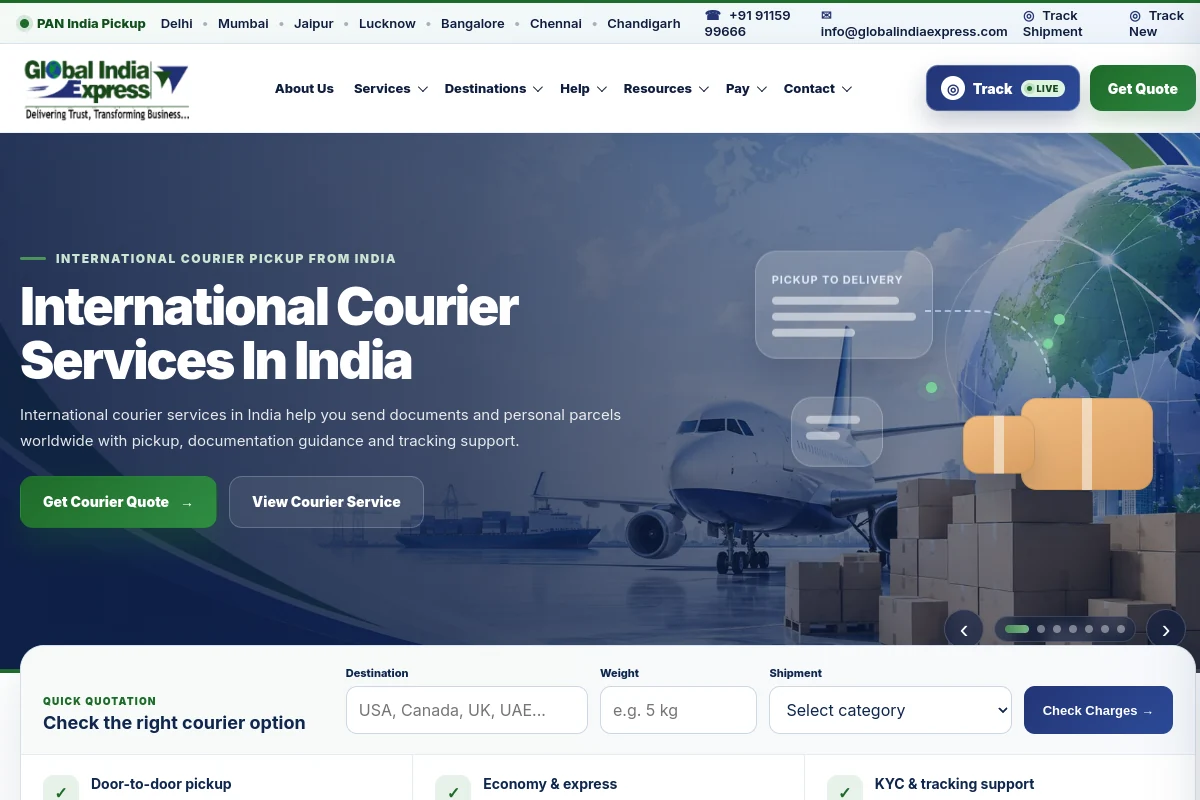
The homepage gives the business a clear international courier identity, supported by service and destination navigation. That structure helps a visitor begin with a recognisable shipping need instead of searching through an undifferentiated list of pages.

Route information near the entry point

Destination, weight and shipment-category cues bring practical shipping context into the browsing experience. These details help distinguish a general service enquiry from a more specific quotation request, while keeping the sender’s task visible.

Visible routes to contact and tracking

Quotation, contact and tracking actions serve different customer intentions. Giving those actions distinct labels helps new senders and existing customers find an appropriate next step without treating every visit as the same kind of enquiry.

From arrival to the next step

From a shipping question to a useful conversation.

The website experience follows the information a sender needs to make their next decision.

  1. Identify the service

    Start with the courier or shipping requirement that best matches the document, parcel or business shipment.

  2. Explore the destination

    Review relevant destination and route information before deciding what to ask the team.

  3. Add shipment context

    Bring the destination, approximate weight and shipment category into the quotation conversation.

  4. Enquire or track

    Choose a quotation or contact route for a new shipment, or tracking for an existing consignment.

Experience summary

A service catalogue with a clear customer task.

The experience connects information discovery with the practical next step a sender wants to take.

Explore the client website

A recognisable courier proposition

The opening content establishes the business category and gives visitors a useful starting point for international shipping enquiries.

Service and destination context

Navigation connects the shipping offer with the information customers look for before asking for a quote.

Different paths for different visits

New enquiries and existing-shipment tasks have distinct entry points within the same website experience.

A useful takeaway

Match the page structure to the shipment decision.

For a courier business, attractive pages work best when they help customers describe a real shipping requirement. Service categories, destinations and quotation prompts should support one another. When planning a similar project, we define those relationships before deciding the number of pages, the content workflow and the enquiry information your operations team needs.

Your project questions

Thinking about a
similar website?

Start with the services, content and enquiry experience your business needs.

What makes a courier website different from a general business website?

Courier customers often need destination, shipment-type and quotation information before they contact a provider. A similar project should organise those decisions clearly, with separate paths for new enquiries and existing-shipment tasks. The exact features depend on your services and operations.

Can you build destination and pickup-city pages for our courier brand?

Yes. We can scope country, city and service pages around genuine coverage and useful customer information. We first review your routes, existing URLs and available content, then agree a structure that your team can maintain.

Can courier rates be managed from one place?

A centrally managed rate table or database can be included in a similar project. We need your pricing rules, zones, weight slabs, taxes and update responsibilities before defining the implementation. Any carrier integration or automated pricing is quoted separately where required.

What do you need to quote a similar courier website?

Share your service list, pickup locations, target destinations, current website and the details your team needs for a quotation. Tell us whether you require rate displays, tracking links, content migration or a private enquiry inbox so the proposal reflects the actual work.

Let’s make your next move

A website shaped around
your business.

Tell us about your services, customers and the next step you want visitors to take. We’ll help define the pages, design and functionality, with a written proposal for your project.

  • Your current website and target audience
  • The services or content you want to prioritise
  • Your timeline, scope and enquiry requirements

Based in New Delhi. Working with ambitious businesses across India and beyond.

Plan a project like Global India Express

Loading security check… You can fill in your details while it loads.

By submitting, you agree to our Privacy Policy and allow us to contact you about this enquiry.

Keep exploring

More client stories.

View all case studies