

- What Is AI Marketing, and Why Does It Matter Now
- AI vs. Traditional Marketing Strategies: What Changes in Practice
- Machine Learning Marketing Automation: Turning Data into Decisions
- Predictive Analytics Customer Segmentation: Find the Right Audience Before You Spend
- Generative AI Content Creation: Scale Without Sounding Generic
- AI-Powered SEO Optimization: From Keywords to Intent to Technical Fixes
- Chatbot Marketing Customer Support: Convert and Retain 24/7
- Personalized Email Marketing AI: Better Timing, Better Relevance
- Social Media Listening Tools AI: Turn Conversations into Campaigns
- How to Use AI for Lead Generation (Without Spamming)
- Marketing Automation Platforms Comparison: How to Choose
- Data Privacy Compliance AI Marketing: Do It Right
- The Future of AI in Digital Marketing: What to Prepare For
- Conclusion: The Real Advantage Is Compounding Learning

Digital marketing is no longer just about creativity plus a media budget—it’s about speed, precision, and learning from data in real time. That’s why AI in digital marketing has shifted from “nice to have” to a core capability. Whether you’re a solo founder running ads or an enterprise team managing omnichannel campaigns, digital marketing AI helps you understand audiences faster, create more relevant experiences, and optimize performance continuously.
What Is AI Marketing, and Why Does It Matter Now
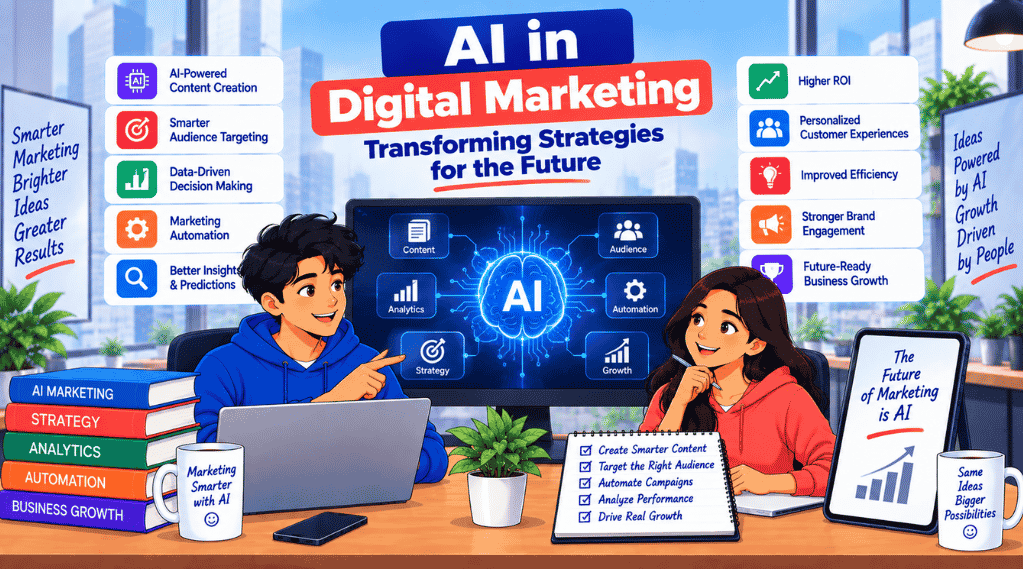
If you’re asking what AI marketing is, think of it as using artificial intelligence (and especially machine learning) to automate decisions, generate insights, and personalize customer experiences across channels. AI-based digital marketing typically combines:
- Data processing (customer behavior, CRM, web analytics, ad platforms)
- Models (classification, forecasting, recommendations)
- Automation (workflows, bidding, personalization, testing)
- Generation (copy, images, variations—i.e., generative AI content creation)
The role of AI in digital marketing is to make marketing more measurable, adaptive, and customer-centric—without requiring you to manually analyze every segment or test every variant.
AI vs. Traditional Marketing Strategies: What Changes in Practice
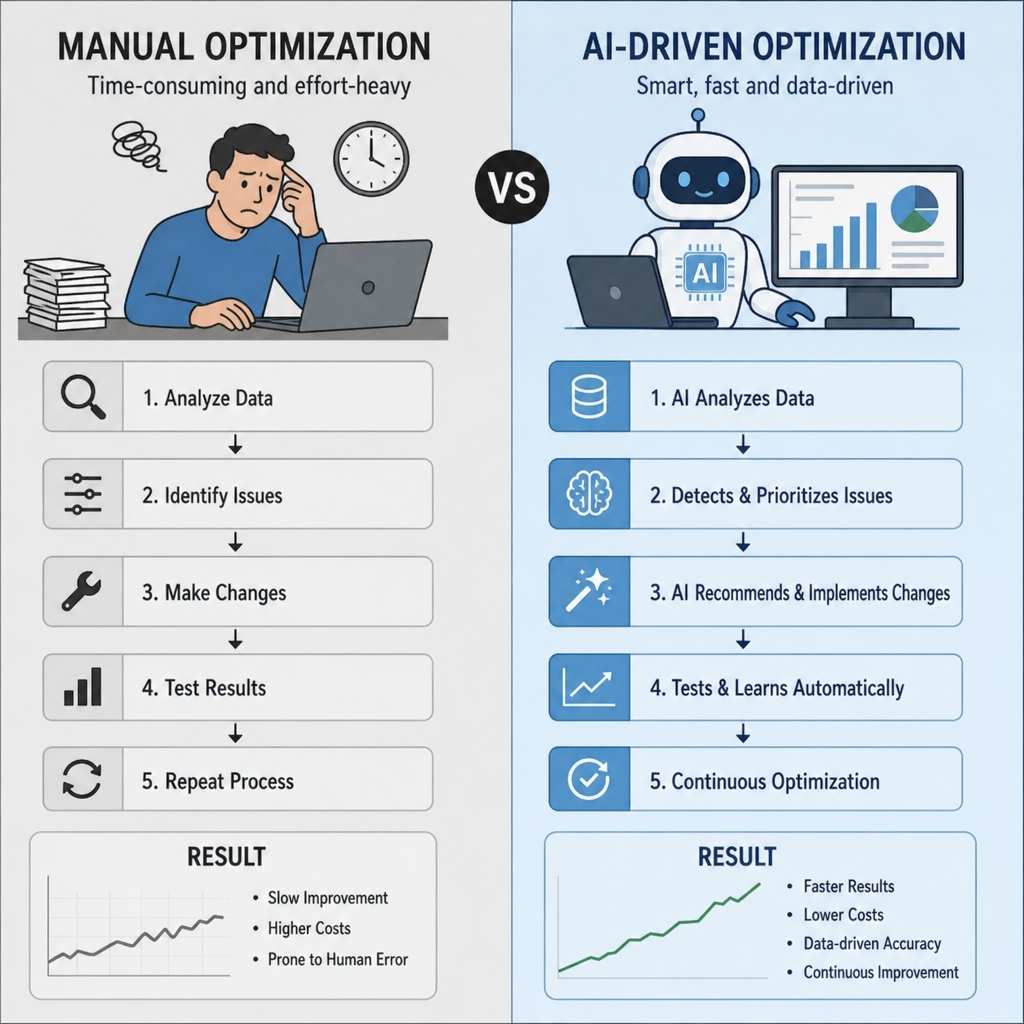
In AI vs. traditional marketing strategies, the biggest difference is feedback speed. Traditional approaches often rely on periodic reporting and manual optimizations. AI-driven approaches can adjust continuously.
Traditional marketing tends to:
- Segment broadly (e.g., age, location)
- Optimize weekly/monthly
- Depend heavily on human pattern recognition
Marketing with AI tends to:
- Segment granularly and dynamically
- Optimize daily or in real time
- Find hidden patterns humans miss
This doesn’t replace marketers—it upgrades them. The best teams use AI for iteration and analysts’ work, while humans own brand, positioning, and strategy.
Machine Learning Marketing Automation: Turning Data into Decisions
Machine learning marketing automation goes beyond “if this, then that” rules. It learns which messages, channels, and timings work best for different users and predicts likely outcomes.
Common automation wins include:
- Smarter lead scoring and routing
- Dynamic product recommendations
- Budget allocation across campaigns
- Automated A/B/n testing and multi-armed bandit testing
This is where marketing automation platform comparison becomes important: some tools are strong at email and lifecycle automation, others at ad optimization, and others at CDP-style segmentation. Your choice should match your data maturity and channels.
Actionable Tip: Start with One High-Impact Workflow
Pick a workflow that is measurable and repeatable, such as
- Abandoned cart
- Trial-to-paid onboarding
- Re-engagement for inactive users Then apply AI to optimize subject lines, timing, and audience selection before expanding.
Predictive Analytics Customer Segmentation: Find the Right Audience Before You Spend
Modern segmentation isn’t just “who bought.” With predictive analytics customer segmentation, AI can identify users likely to:
- Convert within a time window
- Churn soon
- Respond to discounts vs. value messaging
- Upgrade to a higher plan
This improves targeting and helps reduce ad spend with AI by focusing budget on higher-probability audiences instead of broad reach.
Example Use Case (Practical)
If you run e-commerce, you can build segments such as
- “High intent, price-sensitive” (send limited-time offers)
- “High intent, premium preference” (show bundles, premium shipping)
- “Low intent, needs education” (send guides, UGC, reviews)
Generative AI Content Creation: Scale Without Sounding Generic
Generative AI content creation is best used as a multiplier, not a substitute for brand thinking. It can help you produce:
- Ad variations for multiple audiences
- Landing page copy drafts
- Product descriptions at scale
- Social captions and hooks
- Content briefs and outlines
How to Keep Brand Voice Intact
Use a simple system:
- Create a “brand voice card” (tone, do/don’t, examples)
- Generate 10–20 variants
- Human-edit the top 2–3
- Test performance and feed winners back into prompts
This approach makes AI digital marketing practical: your team stays creative, while AI increases throughput.
AI-Powered SEO Optimization: From Keywords to Intent to Technical Fixes
AI-powered SEO optimization has moved beyond keyword lists. AI helps you map search intent, build topic clusters, and identify on-page and technical issues that block performance.
High-value SEO applications include:
- Identifying content gaps vs. competitors
- Generating content briefs aligned to intent
- Internal linking suggestions
- Schema and metadata recommendations
- Log-file and crawl anomaly detection (where supported)
Actionable Tip: Optimize for Questions and Outcomes
Instead of only targeting “best X,” include intent-rich sections:
- “How to choose X”
- “X vs Y”
- “Pricing and ROI of X” This aligns with how people search and how AI-driven search experiences synthesize results.

Chatbot Marketing Customer Support: Convert and Retain 24/7
Chatbot marketing customer support is no longer limited to scripted FAQs. Today’s bots can:
- Recommend products based on needs
- Capture lead details and qualify prospects
- Route tickets with context to human agents
- Assist with onboarding and troubleshooting
Where Chatbots Improve Revenue
They often lift conversions by reducing friction:
- Instant answers reduce drop-offs on pricing pages
- Guided product finders reduce choice overload
- Faster support improves retention and reviews
If you’re wondering how AI improves conversion rates, friction reduction plus personalization is the core mechanism—customers get relevant help at the exact decision moment.
Personalized Email Marketing AI: Better Timing, Better Relevance
Personalized email marketing AI focuses on delivering the right message to the right person at the right time. AI can optimize:
- Send time per user
- Subject line and preview text variants
- Product recommendations
- Next-best-offer logic
- Lifecycle branching (based on behavior)
Quick Win: Personalize by Behavior, Not Just Name
Replace generic “Hi {First Name}” personalization with:
- Browsed category
- Most-viewed product line
- Stage in the funnel
- Content consumed (guides, webinars)
Social Media Listening Tools AI: Turn Conversations into Campaigns
With social media listening tools like AI, you can analyze sentiment, emerging topics, and brand mentions at scale. This helps you:
- Catch reputation issues early
- Discover content ideas from real audience language
- Identify influencer and community opportunities
- Track competitors’ share of voice
Actionable Tip: Build a “Signal to Action” Loop
Set up a weekly process:
- Top 10 themes + sentiment shifts
- Top customer objections
- Top product praise points Then convert those into ad angles, FAQ updates, and landing page improvements.
How to Use AI for Lead Generation (Without Spamming)
If you’re searching for how to use AI for lead generation, focus on relevance and qualification. AI can improve lead gen by:
- Identifying lookalike audiences with higher LTV
- Predicting lead quality from firmographic/behavioral data
- Personalizing landing pages by source or segment
- Automating follow-ups with context
Practical Lead Gen Stack (Simple and Effective)
- AI-assisted ad creative testing
- Landing page personalization
- Lead scoring + routing
- Nurture sequences with dynamic content
This keeps volume high while improving quality—so sales teams don’t drown in unqualified leads.
Marketing Automation Platforms Comparison: How to Choose
A good marketing automation platform comparison looks at fit, not hype. Evaluate platforms on:
- Data connectivity: CRM, e-commerce, analytics, ad platforms
- AI capabilities: segmentation, recommendations, experimentation
- Governance: roles, approvals, brand controls
- Reporting: incrementality, attribution options, cohort analysis
- Ease of use: can your team run it weekly without consultants?
Actionable Tip: Demand a Pilot With Real Data
Before committing, run a 2–4 week pilot on:
- One lifecycle journey (e.g., trial onboarding)
- One paid channel (e.g., paid social retargeting): Measure lift against a control group where possible.
Data Privacy Compliance AI Marketing: Do It Right
As AI use grows, data privacy compliance and AI marketing become non-negotiable. Key practices include:
- Minimize data collection to what you need
- Use consent-based personalization
- Apply retention limits and access controls
- Prefer aggregated or anonymized analytics where possible
- Document model inputs and decision logic for auditing
Practical Rule
If you can’t clearly explain to a customer why they received a message, your personalization is likely too invasive—or poorly governed.
The Future of AI in Digital Marketing: What to Prepare For
The future of AI in digital marketing is moving toward:
- Always-on experimentation (creative + landing pages + offers)
- Autonomous media buying with tighter guardrails
- More predictive lifecycle marketing (churn and LTV forecasting)
- Stronger first-party data strategies as tracking changes continue
- More emphasis on brand authenticity as content volume rises
Winning teams will combine AI speed with human judgment—especially on brand, ethics, and long-term positioning.
Conclusion: The Real Advantage Is Compounding Learning
The biggest benefit of AI in digital marketing isn’t just automation—it’s compounding improvement. Each campaign generates data, AI finds patterns, and your marketing gets smarter with every iteration. Start small (one workflow, one channel, one KPI), prove lift, and then scale.
If you treat AI as a system—digital marketing AI plus measurement plus governance—you’ll create more relevant experiences, waste less spend, and build a marketing engine that improves month after month.