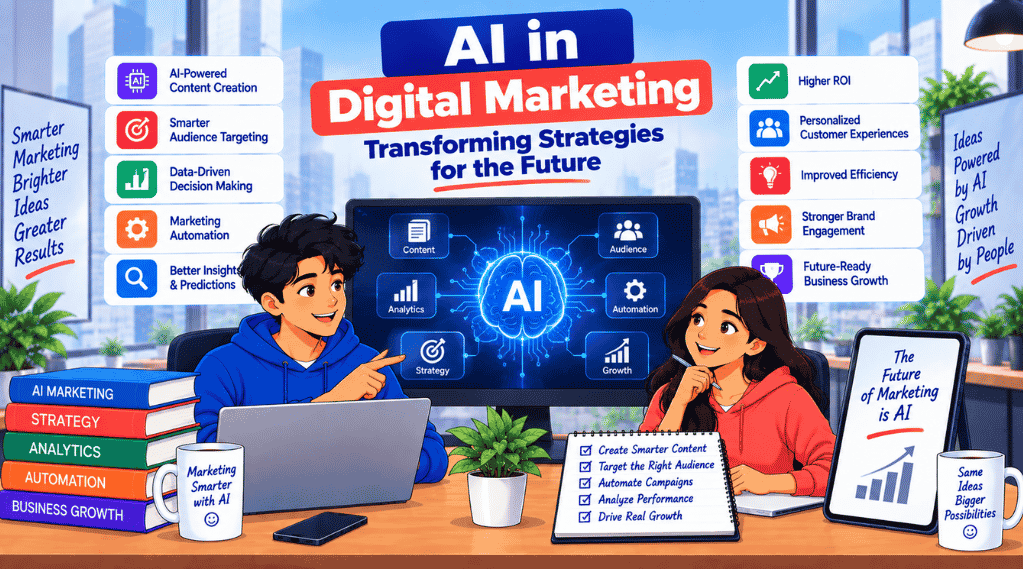

Artificial Intelligence is transforming industries, but does it threaten or empower human work?
Learn the real impact of AI on employment, future skills, and how to adapt for the next decade.
Short answer: AI automates repetitive tasks, not creativity or empathy. Most jobs aren’t disappearing—they’re evolving.
AI changes how we work, not whether we work.
1️⃣ How AI Is Changing Jobs
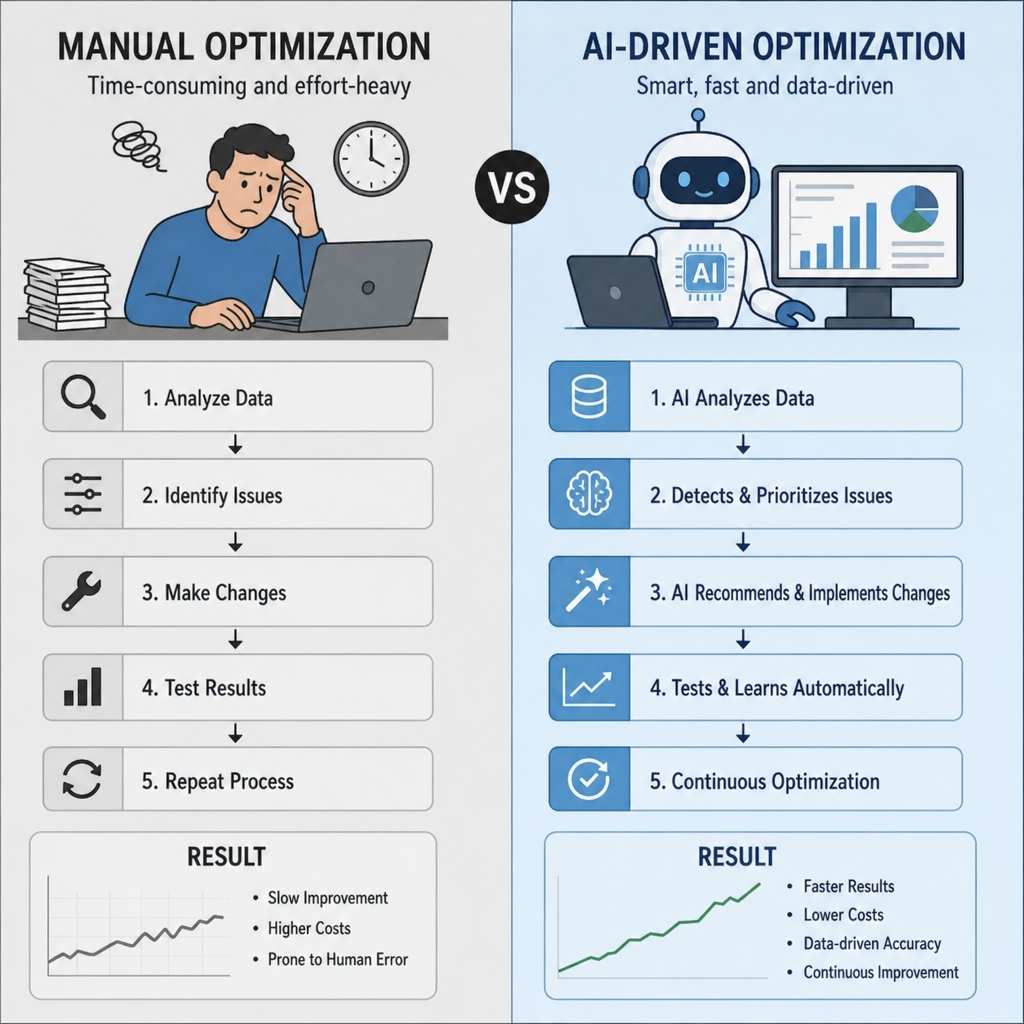
AI streamlines operations by handling routine and analytical work—data entry, report generation, and response drafting.
This shift allows humans to focus on creative strategy, emotional intelligence, and problem-solving.
For example, at Sync Soft Solution, our marketers use AI for keyword clustering, while human experts craft
compelling brand stories and SEO-optimized campaigns that connect emotionally with users.
To see how this works in real performance campaigns, check out our case study on
Performance Marketing in Delhi,
where AI-driven ad optimization improved ROI by 42%.
Quick Insight: The most successful teams combine human creativity with AI efficiency — “AI + You” is the future.
2️⃣ Why AI Can’t Replace Humans
AI can analyze data, but humans apply ethics and intuition.
AI can generate content, but humans ensure authenticity and creativity.
AI can suggest decisions, but humans take responsibility for them.
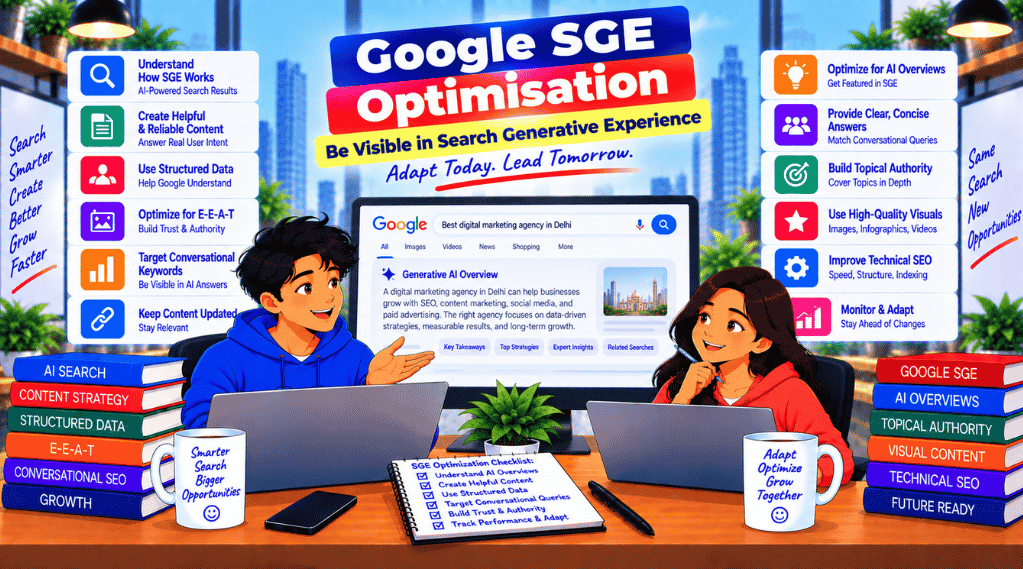
Our blog on Google SGE Optimisation
explains how AI-assisted search still needs human SEO experts to interpret data, refine content, and ensure alignment with user intent.
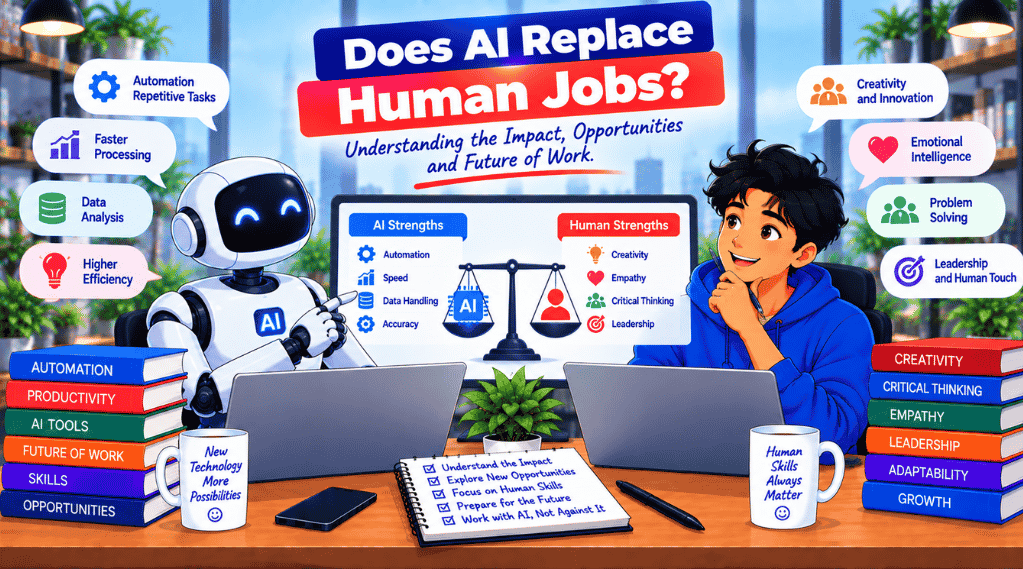
Where AI Shines:
Processing and analyzing large datasets
Automating predictable workflows
Generating summaries, reports, and drafts
Where Humans Excel:
Empathy and emotional intelligence
Creative and strategic thinking
Ethical judgment and trust building
3️⃣ Jobs Most Affected by AI (and How They’ll Evolve)
AI transforms—not terminates—roles. Here’s what changes across industries:
Marketing: AI automates A/B testing and analytics; humans tell the brand story.
Healthcare: AI supports diagnostics; doctors provide care and reassurance.
Education: AI personalizes learning; teachers inspire and mentor.
Our insights in SEO Playbook 2025
show how AI tools are revolutionizing keyword research, competitor tracking, and user experience — while strategy still depends on people.
4️⃣ New AI-Driven Career Opportunities
As automation rises, entirely new jobs are emerging:
AI Prompt Engineer
Machine Learning Auditor
AI Ethics Specialist
Human-AI Experience Designer
Data Quality Analyst
According to the
World Economic Forum, automation will displace 85 million jobs by 2030 but create 97 million new ones.
5️⃣ How to Future-Proof Your Career
Professionals must evolve with AI. Here’s how:
Learn AI Tools: Explore ChatGPT, Jasper, Gemini, and automation platforms.
Strengthen Human Skills: Communication, creativity, empathy, and decision-making.
Develop Tech Synergy: Basic coding, analytics, and data storytelling.
Personal Branding: Share AI-related insights on LinkedIn and build your thought leadership.
Pro Tip: Treat AI like your colleague — let it handle repetitive work while you lead innovation and relationships.
6️⃣ Responsible AI for Businesses
Businesses must balance innovation with responsibility. Follow these steps for ethical AI adoption:
Start with small pilot projects (marketing automation, analytics, customer service)
Establish an AI ethics policy
Train employees on AI literacy
Measure ROI through productivity and quality improvements
Keep a human review in every critical decision loop
Our blog on
Digital Marketing Services in Delhi showcases how AI-enhanced marketing strategies are already reshaping ROI and conversions for clients.
7️⃣ Final Thoughts
AI isn’t a replacement—it’s a revolution. It redefines roles, enhances productivity, and challenges us to grow creatively.
The winners will be those who embrace collaboration between humans and machines.
Search Bot Optimization (SBO): Technical Blueprint for AI Crawlers
Search visibility no longer depends only on keywords. Your website must also be easy for search bots, AI crawlers,
and answer engines to crawl, render, interpret, trust, and prioritize. This commercial-first guide explains how SBO improves
crawl paths, page clarity, schema, internal linking, and conversion-ready architecture for lead generation.
Reading time: ~14 minutes • Category: Technical SEO / AI Search • Publisher: Sync Soft Solution
Need implementation instead of just strategy?
If your pages are not being interpreted clearly by modern search systems, explore our
Search Bot Optimization services
for audit, fixes, structure, schema, and commercial page improvements.
Search Bot Optimization is the process of improving how bots access and understand your website. Traditional SEO
often focuses on rankings and keywords. SBO goes deeper into the technical and structural layer that affects whether
a page is even interpreted correctly in the first place.
When a search bot reaches your site, it needs a clear crawl path, stable rendering, meaningful headings, strong internal
links, clean canonical logic, valid structured data, and clear service intent. If these signals are weak, the page may be
indexed poorly, misunderstood, or ignored for higher-value search experiences like AI-generated answers and entity-led results.
For service businesses, SBO matters because pages with stronger machine readability usually perform better in search visibility,
AI summaries, and commercial conversions. It is not only about traffic. It is about making your best pages easier to discover,
easier to interpret, and easier to trust.
Why SBO matters for commercial websites
Business websites lose opportunity when search bots waste crawl budget on weak pages while stronger service pages remain under-supported.
SBO helps prioritize the pages that bring revenue, such as service pages, city pages, pricing pages, solution pages, and comparison pages.
✓
Better crawl efficiency — bots reach your high-value pages faster and more often.
✓
Improved machine understanding — services, locations, and offers become easier to interpret.
✓
Stronger AI visibility — a clean technical foundation supports answer engines and AI search experiences.
More qualified leads — traffic lands on pages that are built to convert, not just rank.
SBO technical blueprint
The most effective SBO campaigns do not depend on one trick. They combine technical clarity, page architecture, entity consistency,
and conversion-focused page design. Use the blueprint below to strengthen your revenue pages from both a bot perspective and a buyer perspective.
✓
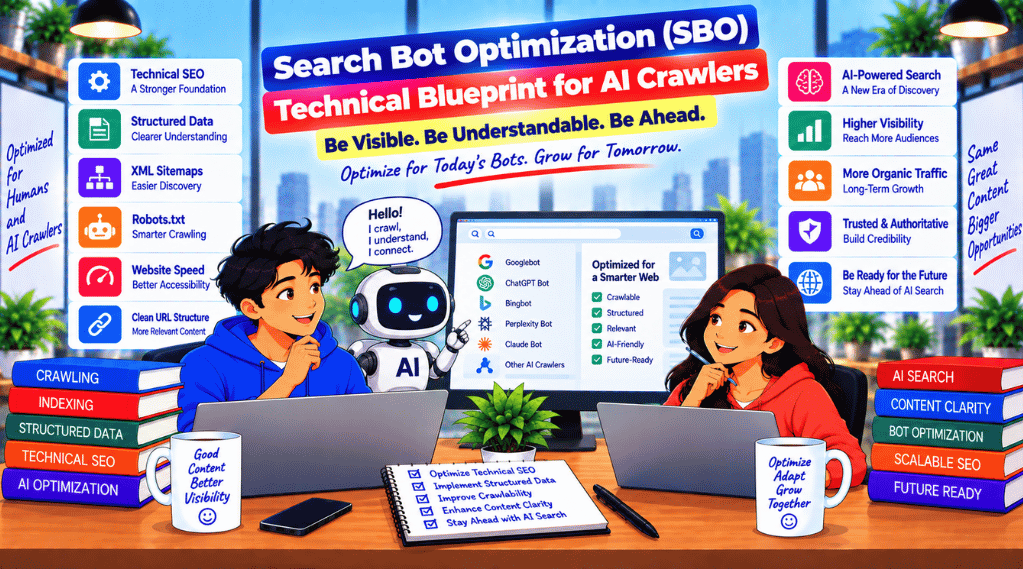
Crawl access: robots rules, XML sitemaps, clean URLs, and crawl-safe architecture.
✓
Rendering stability: pages should load meaningful HTML without forcing bots to guess.
✓
Indexation control: strong canonical logic, reduced duplication, and page-value prioritization.
✓
Internal linking: service, city, blog, and solution pages should support each other logically.
✓
Structured meaning: schema, entity clarity, service relevance, FAQ context, and local signals.
✓
Commercial UX: CTA flow, pricing clarity, proof blocks, and fast contact paths.
Bot-first checklist for service pages
✓
One clear topic per page with a commercial H1 that matches buyer intent.
✓
Meaningful intro section that explains service, audience, location, and outcome immediately.
✓
Schema alignment using Service, FAQ, Breadcrumb, LocalBusiness, and Organization where relevant.
✓
Logical support links from blogs to services, services to city pages, and cluster pages back to money pages.
✓
Visible commercial signals such as pricing starts from, deliverables, process, and consultation CTA.
✓
Index-worthy uniqueness so similar pages do not compete against each other.
How AI crawlers and search bots read your pages
A bot does not experience your website like a human. It follows links, interprets code, reads structure, and evaluates relationships
between pages. If a page depends too heavily on scripts, vague sections, duplicate headings, or missing context, its real value may never
be understood properly.
This is why SBO begins with page accessibility and structural clarity. A good page tells bots what it is, who it is for, how it relates to
the rest of the site, and why it deserves indexing. That clarity becomes even more important when your site has multiple services, locations,
subfolders, landing pages, or blog clusters.
Common crawl and interpretation issues
✓
Too many near-duplicate pages with weak differentiation.
✓
Broken internal paths that keep money pages too deep in the architecture.
✓
Weak intro copy that does not explain the page purpose early enough.
✓
Poor heading hierarchy that makes sections harder to interpret.
✓
Schema errors or missing schema on important pages.
✓
Heavy rendering dependence where important content appears too late or unreliably.
Page structure that improves bot understanding
Strong SBO pages are easy to scan for both users and machines. Every major section should answer a specific question and move the visitor
closer to action. This is especially important on pages targeting services, pricing, or local intent.
Recommended page structure for high-conversion SBO pages
✓
Hero section: service + audience + outcome + CTA above the fold.
✓
Direct explanation: what the service is and why it matters.
✓
Deliverables section: exactly what is included in the work.
✓
Technical process: audit, implementation, reporting, and scaling steps.
✓
Pricing context: plan levels, project scope, and what influences cost.
✓
Trust blocks: case studies, proof, reviews, screenshots, and business credentials.
✓
FAQ section: answer objections before the visitor leaves the page.
What SBO services should include
Search Bot Optimization should not stop at a technical report. If the goal is commercial growth, implementation matters.
A solid SBO service usually includes diagnostic work, page-level fixes, architecture improvements, schema deployment,
internal linking upgrades, and conversion-focused enhancements for service pages.
Search Bot Optimization pricing depends on the number of revenue pages, crawl complexity, technical debt, site size,
schema requirements, and reporting depth. A retainer model usually works best when implementation and iteration are needed.
Full architecture improvement, 20+ page implementation, advanced entity + schema mapping, technical clean-up, internal cluster rollout, and weekly strategic support
₹74,999per month
What affects SBO pricing?
✓
Site size and number of important pages.
✓
Technical debt including duplication, rendering, and structural issues.
✓
Service complexity and how many commercial pages need upgrading.
✓
Location count for city-specific or multi-region targeting.
✓
Schema scope and structured data implementation depth.
✓
Reporting cadence and strategic support requirements.
Recommended internal links for topical support
SBO performs best when supported by a broader AI-search content cluster. Connect technical pages, service pages, and related guides
so search systems can understand the topic depth of your website and users can move naturally toward a conversion page.
Search Bot Optimization Services
Main conversion page for SBO audits, implementation, deliverables, and lead-focused execution.
Search Bot Optimization services improve how search engines, AI crawlers, and answer engines discover, render, interpret, and trust your website. This includes crawl paths, internal linking, structured data, indexation, content clarity, and technical SEO fixes that support visibility and lead generation.
02 Is Search Bot Optimization different from Answer Engine Optimization?
Yes. Answer Engine Optimization focuses on winning direct answers and AI-generated responses, while Search Bot Optimization strengthens the technical foundation that helps bots crawl, render, and understand your pages correctly. Strong SBO supports better AEO outcomes.
03 Why does SBO matter for business websites?
It matters because strong services and offers can still underperform if bots cannot interpret them properly. SBO helps your important pages become easier to index, easier to understand, and more likely to attract qualified traffic and conversions.
04 Can SBO help AI Overviews and answer engines?
Yes. SBO improves crawl access, structured meaning, internal context, and page clarity, which supports the systems behind AI Overviews, answer engines, and modern search features.
05 What problems does SBO usually fix?
It commonly fixes crawl waste, weak internal linking, duplicate pages, poor heading structure, slow or script-heavy rendering, schema gaps, canonical confusion, thin page architecture, and weak commercial clarity.
06 Who should invest in Search Bot Optimization?
Local businesses, agencies, service companies, SaaS brands, eCommerce stores, consultants, and multi-location businesses should consider SBO when they want stronger search visibility, AI discoverability, and better lead quality from organic traffic.
07 How long does SBO take to show results?
Some improvements such as better crawlability, cleaner page structure, and stronger conversion flow can show value quickly. Broader visibility gains usually build over several weeks to months depending on competition and site condition.
08 Does SBO replace SEO?
No. SBO strengthens SEO. It improves the machine-readable foundation that supports ranking, indexing, AI interpretation, and the performance of your commercial pages.
09 Does schema markup matter for SBO?
Yes. Schema gives machines better context about your organization, services, FAQs, reviews, and page intent. This improves clarity and supports richer interpretation across search systems.
10 Can SBO improve lead generation?
Yes. Better bot understanding often leads to better visibility, and when that visibility points to well-structured commercial pages with strong CTAs, lead quality usually improves too.
11 What is included in an SBO audit?
A typical audit includes crawl review, indexation analysis, rendering checks, canonical review, sitemap and robots checks, schema validation, internal linking analysis, and page-level recommendations for high-value URLs.
12 Can SBO help my service pages rank better?
Yes. Service pages often improve when they have clearer structure, better internal support, stronger commercial relevance, improved schema, and cleaner signals for bots and users alike.
13 What is the difference between SBO and technical SEO?
Technical SEO is the broader field. SBO is a more focused bot-first approach inside technical SEO that emphasizes crawl behavior, rendering, interpretation, structured context, and modern AI search readiness.
14 Is SBO useful for WordPress websites?
Yes. WordPress websites often benefit from cleaner architecture, stronger internal linking, plugin cleanup, schema corrections, page-speed improvements, and clearer page hierarchy for better crawl efficiency.
15 Can SBO help multi-location businesses?
Yes. Multi-location businesses need clear page hierarchy, unique city intent, consistent schema, local entity clarity, and controlled internal linking. SBO helps reduce confusion between similar pages.
16 Will SBO fix indexing issues?
It can fix many indexing blockers, including weak crawl paths, canonical mistakes, duplicate logic, noindex conflicts, thin pages, and poor support signals for important URLs.
17 How much do Search Bot Optimization services cost?
Pricing depends on site size, technical debt, number of services, number of locations, schema depth, and implementation scope. Most businesses choose monthly retainers or an audit-plus-implementation plan.
18 Can SBO support Google, Bing, and AI search together?
Yes. SBO improves the core structure and machine readability of your website, which supports multiple search ecosystems rather than only one platform.
19 Do I need new content for SBO?
Not always. Many websites first need stronger structure, improved internal links, better schema, cleaner page positioning, and clearer conversion-focused copy before large-scale new content is required.
20 Where can I get Search Bot Optimization services?
You can explore Search Bot Optimization services from Sync Soft Solution for audits, implementation, technical cleanup, page upgrades, schema improvements, and conversion-driven search growth.
Google SGE Optimisation (AI Overviews): How to Get Cited & Convert Traffic
AI Overviews are changing how customers compare agencies and services. This guide shows a framework
to improve your chances of being selected, cited, and clicked—using answer-ready structure, entity SEO, schema, trust signals, and conversion-first UX.
Google’s AI Overviews (popularly called SGE) are AI-generated summaries that can appear above the traditional results. Instead of clicking
5–10 links to compare options, users often read one overview, scan the cited sources, and then choose a provider.
This shifts SEO from only “rank #1” to a new goal: be understood, be trusted, and be cited.
If your service pages are vague, thin, or missing proof, AI systems may skip them—even if you rank on page one. SGE optimisation is about
presenting your expertise in a format that AI can parse fast, verify through signals, and recommend confidently.
Why SGE optimisation matters
SGE optimization for keywords like “best digital marketing agency”, “SEO services pricing”, and
“GEO agency near me” are where leads happen. AI Overviews can reduce clicks, but they also create a powerful shortcut:
brands that appear inside the AI summary get premium visibility and higher trust.
✓
Less scrolling — decisions happen inside the AI summary.
✓
Shortlists win — AI often recommends only a few sources/providers.
✓
Higher intent — searches with “best”, “pricing”, “agency”, “services” are close to buying.
✓
Trust signals decide — proof, clarity, and authority matter more than fluffy content.
✓
Better conversions — conversion-first UX turns fewer visits into more leads.
SGE Optimisation Framework
Use this 5-layer framework to increase your probability of being cited and converting traffic. You don’t need to “game AI.”
You need to remove ambiguity and build confidence signals—exactly what strong SEO should do in 2026.
Fast contact path: WhatsApp + call + form above the fold.
How to structure content for AI Overviews (templates)
SGE selects content that is easy to summarize. That means your page must have clean information architecture.
Below are two templates that consistently work for service businesses.
Implementation examples (what changes you will make on pages).
✓
Conversion plan (CTA placement, contact options, lead form structure).
Content formatting that improves AI readability
✓
Use mini-summaries below every H2 (2–3 lines) before going deeper.
✓
Use “How it works” steps with numbered lists.
✓
Add comparisons (SEO vs GEO vs AEO; in-house vs agency; starter vs growth plans).
✓
Answer questions directly (avoid starting every paragraph with “In today’s world…”).
Recommended pricing positioning (for leads)
For SGE/GEO optimisation, pricing should match the scope (pages, clusters, locations, schema, reporting) and competition.
Here is a clean retainer model you can place on money pages for better conversions.
SGE optimisation works best inside a topic cluster. Add internal links between these supporting guides to improve crawl flow,
topical relevance, and trust signals.
Generative Engine Optimisation (GEO) Guide
Core foundation: structure + entities + schema + trust. Use this to support all AI SEO pages.
It’s Google’s AI-generated summary shown on some searches. Your goal is to be cited or recommended in those answers and capture high-intent clicks.
02 How do I rank in AI Overviews?
Use direct answers, structured headings, FAQ blocks, strong entity signals, validated schema, proof blocks, and internal linking around a topic cluster.
03 Does schema help SGE?
Yes. Schema improves machine-readable context and helps systems interpret services, business info, FAQs and intent.
04 Is SGE optimisation different from SEO?
It builds on SEO but focuses more on being cited/mentioned in AI summaries using structure, entities, schema, and trust signals.
05 How long does it take to see results?
You can see clarity + conversion improvements quickly, while citations and AI visibility typically compound over weeks to months.
Google SGE Optimisation (AI Overviews): How to Get Cited & Convert Traffic
AI Overviews are changing how customers choose agencies. This guide shows a commercial framework to improve your
chances of being selected, cited, and clicked—using answer-ready structure, entity SEO, schema, trust signals, and conversion-first UX.
AI Answer Structure Entity SEO Schema Proof & Trust CRO
Reading time: ~9 minutes • Category: AI SEO / GEO • Publisher: Sync Soft Solution
Want implementation (not theory)?
If you want real improvements for AI visibility + commercial keyword growth, use our GEO Services with pricing,
deliverables, and conversion-first structure.
Google’s AI Overviews (often called SGE) generate an AI summary at the top of the results. In many searches,
users get the answer instantly—then choose a provider from a shortlist, citations, or a quick comparison.
That means your brand needs more than “normal SEO.” You need content that AI can understand, trust, and cite.
Why SGE optimisation matters for commercial keywords
✓
Less scrolling — decisions happen inside the AI summary.
✓
Shortlists win — AI often recommends only a few sources/providers.
✓
Higher intent — users searching “best agency” or “pricing” are close to buying.
✓
Trust signals decide — proof, clarity, and authority matter more than fluff.
SGE Optimisation Framework (Commercial)
Use this 5-layer model to increase citation potential and conversions:
Proof blocks (case snippets, audits, results screenshots if available).
Recommended pricing positioning (for leads)
If you sell GEO/SGE optimisation as a monthly retainer, pricing should match competition level and delivery volume.
Here is a clean commercial structure you can use on service pages too:
It’s Google’s AI-generated summary shown on some searches. Your goal is to be cited or recommended in those answers and capture high-intent clicks.
02 How do I rank in AI Overviews?
Use direct answers, structured headings, FAQ blocks, strong entity signals, validated schema, proof blocks, and internal linking around a topic cluster.
03 Does schema help SGE?
Yes. Schema improves machine-readable context and helps systems interpret services, business info, FAQs and intent.
04 Is SGE optimisation different from SEO?
It builds on SEO but focuses more on being cited/mentioned in AI summaries using structure, entities, schema, and trust signals.
05 How long does it take to see results?
You can see clarity + conversion improvements quickly, while citations and AI visibility typically compound over weeks to months.
On Page SEO Services for Small Businesses and eCommerce Websites | Sync Soft Solution
SEO • UX • Content • Conversion Optimisation
On Page SEO Services for Small Businesses and eCommerce Websites: What Actually Improves Rankings, Traffic, and Conversions
Many websites do not struggle because they lack content. They struggle because their important pages are weak, unclear, poorly structured, and not aligned with how people search. This is where On Page SEO Services matter. They help turn ordinary pages into stronger business assets that rank better, communicate better, and convert better.
For small businesses, local brands, startups, and eCommerce websitesFocused on rankings, user experience, trust, and conversionsBuilt for Delhi NCR businesses and growth-focused brands across India
Strong on-page SEO helps webpages become easier to understand, easier to rank, and easier to convert from.
A page can be indexed and still underperform. It can show up in search and still get poor clicks. It can bring traffic and still fail to generate enquiries or sales. In most cases, the problem is not only competition. The problem is that the page is not giving search engines or users strong enough signals.
That is why on page seo services matter so much. They focus on the things people actually see and interact with on the page: headings, content, titles, descriptions, internal links, images, layout, structure, mobile usability, schema, and call-to-action flow. When those elements improve, rankings often improve. More importantly, conversions improve too.
Whether you run a small business website, a local service brand, a WordPress site, a Shopify store, or a large eCommerce website, on-page SEO is often one of the highest-impact areas for growth because it improves the pages that already matter most.
Direct answer: On Page SEO Services improve rankings and conversions by making webpages more relevant to search intent, easier for search engines to understand, more useful for users, and more effective at turning visitors into enquiries or customers.
What Are On Page SEO Services?
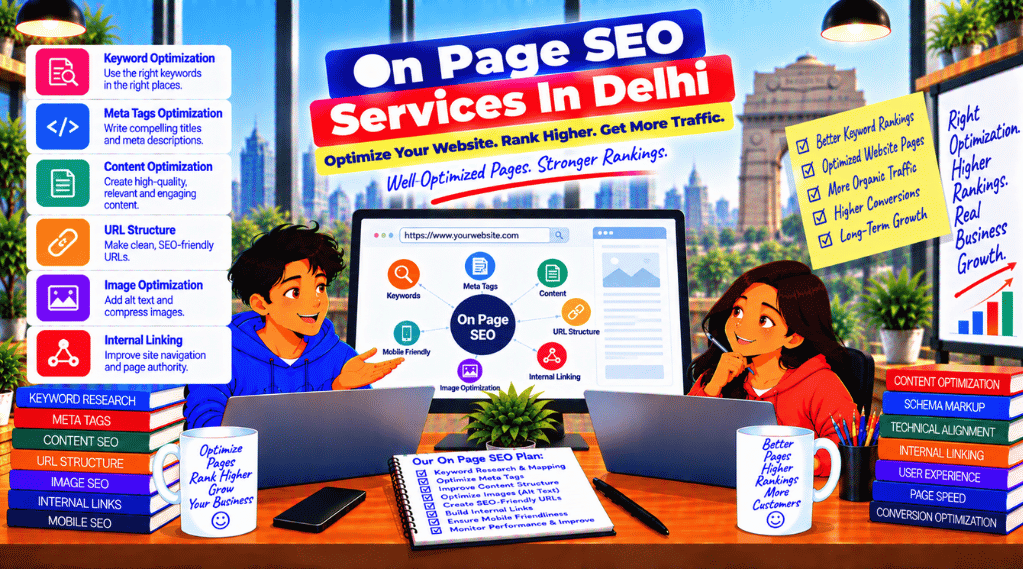
On Page SEO Services are the strategies and optimisation tasks applied directly to individual webpages to improve search visibility, usability, and conversion performance. This includes content structure, keyword intent alignment, title tags, meta descriptions, headings, internal links, image optimisation, schema markup, URL structure, page speed support, and mobile friendliness.
A good on page seo company does not treat these as isolated tasks. Real on-page optimisation works because all page elements support one another. The page title should match the user query, the heading should match the promise, the content should answer the need, and the page design should make action easy.
What professional on-page SEO usually includes
Keyword and intent mapping for commercial and informational pages
Title tag and meta description optimization for visibility and click-through rate
Heading tag optimization for structure and readability
Content optimization services to improve depth, clarity, usefulness, and trust
Internal linking optimization to connect related pages and improve crawl flow
Image SEO optimization services including alt text, compression, and file naming
Schema optimization services for better search understanding
URL optimization services for cleaner and more relevant page structure
Page speed and SEO optimization for better user experience
Mobile SEO optimization services for smaller screens and faster interactions
Why On Page SEO Matters More Than Most Businesses Think
Many businesses assume SEO is mainly about backlinks or blog publishing. Those things matter, but pages themselves still do the real work. A weak page cannot perform consistently, no matter how much traffic or authority it gets. A strong page, on the other hand, can rank better, hold attention longer, and drive more conversions from the same amount of traffic.
Search engines are also becoming better at evaluating content quality, relevance, and user experience. AI-driven answer engines and search summaries increasingly favour pages that are well-structured, easy to extract, clearly written, and context-complete. That means on-page SEO now supports both classic search rankings and emerging AI discovery.
It is especially important for:
Small businesses that need every important page to perform better
Local businesses competing for city and service-area searches
eCommerce stores relying on category and product page visibility
WordPress websites that often have structure or speed issues
D2C brands that need pages to rank and sell at the same time
Good on-page SEO starts with structure, clarity, and alignment between search intent and page purpose.
A stronger page improves rankings, trust, and conversion potential at the same time.
What Actually Improves Rankings, Traffic, and Conversions
The best professional on page seo services focus on the things that improve both discoverability and business performance. Ranking alone is not enough. A page also needs to hold attention, answer questions, and guide the visitor toward a meaningful next step.
1. Search intent alignment
One of the biggest reasons pages underperform is intent mismatch. If a page is trying to sell too hard for an informational query, rankings often weaken. If a service page reads like a generic article, conversions weaken. Strong on-page SEO ensures the page type matches what the user expects to find.
2. Better title tags and meta descriptions
Meta tag optimization services matter because title tags and meta descriptions shape the first impression in search results. They influence click-through rates, signal relevance, and affect how attractive the page appears compared with competing results.
3. Strong heading structure
Heading tag optimization helps users scan and helps search engines understand the hierarchy of the page. A clear H1, H2, and H3 structure often improves readability, snippet potential, and topical clarity.
4. Content that solves real questions
Good content does not just repeat keywords. It explains, clarifies, compares, guides, and removes confusion. The best content optimization services improve how useful the page feels, not just how long it is.
5. Internal links that guide users and search engines
Internal linking optimization is often underestimated. Good internal links improve crawl pathways, support topical relevance, distribute authority, and help visitors move naturally from one useful page to another.
6. Image optimisation and visual support
Image SEO optimization services improve accessibility, load speed, and contextual relevance. Images should support understanding without slowing the page down or feeling disconnected from the content.
7. Schema and better machine understanding
Schema optimization services help search engines interpret your page more clearly. Service schema, FAQ schema, article schema, and organisation schema can strengthen context and improve how the page is understood.
8. Mobile usability and page speed
Mobile performance matters because many users first encounter a brand on a phone. Page speed and SEO optimization and mobile seo optimization services improve both user satisfaction and commercial outcomes.
Practical insight: Many websites do not need more pages to grow. They need better versions of the pages that already exist. A stronger homepage, service page, category page, or landing page often creates more impact than publishing low-value content at scale.
On Page SEO for Small Business Websites
On page seo for small business is usually about getting more value from a limited number of key pages. Most small businesses do not have hundreds of pages driving performance. That means the homepage, service pages, about page, city pages, and contact page must be structured much more carefully.
For local and service-based brands, on-page SEO should make it easier for visitors to understand what the business offers, where it operates, why it is trustworthy, and what the next step should be.
What small business websites usually need most
Clear service-page structure
Natural local relevance without keyword stuffing
Better trust signals and proof sections
Clearer benefits and offer presentation
Smarter internal links between service and location pages
Mobile-friendly layout for calls, forms, and WhatsApp enquiries
For businesses serving Delhi and surrounding areas, combining strong on-page SEO with local SEO services often improves both visibility and local conversion quality.
eCommerce On Page SEO Services: What Matters Most
ecommerce on page seo services require a more detailed approach because product pages and category pages behave differently from standard service pages. Search intent, filters, duplicate content, product descriptions, image quality, and structured data all affect performance.
What improves product page SEO
Unique product titles and descriptions
Benefit-led product copy, not just basic specifications
Clear product images with good optimisation
Helpful FAQs and trust elements
Structured data for products and reviews where appropriate
Clear shipping, returns, and CTA information
What improves category page SEO
Relevant introductory content
Better internal linking to subcategories and products
Cleaner metadata for transactional search
Logical filtering and navigation
Buyer-intent aligned content structure
Many stores publish hundreds of product pages but still underperform because the template is weak, the copy is thin, or the category structure is unclear. Better page quality often matters more than more page count.
On Page SEO vs Technical SEO
Businesses often mix up on-page SEO and technical SEO. Both matter, but they solve different problems. On-page SEO improves page quality, meaning, clarity, and conversion ability. Technical SEO improves the ability of search engines to crawl, index, and process the website correctly.
Indexing, crawling, site architecture, canonicalisation, redirects, XML sitemaps
Primary goal
Improve page quality and conversions
Improve search engine access and processing
Typical tasks
Content optimisation, schema, image SEO, title tags, CTA flow
Crawl fixes, duplicate handling, site speed infrastructure, server-side issues
Business effect
Direct impact on user behaviour and lead quality
Supports overall site visibility and technical health
Strong results usually come when on site seo services and technical improvements work together. One improves the page itself. The other improves how that page gets discovered and processed.
What a Good On Page SEO Audit Looks Like
A proper seo audit and on page optimization process should not start with random edits. It should start with diagnosis. Before changing titles, headings, or copy, you need to understand where performance is actually breaking down.
A strong on-page audit usually covers
Page purpose and search intent
Keyword-to-page alignment
Title tag and meta description quality
Heading hierarchy and section flow
Content depth, usefulness, and duplication issues
Internal link opportunities
Image optimisation and media impact
Schema implementation
Mobile usability and speed issues
Conversion friction and CTA weakness
A good on page seo consultant does not just point out what is wrong. They also prioritise what should be fixed first for the highest commercial impact.
Common On Page SEO Mistakes to Avoid
Many ranking and conversion problems come from avoidable mistakes. These issues often look small individually, but together they make pages weaker, less trustworthy, and less competitive.
Writing for keywords instead of writing for search intent
Using duplicate or weak title tags
Overusing city names unnaturally
Poor heading hierarchy
Thin service or product content
Missing internal links between related pages
Large uncompressed images
No schema on key pages
Slow mobile layouts
Pages designed to rank but not convert
How On Page SEO Improves Conversions Too
On-page SEO is not only about search visibility. It also improves the way a user experiences the page. Better structure, clearer copy, stronger proof, better calls to action, and more useful information all improve decision-making.
A page that is easier to understand usually becomes easier to trust. A page that is easier to trust usually becomes easier to convert from. This is why SEO and conversion thinking should not be separated on important commercial pages.
Businesses that combine on-page SEO with conversion rate optimization usually create better value from the same traffic because the page is built for action as well as visibility.
What usually improves conversions on optimised pages
Sharper value propositions
Clearer CTA placement
Better trust sections and FAQs
Improved content flow
Cleaner mobile UX
Better alignment between search query and page message
How to Choose the Right On Page SEO Agency or Expert
A good on page seo agency or on page seo expert should understand SEO, content quality, structure, user behaviour, and conversion strategy. Avoid providers that only talk about keyword density or give generic audit reports without real prioritisation.
What to look for in the right provider
A clear audit and implementation process
Experience with both small business and eCommerce websites
Ability to improve content and page structure, not just metadata
Understanding of schema, mobile UX, and conversion flow
Commercial awareness, not just SEO theory
Ability to support AI-search-friendly page structure
If you want wider support beyond SEO alone, explore digital marketing agency in Delhi services that connect SEO, paid media, content, and website improvements under one strategy.
What Affects the Cost of On Page SEO Services?
The cost of an on page seo package depends on the number of pages, the website platform, the level of content improvement needed, the technical dependency of the work, and whether the service includes only recommendations or full implementation.
Common pricing factors
Number of priority pages
Need for content rewriting or expansion
Platform type such as WordPress, Shopify, or custom site
Schema and structured data needs
Speed and mobile issues
Local SEO complexity
eCommerce catalogue depth
The best affordable on page seo services are not necessarily the cheapest. They are the ones that improve the right pages first and create clear business impact without wasted work.
Why On Page SEO Also Supports AI Search Visibility
Search behaviour is changing. AI-driven systems increasingly surface content that is clearly written, logically structured, context-rich, and easy to summarise. This means good on-page SEO now supports more than traditional rankings.
Pages that are more likely to perform well in AI discovery often have:
Why Choose Sync Soft Solution for On Page SEO Services
Sync Soft Solution approaches on-page SEO as a business growth discipline, not a checklist service. The focus is on improving the pages that matter most for rankings, user trust, and conversions.
Whether you need on page seo services in Delhi for a local business, wordpress on page seo services for a service website, or ecommerce on page seo services for a store, the approach stays practical and commercially useful.
The team looks beyond simple keyword placement and focuses on page quality, user experience, content depth, conversion clarity, and how the page fits into the broader business funnel.
You likely need professional on-page SEO support if your website shows any of these signs:
Your pages are indexed but not ranking well
You get impressions but poor click-through rates
You get traffic but weak leads or sales
Your service pages feel outdated or thin
Your product or category pages lack quality and depth
Your mobile experience feels slow or confusing
Your site has grown without a clear content structure
Frequently Asked Questions
What are on page SEO services?
On page SEO services improve the content, structure, headings, metadata, images, internal links, schema, and usability of webpages so they rank better and convert better.
How is on-page SEO different from technical SEO?
On-page SEO focuses on the quality and optimisation of individual pages, while technical SEO focuses on crawlability, indexing, site architecture, and backend search health.
Do small businesses really need on-page SEO?
Yes. Small businesses often depend on a limited number of key pages, so improving those pages can create a strong impact on rankings, enquiries, and local visibility.
Can on-page SEO improve conversions as well as rankings?
Yes. Better structure, clearer content, stronger trust signals, and better calls to action help pages perform better for both search engines and users.
Is on-page SEO important for eCommerce websites?
Absolutely. Product pages, category pages, metadata, internal linking, content quality, and structured data all influence visibility and sales performance.
How long does it take to see results from on-page SEO?
It depends on site condition, competition, crawl frequency, and implementation quality. Improvements often begin to show after pages are updated, indexed, and better aligned with search intent.
What is included in an on-page SEO audit?
An audit usually covers page structure, keyword targeting, title tags, meta descriptions, headings, content quality, internal linking, images, schema, mobile UX, speed, and conversion issues.
Which pages should be optimised first?
Usually the homepage, main service pages, key location pages, important landing pages, category pages, and top-selling product pages should be prioritised first.
Does on-page SEO help AI search visibility too?
Yes. AI systems prefer content that is clearly structured, useful, trustworthy, and easy to summarise, which is exactly what strong on-page SEO supports.
Ready to Improve the Pages That Matter Most?
Request a Free Consultation and On-Page SEO Audit
If your website is not ranking as well as it should, or your traffic is not converting into enough enquiries or sales, the issue may be on the page itself. Sync Soft Solution can help you understand what is holding your key pages back and what should be improved first.
From service pages and city pages to product pages, category pages, and landing pages, we build on-page SEO strategies designed to improve both visibility and business outcomes.
If your website has the right services, products, or expertise but still is not getting enough visibility or conversions, on-page SEO is often one of the first areas that needs attention. Better pages almost always create better results.
Strong On Page SEO Services improve the quality of the pages that users and search engines rely on most. That means clearer messaging, stronger structure, better usability, better relevance, and a more effective path to enquiry or sale.
For small businesses, local brands, and eCommerce websites, this matters because growth usually depends on a small number of high-value pages. When those pages improve, rankings, trust, and conversion potential often improve together.
In simple terms: on-page SEO is about making your important pages easier to find, easier to understand, and easier to act on.
Why This Matters for Your Business
Your important pages become more competitive in search results
Your visitors understand your offer faster and more clearly
Your website becomes easier to use on mobile and desktop
Your traffic becomes more valuable because pages convert better
Your SEO foundation becomes stronger for long-term growth
When You Should Consider Professional On-Page SEO Help
You should consider professional help if your site gets impressions but weak clicks, traffic but poor conversions, or if your pages feel outdated, thin, confusing, or weak against competitors. It is also important during redesigns, service expansion, and eCommerce growth.
Why Businesses Invest in Professional On-Page SEO
Businesses invest in on-page SEO because it improves the pages that generate the most value. Instead of chasing more traffic blindly, it helps build pages that attract the right audience, explain the offer clearly, and support stronger conversion outcomes.
The real goal is simple: create pages that rank better, communicate better, and convert better.
Final Thought
If your website already has potential but the results do not reflect it, improving on-page SEO is often one of the smartest next steps. Better page quality leads to better visibility, better trust, and better long-term business growth.